Are you a wine enthusiast looking to take your collection to the next level? Look no further! In this ultimate buyer’s guide, we’ll uncork the secrets to finding the best home wine cellars in 2025.
Did you know that proper wine storage can increase the value of your collection by up to 20%? That’s right – investing in the right wine cellar isn’t just about preserving flavors; it’s about safeguarding your liquid assets.
From compact coolers to grand custom cellars, we’ll explore the top options that’ll make your wine-loving heart skip a beat. So, grab a glass of your favorite vintage, and let’s explore the world of home wine storage!
Welcome to Didi Somm, and Cheers!
Important Notice: The information in this article is for general and public information purposes only. It solely reflects Didi Somm’s or his Staff’s opinion, and no responsibility can be assumed for errors or omissions in the service’s contents. For details, please check the Disclaimer at the bottom of the homepage.
Key Takeaways
- Proper wine storage is crucial for maintaining and increasing the value of your collection
- Home wine cellars come in various sizes and styles to suit different needs and spaces
- Key features to consider include temperature control, humidity regulation, and UV protection
- The best home wine cellars balance functionality with aesthetic appeal
- Investing in a quality wine cellar can enhance your wine-drinking experience and protect your investment
Understanding the Importance of Proper Wine Storage
Let me tell you, folks, I learned the hard way about the importance of proper wine storage. Picture this: I’d just scored a case of my favorite Cabernet Sauvignon at an unbeatable price. Feeling pretty chuffed with myself, I stashed those bottles in my garage, thinking, “Hey, it’s cool and dark in there. Perfect, right?” Wrong!
Fast forward to a scorching summer heatwave, and I’m excited to crack open a bottle for a dinner party. As I poured that first glass, the smell hit me like a ton of bricks. It was… off. And the taste? Let’s just say my guests were too polite to comment, but their faces said it all. My prized wine had turned into fancy vinegar!
Temperature Fluctuations
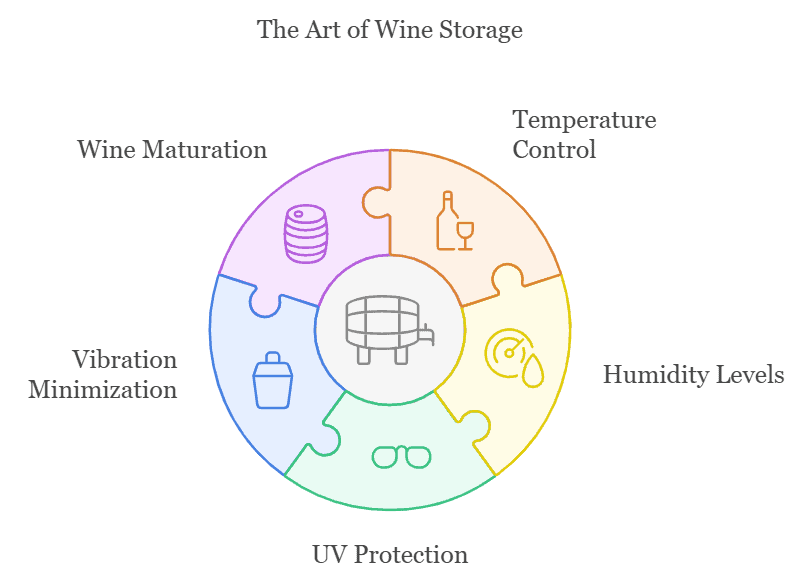
That’s when I dove headfirst into learning about proper wine storage. Trust me, temperature fluctuations are a wine’s worst enemy. Ideally, you want to keep your vino between 45°F and 65°F, with 55°F being the sweet spot. Why? Because heat can speed up the aging process, turning your wine into a hot mess. And those temperature swings? They can cause the cork to expand and contract, letting air seep in and spoil your wine.
Humidity
But it’s not just about temperature. Humidity plays a huge role, too. You want to aim for about 60-70% humidity. Too dry, and your corks can shrivel up, letting air in. Too humid, and you’re inviting mold to the party. Nobody wants that!
UV Rays and Vibration
And don’t get me started on UV rays and vibrations. Light can degrade and prematurely age wine, while vibrations can disturb the sediment. That’s why those fancy wine cellars have special UV-resistant glass and are built like fortresses.
The payoff for all this fuss? Oh, it’s worth it. Proper storage doesn’t just preserve your wine; it lets it mature gracefully. A well-stored wine can develop complex flavors and aromas that knock your socks off. Plus, if you’re into wine as an investment, proper storage is non-negotiable for maintaining (and potentially increasing) its value.
Personal Tip: Take it from someone who learned the hard way: treat your wine right, and it’ll return the favor tenfold. Your taste buds (and wallet) will thank you!
Types of Home Wine Cellars
Alright, wine lovers, let’s chat about the different types of home wine cellars. When I started getting serious about my vino collection, I was overwhelmed by the options. But after some trial and error (and a few questionable purchases), I’ve got the lowdown on what’s what.
Freestanding Wine Coolers
Let’s kick things off with freestanding wine coolers. These bad boys are like the entry-level sports car of wine storage. They’re perfect if you’re just starting out or don’t have a ton of space. I started with a 30-bottle cooler that fit snugly in my dining room corner. Pro tip: make sure it’s not in direct sunlight or near a heat source. I learned that the hard way when I put my first one next to the radiator. Yikes!
Built-In Wine Refrigerators
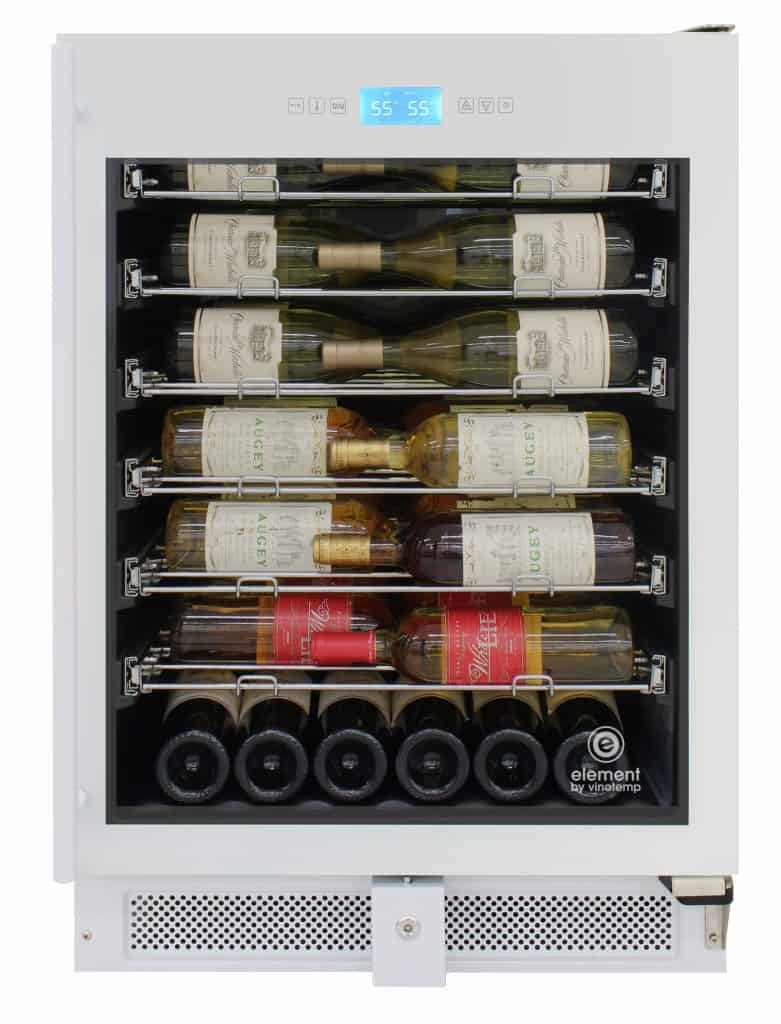
Now, if you’re looking to step up your game, built-in wine refrigerators are where it’s at. These sleek units can be integrated into your kitchen cabinetry or tucked under a counter. They’re a great option if you want something more permanent but don’t have space for a full cellar. Just remember, they need proper ventilation, so don’t try to cram them into a tight spot.
Walk-In Wine Rooms
For the true wine aficionados (or those with enviable square footage), walk-in wine rooms are the crème de la crème. I once house-sat for a friend with one of these, and let me tell you, it was like stepping into wine heaven. Climate-controlled, beautifully lit, with rows upon rows of bottles? Yes, please! But fair warning: once you go walk-in, it’s hard to go back.
Custom-Designed Wine Cellars
If you’re feeling fancy (and have deep pockets), custom-designed wine cellars are the ultimate flex. These can be tailored to your specifications, turning a spare room into a wine lover’s paradise. I’ve seen some that look like they’re straight out of a French château. Dream big, right?
Under-Stairs Wine Storage Solutions
Last but not least, don’t overlook under-stairs wine storage solutions. This clever use of space can turn that awkward area under your staircase into a mini wine cellar. It’s like Harry Potter’s cupboard, but for adults and filled with much better stuff!

Remember, the best home wine cellar is the one that fits your space, budget, and collection. Whether you’re storing a few special bottles or a small vineyard’s worth, there’s a solution out there for you. Cheers to finding your perfect wine home!
Top Features to Look for in Home Wine Cellars
Alright, wine enthusiasts, gather ’round! Let’s talk about the must-have features in home wine cellars. Trust me, after fumbling through a few cellar setups, I’ve learned what separates the good from the great.
Temperature Control Systems
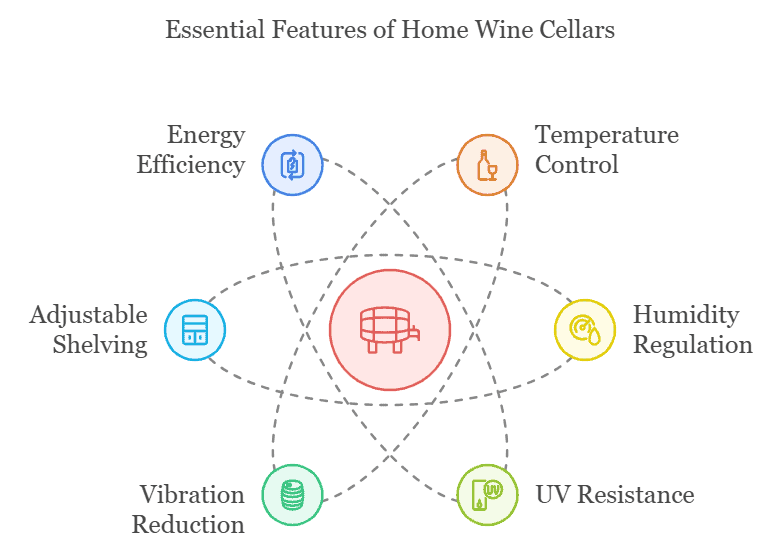
First up: precise temperature control systems. This isn’t just a fancy thermostat, folks. We’re talking about tech that keeps your wine at a constant temp, usually around 55°F (13°C). Why? Because temperature swings can turn your prized Bordeaux into expensive vinegar. I once lost a 1982 Château Lafite Rothschild bottle to a faulty cooling system. Let’s just say I cried real tears that day.
Humidity Regulation Capabilities
Next on the list are humidity regulation capabilities. Aim for 60-70% humidity. Too dry, and your corks shrivel faster than a grape in the Sahara. Too moist, and you’re inviting mold to your wine party. Nobody wants that funky flavor in their Chardonnay!
UV-Resistant Glass Doors
UV-resistant glass doors are a game-changer. Light is like kryptonite to wine, causing it to age prematurely. I learned this the hard way when I stored some bottles near a window. The result? Faded labels and flat-tasting wine. Not cool, literally.
Vibration Reduction Technology
Don’t overlook vibration reduction technology. Constant shaking can disturb the sediment in your wine, messing with its aging process. It’s like trying to nap on a roller coaster – not ideal for your wine’s beauty sleep.
Adjustable Shelving
Adjustable shelving is a must. Trust me, not all wine bottles are created equal. That oddly shaped Champagne bottle or magnum of Cab Sav will thank you for the extra space. I had to leave a gift bottle of oversized Prosecco out because it wouldn’t fit. Talk about a party foul!
Energy Efficiency
Lastly, pay attention to energy efficiency ratings. Your wallet (and the planet) will thank you. Plus, an energy-efficient unit means less heat output, which is crucial for maintaining that perfect wine environment.
Remember, a good wine cellar is an investment in your liquid assets. Choose wisely, and your future self will raise a glass to your excellent decision-making skills. Cheers to perfect wine storage!
Size Matters: Choosing the Right Capacity
Let’s talk size, folks – and I’m not talking about the size of your pour (though that’s important too). When it comes to wine cellars, size really does matter. Trust me, I’ve been through the whole “eyes bigger than my cellar” phase, and it’s not pretty.
First things first: take a good, hard look at your current collection. How many bottles are you working with? Now, here’s the kicker – think about where you want your collection to be in a few years. Trust me, wine collecting has a funny way of snowballing. I started with a modest 20-bottle cooler, and before I knew it, I was eyeing walk-in cellars!
For newbies or casual sippers, small wine coolers that hold under 50 bottles are a great starting point. They’re perfect for apartments or if you’re just dipping your toes into the world of wine. I had one of these in my first studio apartment – it fit snugly in the corner and held all my weekend wines plus a few special occasion bottles.
Moving up the ladder, we’ve got medium-sized cellars that can house between 50-200 bottles. This is where things start getting serious. If you’re hosting regular dinner parties or like to keep a variety on hand, this might be your sweet spot. I upgraded to one of these when I moved into my first house, and it was like Christmas morning unpacking all my wines into their new home.

Now, for the true aficionados (or those with enviable space), large wine rooms that can store over 200 bottles are the crème de la crème. These babies can hold everything from your everyday drinkers to those special vintages you’re aging for your retirement party. Fair warning: once you go big, it’s hard to go back. I visited a friend’s 500-bottle cellar once and spent the whole evening just admiring the collection!
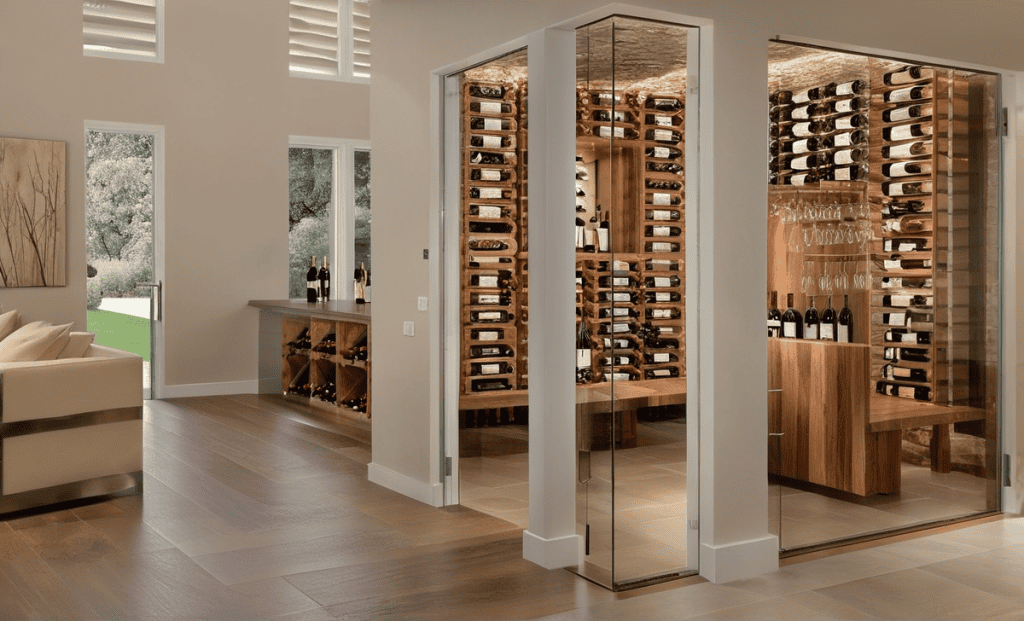
But here’s the rub – it’s not just about bottle count. You’ve got to think about space requirements, too. A 50-bottle freestanding cooler needs way less room than a 200-bottle built-in unit. And don’t even get me started on walk-in cellars! I once helped a buddy install a “small” walk-in cellar, and let’s just say his man cave got a lot smaller.
Pro Tip
Always go a bit bigger than you think you need. Wine collections have a funny way of growing, and you don’t want to be playing Tetris with your bottles every time you bring home a new case.
Remember, the right size is the one that fits your space, your collection, and your wine dreams. Whether you’re storing a few special bottles or enough to open your own wine bar, there’s a perfect size out there for you. Cheers to finding your Goldilocks cellar!
Best Home Wine Cellars for Every Budget
Alright, wine lovers, let’s talk money – specifically, how to get the best bang for your buck when it comes to home wine cellars. I’ve been through the wringer on this one, from bargain hunting to splurging on my dream cellar, so buckle up for some real talk.
Entry-Level Options
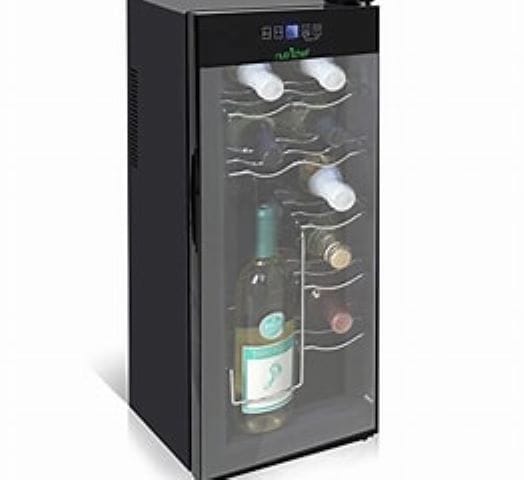
For those just dipping their toes into the world of wine storage (or watching their pennies), there are some solid entry-level options out there. I started with a 12-bottle thermoelectric cooler that cost me less than a nice bottle of Bordeaux. Was it fancy? Nope. Did it keep my wines at a consistent temperature? You bet. These budget-friendly options are perfect for apartments or if you’re not sure how deep down the wine rabbit hole you want to go.
Mid-Range Cellars
Moving up the ladder, we’ve got mid-range cellars with some nifty advanced features. This is where I landed after my collection outgrew my starter cooler. For a few hundred bucks more, you can get dual-zone temperature control (hello, perfect storage for reds and whites!), UV-protected glass, and even smart home compatibility. I once forgot to close my cellar door properly, and my smart system alerted me before any damage was done. Talk about a wine saver!
Custom-Built Walk-In Cellars
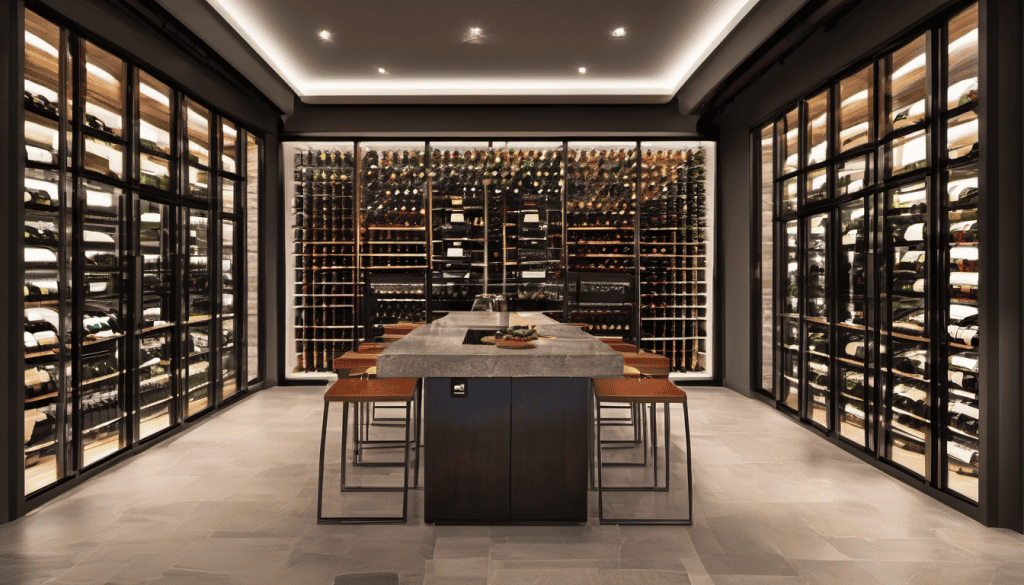
If you’ve got champagne tastes and the budget to match, high-end luxury wine storage solutions are where it’s at. I’m talking about custom-built walk-in cellars, fingerprint-locked doors, and humidity systems that would make a rainforest jealous. I once visited a buddy’s top-of-the-line cellar, and I swear I heard angels singing when he opened the door. Is it necessary? Probably not. Is it awesome? Absolutely.
But here’s the million-dollar question (sometimes literally): is it worth it? Well, that depends on your situation. If you’re storing high-value wines or plan on aging bottles for years, investing in a quality system can actually save you money in the long run. I learned this the hard way when I lost a case of premium Pinot Noir to a cheap cooler that conked out during a heatwave. Lesson learned!
On the flip side, if you’re more of a “buy it, drink it” kind of wine enthusiast, you might not need all the bells and whistles. A solid mid-range option could be your sweet spot.
Remember, the best wine cellar is the one that fits your budget AND your needs. Don’t let FOMO drive you into debt, but also don’t skimp if you’ve got serious wines to protect. Your future self (and your wine) will thank you for making the right choice. Cheers to finding your perfect wine home, whatever your budget!
Installation and Placement Considerations
Let’s chat about the nitty-gritty of installing and placing your wine cellar, fellow wine enthusiasts. Trust me, a little planning goes a long way in this area. I’ve made my fair share of blunders here, so learn from my mistakes!
Location
First up, location, location, location! The ideal spot for your wine cellar isn’t just about convenience – it’s about creating the perfect environment for your precious bottles. I once thought having my wine fridge in the sunroom would be cool. Big mistake! The constant sunlight and temperature fluctuations were a nightmare for my wines. Cool, dark spaces are your friend here. Basements are perfect if you have one, but an interior wall away from windows and heat sources can also work.
Ventilation
Now, let’s talk ventilation. This is crucial, folks! Your wine cellar needs to breathe, just like a good wine. I learned this the hard way when I installed my first built-in unit without proper ventilation. The poor thing worked overtime, heated up like crazy, and died within a year. RIP, little wine fridge. For freestanding units, leave some space around them. Built-ins and walk-ins? Make sure you’ve got a solid ventilation plan. Your cooling system will thank you, and so will your energy bill.
Professional Installation vs. DIY
Here’s a hot topic: professional installation vs. DIY. Now, I’m all for a good DIY project (you should see my attempt at a wine bottle chandelier), but when it comes to wine cellars, sometimes it’s best to call in the pros. Especially for built-in units or walk-in cellars. These must be properly insulated and sealed to maintain the right temperature and humidity. That said, if you’re handy and it’s a simple freestanding unit, go for it! Just make sure you’ve got a buddy to help with the heavy lifting.
Home Decor Integration
Lastly, let’s talk about integrating your wine cellar into your home decor. This is where you can have some fun! I’ve seen some amazing setups, from sleek modern designs to rustic wine cave vibes. My personal favorite? A friend turned an old phone booth into a funky little wine fridge. Talk about a conversation starter!
Remember, your wine cellar doesn’t have to be hidden away. With some creative thinking, it can become a stunning focal point in your home. Just make sure wherever you put it, it’s doing its primary job of keeping your wines happy and healthy.
So there you have it, folks. Choose your location wisely, ventilate properly, know when to call the pros, and have fun with the design. Your wines will be living in their best home, and you’ll have a stunning addition to your space. Cheers to that!

Maintaining Your Home Wine Cellar
Alright, wine lovers, let’s talk maintenance. Your dream cellar is set up, but the work doesn’t stop there. Trust me, I learned this the hard way after neglecting my first wine fridge and ending up with a very expensive vinegar collection.
Cleaning
First things first: cleaning. I know it’s not the sexiest part of wine collecting, but it’s crucial. Every few months, give your cellar a good once-over. Dust those bottles, wipe down the shelves, and check for any signs of mold or mildew.
Pro tip: Use a gentle, unscented cleaner. You don’t want any strong odors hanging around your wine. I once used a lemon-scented cleaner and swear I could taste it in my Chardonnay for weeks!
temperature and humidity
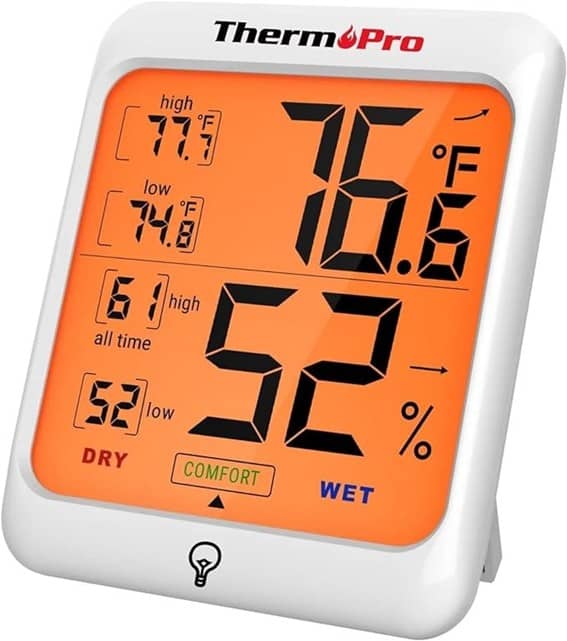
Now, let’s talk about the dynamic duo of wine storage: temperature and humidity. These are your wine’s BFFs, and you need to monitor them closely. Invest in a good thermometer and hygrometer. I check mine at least once a week. Why? Because even slight fluctuations can impact your wine over time. I once went on vacation and came back to find my cellar had turned into a sauna. Let’s just say those bottles didn’t make it to my dinner party.
Collection Organization
Organizing your collection is another biggie. Trust me, there’s nothing worse than digging through piles of bottles to find that one special vintage for dinner. I use a simple system: whites on top, reds on bottom, organized by region and vintage. And don’t forget to keep an inventory! I use a wine app to track what I have and when I should drink it. It’s saved me from many “oops, I aged this too long” moments.
Troubelshooting & Prevention
Now, let’s talk troubleshooting. Things can and will go wrong, but don’t panic! Strange noises from your cooling unit? It might just need a good cleaning. Fluctuating temperatures? Check your door seal. Humidity too low? A pan of water or some damp lava rocks can help. I once freaked out over a sudden temperature spike, only to realize I’d left the cellar door ajar. Facepalm moment!
Remember, prevention is key. Regular maintenance can catch small issues before they become big problems. And if you’re ever in doubt, don’t be afraid to call in a pro. It’s better to spend a little on a check-up than a lot on replacing spoiled wine.
Maintaining your wine cellar might seem like a chore, but think of it as caring for your liquid treasures. A little TLC goes a long way in ensuring your wines age gracefully and are ready to shine when you pop that cork.
Enhancing Your Wine Cellar Experience
Let’s talk about taking your wine cellar from functional to fabulous! Trust me, once you start enhancing your cellar experience, you’ll wonder how you ever lived without these little luxuries.
Lighting
First up: Lighting. Oh boy, did I learn this one the hard way! My first cellar was lit up like a football stadium. Rookie mistake! Harsh lighting is a no-no for both your wines and your ambiance. I’ve since discovered the magic of soft, warm LED lights. They’re energy-efficient and don’t emit heat or harmful UV rays. I installed some dimmable strips under my shelves, and let me tell you; it’s like walking into a swanky wine cave every time I grab a bottle. Pro tip: motion sensors are a game-changer. No more fumbling for light switches with your hands full of Pinot!
Tasting Areas
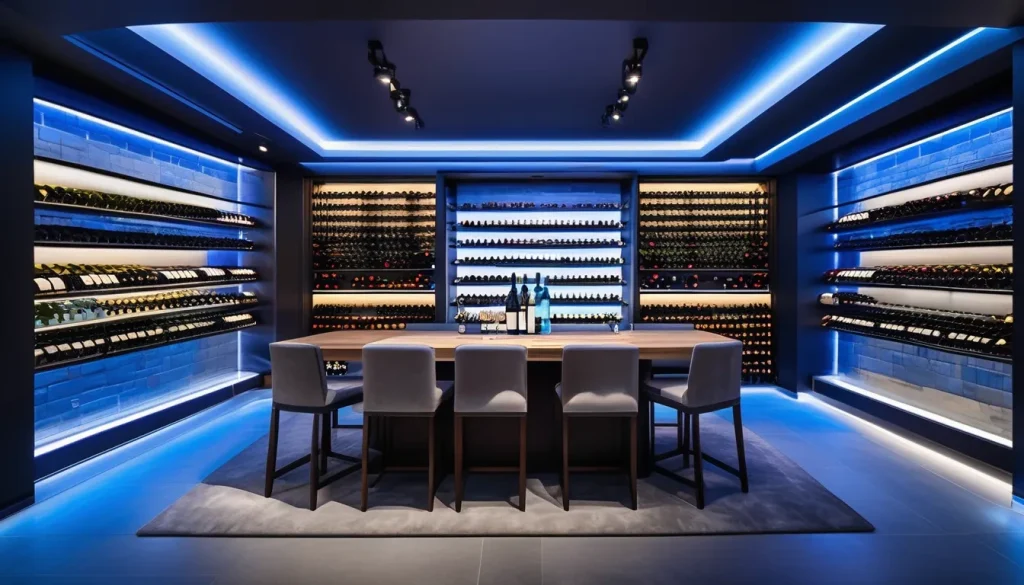
Now, let’s chat about tasting areas. If you’ve got the space, a small tasting nook can transform your cellar from a storage space to an experience. I carved out a corner with a high-top table and a couple of stools. It’s become my favorite spot for intimate wine tastings with friends. One buddy of mine went all out and installed a cheese fridge next to his tasting area. Talk about living the dream!
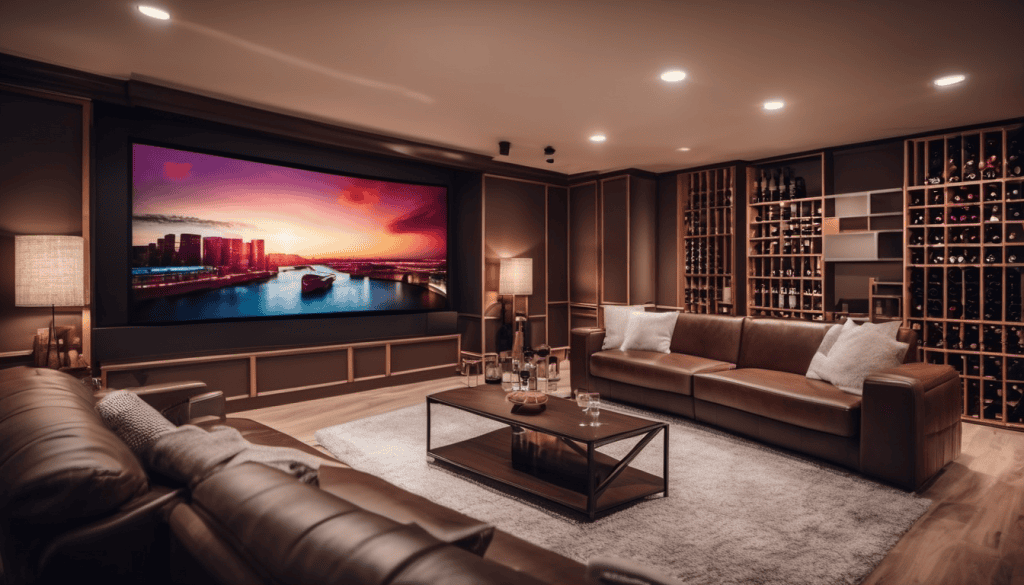
But why stop there? If you’re feeling fancy (and have the square footage), consider creating a full-on entertaining space. I’m talking about comfy seating, maybe a small bar area, or even a TV for those wine documentary nights. I once visited a cellar with a glass floor looking down into the lower-level storage area. It was like walking in a sea of wine bottles!
Wine Cellar Apps
Now, let’s geek out for a second about wine cellar management software and apps. Game. Changers. I used to keep track of my collection with a clunky spreadsheet. Now? I use an app that lets me scan labels, track my inventory, and even suggest food pairings. It’s like having a sommelier in my pocket! Some high-end systems even integrate with your cellar’s climate control. I once got an alert on my phone that my cellar temp was rising while I was on vacation. Crisis averted! – Oh, I almost forgot. My favorite is CellarTracker, one of the top apps on the market.
Remember, enhancing your cellar is all about making it work for you. Whether you’re a serious collector or just enjoy a good glass now and then, there are tons of ways to make your cellar more functional and fun.
And here’s a little secret: half the fun is in the process. I’m constantly tweaking and improving my setup. It’s become a hobby within a hobby! So go ahead, get creative, and make your cellar a space you truly love. After all, great wine deserves a great home. Cheers to your perfect wine sanctuary!
FAQ – Best Home Wine Cellars
- Q: What is the ideal temperature for storing wine?
A: The ideal temperature for storing wine is between 45°F and 65°F (7°C to 18°C), with 55°F (13°C) being optimal for long-term storage of most wines. - Q: How much does a good home wine cellar cost?
A: The cost of a home wine cellar can vary widely, ranging from $200 for a small wine cooler to over $10,000 for a custom-built walk-in cellar. A good mid-range option typically costs between $1,000 and $3,000. - Q: Can I store red and white wines together?
A: Yes, you can store red and white wines together in the same cellar as long as the temperature is consistent and suitable for both types. However, if you have separate zones, it’s best to keep whites slightly cooler. - Q: How long can wine be stored in a home cellar?
A: With proper storage conditions, many wines can be stored for several years or even decades. However, the aging potential varies depending on the type of wine and its quality. - Q: What’s the difference between a wine cooler and a wine cellar?
A: Wine coolers are typically smaller, designed for short-term storage, and maintain a single temperature. Wine cellars are larger, offer better humidity control, and often have multiple temperature zones for long-term storage. - Q: Do I need a humidity control system in my wine cellar?
A: Yes, maintaining proper humidity (around 60-70%) is crucial for long-term wine storage to prevent corks from drying out or mold growth. Most quality wine cellars include humidity control. - Q: Can I store my wine cellar in the garage?
A: It’s not recommended to store wine in a garage due to temperature fluctuations and potential vibrations. A temperature-controlled indoor location is best for wine preservation. - Q: How often should I clean my wine cellar?
A: Clean your wine cellar every 3-6 months, or more frequently if needed. Regular dusting and occasional deep cleaning will help maintain optimal storage conditions. - Q: Is it worth investing in a high-end wine cellar?
A: If you have a valuable wine collection or plan to age wines long-term, investing in a high-end cellar can be worthwhile for optimal preservation and potential appreciation of your wines. - Q: Can I build my own wine cellar?
A: Yes, it’s possible to build your own wine cellar, but it requires careful planning and expertise to ensure proper insulation, temperature control, and humidity regulation. Professional help is recommended for best results. - Q: How much electricity does a wine cellar use?
A: Energy consumption varies depending on the size and features of the cellar. On average, a medium-sized wine cellar might use 100-200 kWh per month, similar to a small refrigerator. - Q: Should wine bottles be stored horizontally or vertically?
A: Wine bottles with corks should be stored horizontally to keep the cork moist and prevent it from drying out. Screw-cap bottles can be stored vertically if space is a concern. - Q: Can I store other beverages in my wine cellar?
A: While wine cellars are designed specifically for wine, you can store other beverages like champagne or craft beers. However, avoid storing strong-smelling foods that could affect the wine’s flavor. - Q: How do I protect my wine collection from power outages?
A: Consider investing in a backup power system or generator for your wine cellar to maintain consistent temperature during power outages. Some high-end cellars come with built-in battery backups. - Q: What’s the best lighting for a wine cellar?
A: LED lighting is ideal for wine cellars as it produces minimal heat and doesn’t emit harmful UV rays. Choose warm, dimmable lights to create ambiance without affecting the wine’s temperature.
Conclusion
Investing in one of the best home wine cellars of 2025 is a decision that’ll pay dividends in the form of perfectly preserved wines and an enhanced tasting experience. Whether you’re a budding enthusiast or a seasoned collector, there’s a wine storage solution out there that’s perfect for you.
Remember, the right cellar not only protects your precious bottles but also adds a touch of sophistication to your home. So, go ahead and take the plunge – your future self (and your wine) will thank you.
Cheers to finding your ideal home wine cellar and the countless memorable sips it’ll help you enjoy for years!
For your reference, the latest articles by Didi Somm include:
- How to Create a Home Wine Cellar for Beginners: The Ultimate Guide
- The Ultimate Guide to Wine Cellar Climate Control: Preserve Your Collection Like a Pro
- Ultimate Guide to Wine Cellar Insulation: Preserve Your Collection
- Wine Cellar Organization Tips: Maximizing Space and Efficiency
- 10 Best Space-Saving Wine Cellar Ideas for Compact Homes
- 15 Stunning Home Wine Cellar Designs to Inspire Your Next Project
Important Notice: The information in this article is for general and public information purposes only. It solely reflects Didi Somm’s or his Staff’s opinion, and no responsibility can be assumed for errors or omissions in the service’s contents. For details, please check the Disclaimer at the bottom of the homepage.