Did you know that the global wine market is expected to reach $456.76 billion by 2028? With such growth, it’s no wonder more wine enthusiasts are looking to create their own home wine cellars.
Whether you’re a budding oenophile or a seasoned collector, building a home wine cellar can be an exciting project that not only preserves your precious vintages but also adds value to your home. In this home wine cellar construction guide, we’ll uncover the secrets to creating your very own wine sanctuary.
Get ready to embark on a journey that’ll transform a corner of your house into a haven for your favorite bottles!
Welcome to Didi Somm and Cheers!
Important Notice: The information in this article is for general and public information purposes only. It solely reflects Didi Somm’s or his Staff’s opinion, and no responsibility can be assumed for errors or omissions in the service’s contents. For details, please check the Disclaimer at the bottom of the homepage.
Key Takeaways
- Proper planning is crucial for a successful home wine cellar construction project
- Climate control is essential for optimal wine storage conditions
- Choose materials that can withstand humidity and temperature fluctuations
- Proper insulation and vapor barriers are key to maintaining ideal conditions
- Lighting and storage solutions should be carefully considered for functionality and aesthetics
- Professional help may be necessary for complex systems like cooling units
Planning Your Home Wine Cellar
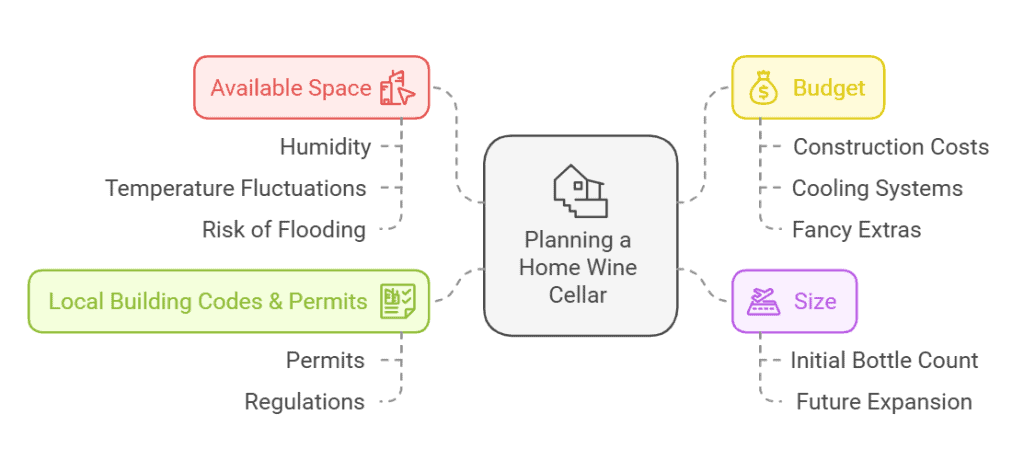
Let me tell you, planning a home wine cellar is no small feat. When I first decided to build mine, I was like a kid in a candy store – excited but totally overwhelmed. Where do you even start? Well, I learned the hard way that it all begins with a good, hard look at your available space.
I remember walking around my house, tape measure in hand, eyeing up every nook and cranny. The basement seemed like the obvious choice, but boy, was I in for a surprise. Turns out, not all basements are created equal when it comes to wine storage. You’ve gotta consider things like humidity, temperature fluctuations, and even the risk of flooding. Who knew, right?
Size – “Plan For Growth”
Once I’d settled on a spot, it was time to think about size. Now, this is where things can get tricky. You might think, “Oh, I’ll just start small.” But let me tell you, your wine collection has a funny way of growing faster than you’d expect. I initially planned for about 500 bottles, thinking that’d be plenty. Fast forward a few years, and I’m squeezing bottles into every available inch. Learn from my mistake, folks – plan for growth!
Money – Budget
Now, let’s talk money. Setting a budget for your wine cellar is crucial, but it can also be a real head-scratcher. There are so many factors to consider – construction costs, cooling systems, racks, and don’t even get me started on the fancy extras. My advice? Set a realistic budget, then add about 20% for those “just in case” moments. Trust me, they’ll happen.
Local Building Codes & Permits
Oh, and here’s something I wish someone had told me earlier – check your local building codes and permits! I was halfway through my project when I found out I needed a permit for the electrical work. Talk about a facepalm moment. Save yourself the headache and check these things out early in the planning stage.
Planning your home wine cellar is all about balancing your dreams with reality. It’s okay to aim high, but make sure you’re considering all the practical aspects, too. And remember, it’s not just about creating a storage space – it’s about crafting a haven for your beloved wines. So take your time, do your research, and don’t be afraid to ask for help. After all, Rome wasn’t built in a day, and neither is the perfect wine cellar!
Selecting the Ideal Location
Alright, let’s chat about finding the perfect spot for your wine cellar. This is where things get real, folks. I remember when I was on the hunt for the ideal location in my house – it felt like I was trying to find the Holy Grail!
Temperature Stability
First things first, temperature stability is key. I learned this the hard way when I initially thought about converting our spare bedroom into a wine cellar. Sounds great, right? Well, not so much. The temperature in that room was like a rollercoaster – up and down all day long. Not exactly ideal for our precious vino.
So, I started exploring other options. The basement seemed like a no-brainer, but here’s a pro tip: not all basements are created equal. I spent a week taking temperature readings in different corners of our basement. Talk about a science experiment! But it paid off. I found a sweet spot where the temperature barely budged more than a couple of degrees throughout the day.
Sunlight Exposure
Now, let’s talk about the sun. As much as we all love a good sunbath, your wines definitely don’t. I almost made the rookie mistake of placing my cellar near a small basement window. Thankfully, a wine-loving buddy of mine pointed out that even that little bit of sunlight could wreak havoc on the cellar’s temperature. Crisis averted!
Accessibility
Accessibility is another biggie. You might think, “Oh, I’ll just tuck it away in the farthest corner of the basement.” But trust me, when you’re lugging cases of wine or trying to grab a bottle for dinner, you’ll thank yourself for choosing a spot that’s easy to get to. I ended up choosing a location near the stairs – not too close to be affected by the temperature changes from the door opening, but close enough for convenience.
Floor Load Capacity
Here’s something that caught me off guard – floor load capacity. Who knew wine could be so heavy? Well, turns out a full wine cellar can put a serious strain on your floor. I had to call in a structural engineer to make sure our chosen spot could handle the weight. Better safe than sorry, right?
Selecting the ideal location for your wine cellar is all about balance. You’re looking for that Goldilocks spot – not too hot, not too cold, not too sunny, not too hard to reach. It might take some time and a bit of trial and error, but trust me, it’s worth it.
Your future self (and your wines) will thank you for putting in the effort to find that perfect location. Cheers to creating the ideal home for your wine collection!

Designing Your Wine Cellar Layout
Okay, folks, let’s dive into the fun part – designing your wine cellar layout! This is where you get to let your inner interior designer shine. But let me tell you, it’s not all glamour and Instagram-worthy shots. There’s a lot of practical stuff to consider, too.
Functional Floor Plan
First up, creating a functional floor plan. When I started sketching out ideas for my cellar, I felt like a kid with a new coloring book. But here’s the kicker – you’ve got to think beyond just making it look pretty. You need to consider things like airflow, accessibility, and how you’ll actually use the space. I learned this the hard way when I realized my initial design had me climbing over racks just to reach my favorite Bordeaux. Not exactly ideal after a glass or two, if you know what I mean!
Storage Options
Now, let’s talk storage options. You’ve got three main choices: freestanding racks, built-in storage, or a combo of both. I went with a mix, and I’ve got to say, it’s worked out pretty well. The built-ins give a sleek, custom look, while the freestanding racks offer flexibility. Plus, it’s kind of fun to rearrange things now and then – it keeps the wine cellar “feng shui” flowing, you know?
Tasting Area
Here’s a hot tip: don’t forget to incorporate a tasting area if you’ve got the space. I added a small table and a couple of chairs in a corner of my cellar, and let me tell you, it’s become my favorite spot in the house. There’s something magical about sipping a glass surrounded by your collection. Just be careful not to get too comfortable and start opening all your prized bottles!
Plan For Expansion
Now, here’s something I wish someone had told me early on – plan for expansion! Trust me, your collection will grow faster than you think. I started out thinking, “Oh, I’ll never fill this space.” Fast forward a couple of years, and I’m playing wine Tetris, trying to fit in new bottles. So, do yourself a favor and leave some room to grow.
Designing your wine cellar layout is all about matching form and function. Sure, you want it to look good, but it also needs to work for you. Don’t be afraid to get creative, but always keep practicality in mind. And remember, this is your space – make it reflect your personality and wine preferences.
Whether you’re a collector of rare vintages or just enjoy a good bottle with dinner, your cellar should be a space that makes you smile every time you step into it. Happy designing, wine lovers!
Essential Climate Control Systems
Alright, let’s talk about something that’s absolutely crucial for your wine cellar – climate control. Now, I know what you’re thinking, “It’s just a bunch of bottles, how hard can it be?” Well, let me tell you, getting this right is the difference between a cellar full of perfectly aged wines and a bunch of very expensive vinegar.
Ideal Temperature and Humidity
First things first, you need to understand the ideal temperature and humidity levels for wine storage. I learned this the hard way when I first started out. I thought, “Hey, my basement is pretty cool, that should be fine, right?” Wrong! Turns out, wines like it between 55°F and 59°F (13°C to 15°C). And humidity? You’re aiming for 50% to 70%. Any lower, and your corks might dry out. Any higher, and you’re inviting mold to the party. Trust me, neither of those are guests you want in your cellar.
Cooling Units & Humidifiers
Selecting the right cooling units and humidifiers is like choosing a good wine – it requires some research and maybe a bit of expert advice. I remember standing in a home improvement store, staring at rows of cooling units, feeling completely lost. Pro tip: don’t be afraid to ask for help. I ended up chatting with a local wine cellar specialist who pointed me in the right direction.
Now, here’s where things get a bit technical – calculating BTU requirements. BTU stands for British Thermal Unit, and it’s basically a measure of how much cooling power you need. I won’t lie, I initially tried to wing it and ended up with a unit that was way too small for my space. Lesson learned: do the math or get someone who knows their stuff to do it for you.
One thing I found super interesting was learning about passive vs. active climate control. Passive systems rely on the natural coolness of underground spaces, while active systems use mechanical cooling. I went with an active system for my cellar, but I know folks who’ve had great success with passive systems in the right conditions.
Installing a climate control system isn’t just about slapping in a cooling unit and calling it a day. You’ve got to think about airflow, insulation, and even the direction your cooling unit is facing. It’s like conducting an orchestra – everything needs to work together in harmony.
Monitoring System
And here’s a final piece of advice – invest in a good monitoring system. I’ve got a smart thermometer that alerts my phone if the temperature or humidity goes out of whack. It’s saved my bacon (and my wine) more than once during power outages.
Getting your climate control right is crucial for protecting your wine investment. It might seem like a lot of work upfront, but trust me when you’re sipping a perfectly aged wine that you’ve stored for years, you’ll be glad you put in the effort. Cheers to perfect wine storage conditions!

Insulation and Vapor Barriers
Let’s chat about something that might not sound super exciting but is absolutely crucial for your wine cellar – insulation and vapor barriers. I know, I know, it’s not as glamorous as picking out wine racks or choosing the perfect lighting, but trust me, get this right, and your wines will thank you.
When I first started planning my cellar, I thought, “Insulation? Pfft, my basement is already cool, do I really need to bother?” Oh boy, was I wrong. Proper insulation isn’t just about keeping the temperature stable – it’s about creating a controlled environment for your precious vino.
Choosing the right insulation materials for your walls and ceiling is like picking the perfect wine pairing – it can make or break the experience. I went with a closed-cell spray foam insulation, and let me tell you, it’s been a game-changer. It not only insulates but also acts as a vapor barrier. Two birds, one stone!

Speaking of vapor barriers, this is something you definitely don’t want to skimp on. I learned about the importance of vapor barriers the hard way when I noticed some mold starting to form in a corner of my first cellar attempt. Turns out, without a proper vapor barrier, moisture can seep through your walls and create a whole host of problems. Not exactly the kind of “aging” you want for your wines!
Sealing the room properly is another crucial step. You want to create a little cocoon for your wines, protected from the outside world. I spent a whole weekend going around with a caulk gun, sealing every nook and cranny. My wife thought I’d gone a bit overboard, but hey, anything for the wine, right?
One thing that caught me by surprise was dealing with condensation points. These are spots where warm, moist air can come into contact with cooler surfaces, creating droplets of water. In a wine cellar, that’s bad news. I had to pay special attention to areas around my cooling unit and any spots where pipes or wires entered the room.
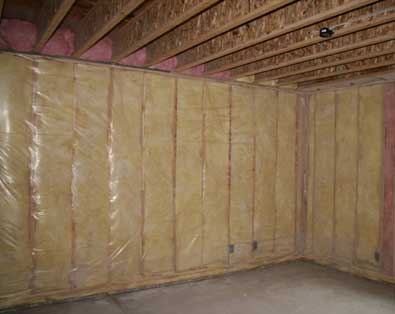
Installing insulation and vapor barriers isn’t the most exciting part of building a wine cellar, but it’s definitely one of the most important. It’s like laying a good foundation – get it right, and everything else will fall into place. Plus, it’ll save you headaches (and potentially ruined wines) down the line.
Remember, your wine cellar is a long-term investment. Taking the time to properly insulate and seal it will pay off in the long run. Your wines will age gracefully, and you’ll have the peace of mind knowing that your collection is protected. So roll up those sleeves, grab that insulation, and get to work! Your future self (and your wines) will thank you.
Flooring and Wall Treatments
Alright, wine lovers, let’s talk about something that’s often overlooked but oh-so-important – flooring and wall treatments for your wine cellar. Now, I know what you’re thinking, “Can’t I just use the same stuff I’ve got in the rest of my basement?” Well, you could, but let me tell you why that might not be the best idea.
Flooring – Moisture Resistance is crucial
When it comes to flooring, moisture resistance is the name of the game. I learned this the hard way when I initially used regular hardwood in my first cellar attempt. Big mistake! The humidity warped the wood faster than you can say “Cabernet Sauvignon.” Now, I’ve got a beautiful slate floor that not only looks great but also handles the moisture like a champ.
Wall Materials
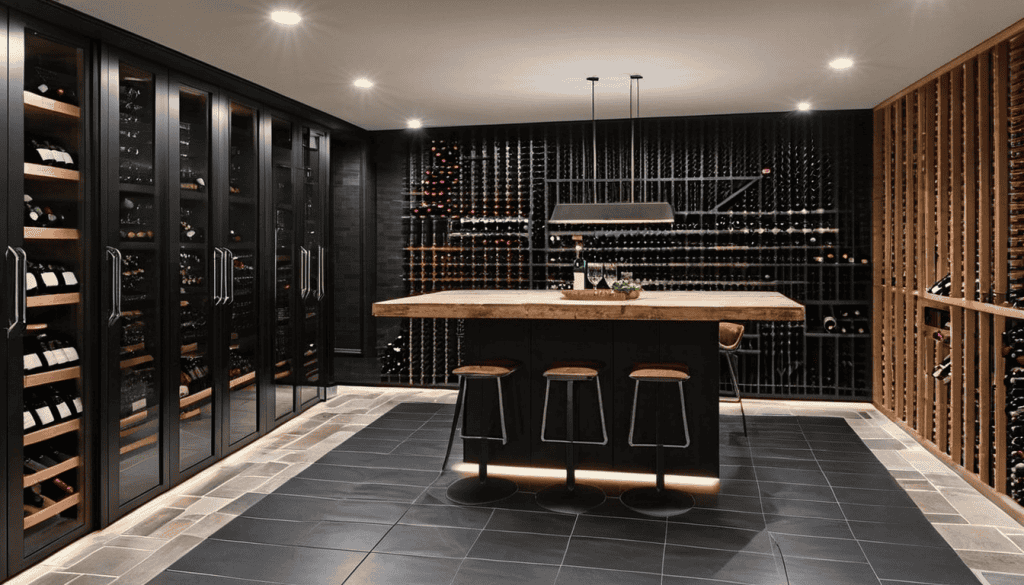
Choosing wall materials is another important decision. You want something that can stand up to the humidity without breaking a sweat. I went with a combination of stone veneer and cedar planks. The stone adds a rustic, old-world charm, while the cedar smells amazing and naturally resists moisture. Plus, it gives the whole cellar a warm, inviting feel.
Aesthetics
Now, let’s talk about aesthetics. Your wine cellar isn’t just a storage space – it’s a showcase for your collection. I had a blast incorporating wine-themed design elements into my cellar. I found these cool barrel stave sconces that add the perfect ambiance. And don’t even get me started on the cork accent wall – it’s become quite the conversation piece when I have guests over!
Maintenance
One thing I wish I’d thought about earlier was the practicality of my design choices. Sure, that textured stone wall looks great, but it’s a real pain to clean. And while the dark floor tiles create a moody atmosphere, they show every speck of dust. Learn from my mistakes, folks – think about maintenance when making your design decisions.
Cork flooring is another option worth considering. It’s naturally antimicrobial, which is great for a wine cellar environment. Plus, it’s soft underfoot and provides a bit of insulation. I haven’t used it myself, but I’ve seen some stunning cork floors in other cellars.
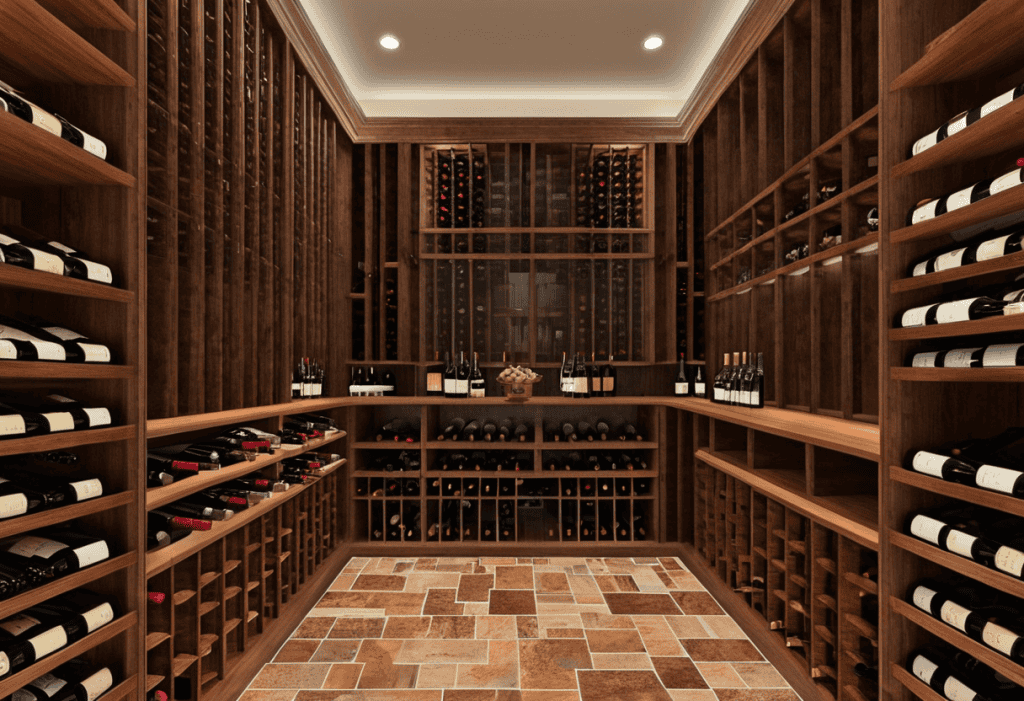
Remember, your flooring and wall treatments aren’t just about looks – they play a crucial role in maintaining the right environment for your wines. They need to be able to handle temperature fluctuations and high humidity without deteriorating or promoting mold growth.
Creating the right atmosphere in your wine cellar is all about balance. You want it to be functional, durable, and beautiful. It should be a space that makes you smile every time you step into it, whether you’re just grabbing a bottle for dinner or hosting a tasting with friends.
Personal Tip: To learn more about wine cellar flooring, please check my recent article, Best Wine Cellar Flooring Ideas For You – 5 Expert Tips
So go ahead, let your creativity flow! Just remember to keep practicality in mind. After all, a wine cellar is a long-term investment – you want it to look as good in 10 years as it does on day one. Cheers to creating a beautiful, functional space for your wine collection!

Lighting and Electrical Considerations
Let’s shed some light on a topic that’s often overlooked in home wine cellar construction – lighting and electrical considerations. Now, I know what you’re thinking, “It’s just a bunch of bottles in a dark room, right?” Wrong! Proper lighting can make or break your wine cellar experience.
When I first started planning my cellar, I thought I’d just slap in a couple of bright overhead lights and call it a day. Boy, was I wrong! Turns out, harsh lighting is a big no-no in the world of wine storage. It’s not just about aesthetics – bright lights can actually harm your wine over time.
LED Lights
So, what’s the solution? LED lights, my friends. They’re like the Swiss Army knife of wine cellar lighting – versatile, energy-efficient, and they don’t generate much heat. I installed a combination of recessed LED spotlights and LED strip lighting under my shelves. The result? A warm, inviting glow that showcases my collection without turning my cellar into a sauna.
Now, let’s talk about placement. You want to illuminate your bottles without creating hot spots. I learned this the hard way when I initially placed a light too close to one of my racks. A few months later, I noticed those wines weren’t tasting quite right. Lesson learned – keep those lights at a safe distance!
One cool trick I discovered is using different color temperatures for different areas. I use warmer lights (around 2700K) for the general ambiance and cooler lights (around 4000K) for areas where I need to read labels. It’s like having the best of both worlds—a cozy atmosphere and practical functionality.
Let’s not forget about electrical outlets. When I first set up my cellar, I grossly underestimated how many outlets I’d need. Between the cooling system, humidifier, and various gadgets (hello, electric bottle opener!), I was running extension cords everywhere. Not exactly the classy look I was going for. My advice? Install more outlets.

Wine Racking and Storage Solutions
Let’s talk about one of the most exciting parts of building a wine cellar – choosing your racking and storage solutions! This is where your inner wine geek really gets to shine. Trust me, I spent more time researching wine racks than I did picking out my last car!
Wine Rack Materials
First up, you’ve got to decide between wood, metal, or custom racking systems. Each has its pros and cons. I initially went with all wood because, well, it just looks classic. But here’s a pro tip: consider mixing materials. I ended up adding some metal racks for my everyday wines, and let me tell you, it’s been a game-changer for accessibility.
Pro Tip: To get inspired and see the latest designs, please check Wine Racks America, a top maker in the market.
Maximizing Storage Capacity
Now, let’s chat about maximizing storage capacity. When I first started, I thought, “Oh, I’ll never fill this space.” Ha! Famous last words. Before I knew it, I was playing wine Tetris, trying to squeeze in new bottles. Learn from my mistake, folks. Think about efficient rack designs from the get-go. I’m talking diamond bins for loose bottles, case storage for those bulk purchases (we’ve all been there after a great winery tour), and don’t forget about those oddly shaped champagne bottles!
Bottle Display
One thing I wish I’d done earlier was incorporate more display areas for my prized bottles. You know, those special vintages you want to show off but are a little afraid to drink? I recently added a few display rows with LED backlighting, and it’s like my own mini wine museum now. It’s become quite the conversation starter when I have guests over!
Lockable Cabinets
Oh, and here’s something I learned the hard way – add lockable cabinets for your valuable vintages. I once had a well-meaning friend open a bottle I’d been saving for a special occasion. Let’s just say it wasn’t the birthday surprise I had in mind! Now, I have a small lockable cabinet for those extra special bottles. It’s like Fort Knox but for wine.
Remember, your storage solutions should reflect your collecting style. Are you a burgundy buff? Make sure you have plenty of spaces for those wider bottles. Love large format bottles? Don’t forget to include some flexible storage options.
Designing your wine racking and storage is like creating a home for your liquid treasures. It should be functional, flexible, and let’s face it, it should look good too. After all, half the fun of collecting wine is admiring your collection, right? So go ahead, get creative, and design a space that makes you smile every time you walk into your cellar. Cheers to perfect wine storage!

Doors and Windows
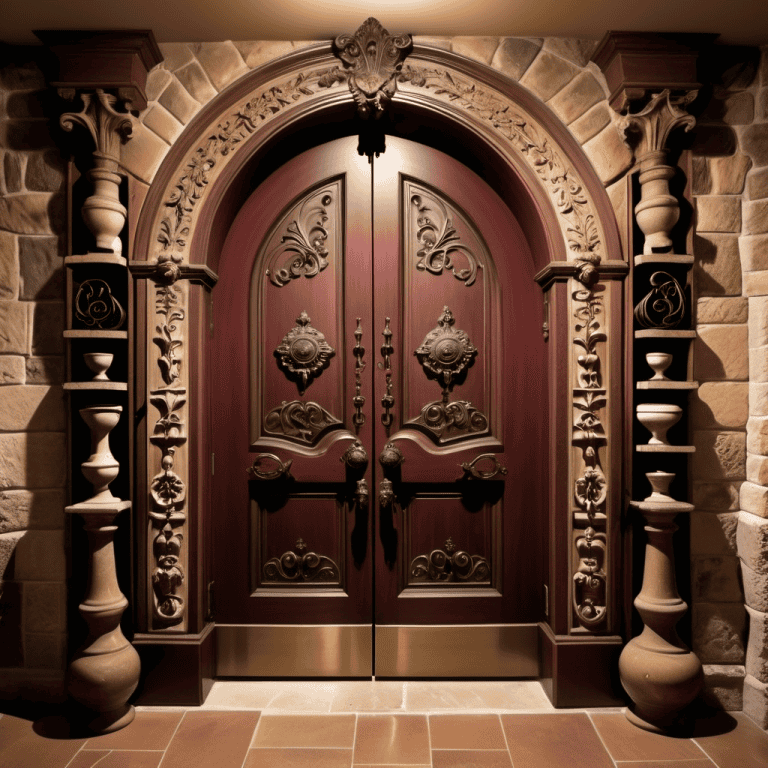
Alright, let’s talk about something that might seem simple but is actually super crucial for your wine cellar – doors and windows. Now, I know what you’re thinking, “It’s just a door, how complicated can it be?” Well, let me tell you, choosing the right door for your wine cellar is like picking the perfect wine for a special dinner – it requires thought and consideration!
Insulated, Sealed Door
First things first, you need an insulated, sealed door for your cellar entrance. When I first built my cellar, I thought I could get away with a regular interior door. Big mistake! I quickly realized that my precious wines were being affected by the temperature fluctuations from the rest of the house. I ended up investing in a proper insulated door, and let me tell you, it was worth every penny.
Now, here’s where it gets fun – glass doors. If you’re anything like me, you want to show off your beautiful wine collection. I mean, what’s the point of having all those gorgeous bottles if you can’t see them, right? I opted for a glass door with an insulated frame, and it’s like having a window into wine paradise every time I walk by. Just remember, if you go this route, make sure it’s properly sealed and consider UV-resistant glass to protect your wines from light damage.
Windows
Windows in a wine cellar? It might sound counterintuitive, but hear me out. If you’re lucky enough to have a space with a window, don’t panic! You can still make it work. I have a small window in my cellar, and I turned it into a feature by installing a double-paned, insulated stained glass panel. It adds a beautiful ambiance when the sun shines through, and more importantly, it keeps the temperature stable.
Weatherstripping and Seals
Last but definitely not least, let’s talk about weatherstripping and seals. This might not be the most exciting topic, but trust me, it’s crucial. I learned this the hard way when I noticed my energy bills skyrocketing after building my cellar. Turns out, all the cool air was escaping through tiny gaps around the door. A good weatherstripping job fixed that right up.
Remember, your door is the gateway to your wine sanctuary. It needs to look good, sure, but more importantly, it needs to protect your precious bottles from the outside world. Temperature fluctuations, humidity changes, light exposure – a good door and window setup will guard against all of these.
So, whether you’re going for a solid wood door for that old-world charm or a modern glass door to showcase your collection, make sure it’s up to the task of protecting your wines. After all, you’re not just building a storage space – you’re creating a haven for your beloved bottles. Cheers to finding the perfect entrance to your wine paradise!
Ventilation and Odor Control
Let’s chat about something that doesn’t get enough attention when it comes to wine cellars – ventilation and odor control. Now, I know what you’re thinking, “Ventilation? I thought we were trying to keep the air in!” Well, let me tell you, proper air circulation is key to keeping your wines happy and your cellar smelling fresh.
When I first built my cellar, I thought all I needed was a good cooling system, and I’d be set. Boy, was I wrong! I quickly learned that stagnant air is the enemy of good wine storage. It can lead to mold, musty odors, and even cork taint. Not exactly the tasting notes you’re looking for, right?
Implementing proper air circulation within the cellar is crucial. I installed a few small fans strategically placed around the room. They keep the air moving without creating any harsh drafts. It’s like a gentle breeze for your bottles – just enough to keep things fresh without disturbing the sediment in your aged reds.
Now, let’s talk about exhaust systems. This was something I didn’t think about initially, but boy am I glad I added one later. An exhaust system helps remove stale air and regulates humidity. I installed a small, quiet exhaust fan that kicks in when the humidity gets too high. It’s like having a personal atmospheric controller for your wines!
Pro Tips
I wish someone had told me earlier – use activated charcoal filters. These babies are amazing at eliminating odors. I placed a few around my cellar, and they’ve been fantastic at neutralizing any funky smells. Because let’s face it, as much as we love the smell of wine, we don’t want our entire basement smelling like a vineyard!
One thing I learned the hard way – be careful about the materials you use in construction. I once made the mistake of using a strongly scented wood sealant. For weeks, my cellar smelled like a furniture store instead of a wine cellar. Now, I always opt for low-VOC, odorless finishes. Your wines will thank you for it.
Oh, and here’s something I recently discovered – plants! Adding a few plants to your cellar can help improve air quality naturally. Just make sure to choose varieties that thrive in low light and cool temperatures. I’ve got a few ferns in my cellar now, and they add a nice touch of green while helping to keep the air fresh.
Remember, good ventilation and odor control are all about creating the perfect environment for your wines to age gracefully. It’s not just about keeping them at the right temperature – it’s about ensuring they have clean, fresh air to ‘breathe’ as they mature.
So, don’t overlook this important aspect of cellar design. With proper ventilation and odor control, you’ll create a space that not only stores your wines perfectly but is also a pleasure to spend time in. After all, what’s the point of having a beautiful wine cellar if you don’t want to hang out there? Here’s to fresh air and fantastic wines!
FAQ – home wine cellar construction
- Q: How much does it cost to build a home wine cellar?
A: The cost can range from $5,000 to $100,000+, depending on size, materials, and cooling systems. - Q: What’s the ideal temperature for a wine cellar?
A: The optimal temperature is between 55°F and 59°F (13°C to 15°C). - Q: How big should my wine cellar be?
A: Size depends on your collection, but a minimum of 25 square feet is recommended for a small cellar. - Q: Do I need a professional to build my wine cellar?
A: While DIY is possible, professional help is recommended for complex systems and ensuring proper insulation. - Q: What type of lighting is best for a wine cellar?
A: LED lighting is ideal as it produces minimal heat and can create a beautiful ambiance. - Q: How long does it take to build a wine cellar?
A: Construction can take anywhere from a few weeks to several months, depending on the complexity of the project. - Q: Can I convert an existing room into a wine cellar?
A: Yes, but it requires proper insulation, sealing, and climate control system installation. - Q: What’s the ideal humidity level for a wine cellar?
A: The optimal humidity range is between 50% and 70%. - Q: How do I protect my wine collection during cellar construction?
A: Store your wines in a cool, dark place or consider temporary professional storage during the construction process. - Q: What type of flooring is best for a wine cellar?
A: Moisture-resistant options like stone, tile, or sealed concrete are ideal. - Q: Can I install a window in my wine cellar?
A: While not recommended, if you do, ensure it’s double-paned and properly insulated to maintain temperature control. - Q: How often should I service my wine cellar cooling system?
A: Annual maintenance is recommended to ensure optimal performance and longevity. - Q: What’s the difference between active and passive wine cellars?
A: Active cellars use cooling systems to maintain temperature, while passive cellars rely on natural cooling methods. - Q: How can I incorporate smart technology into my wine cellar?
A: Use smart thermostats, humidity sensors, and inventory management systems for monitoring and control. - Q: What’s the best way to organize wines in my cellar?
A: Organize by varietal, region, or aging potential, and use a digital inventory system for easy tracking.
Conclusion
Building your own home wine cellar is an exciting venture that combines passion, creativity, and technical know-how. By following this beginner’s guide, you’ll be well on your way to creating a personal oasis for your wine collection.
Please remember that the key to a successful wine cellar lies in meticulous planning, proper climate control, and attention to detail. Whether you’re storing a few dozen bottles or aiming for a collector’s paradise, your custom-built wine cellar will protect your investment and provide a stunning showcase for your love of wine.
So, raise a glass for your new project. Cheers!
For your reference, the latest articles by Didi Somm include:
- The Ultimate Guide to Wine Cellar Climate Control in 2024: Preserve Your Collection Like a Pro
- Ultimate Guide to Wine Cellar Insulation: Preserve Your Collection in 2024
- Wine Cellar Organization Tips: Maximizing Space and Efficiency in 2024
- 10 Best Space-Saving Wine Cellar Ideas for Compact Homes in 2024
- 15 Stunning Home Wine Cellar Designs to Inspire Your Next Project
- Best Home Wine Cellars 2024: The Ultimate Buyer’s Guide
Important Notice: The information in this article is for general and public information purposes only. It solely reflects Didi Somm’s or his Staff’s opinion, and no responsibility can be assumed for errors or omissions in the service’s contents. For details, please check the Disclaimer at the bottom of the homepage.