
Picture this: You’re planning the perfect wine country getaway, but there’s one crucial detail you can’t overlook – how to safely transport your precious wine discoveries back home.
According to Wine Spectator, 73% of wine enthusiasts report having experienced at least one broken bottle during travel. That’s where a reliable wine travel case becomes your ultimate companion!
As someone who’s traversed numerous wine regions and tested countless carriers, I’m here to guide you through selecting the perfect wine travel case that’ll keep your prized bottles safe and sound.
Welcome to Didi Somm, and Cheers!
Important Notice: The information in this article is for general and public information purposes only. It solely reflects Didi Somm’s or his Staff’s opinion, and no responsibility can be assumed for errors or omissions in the service’s contents. For details, please check the Disclaimer at the bottom of the homepage.

Key Takeaways
- Wine travel cases come in various sizes, typically holding 2-12 bottles
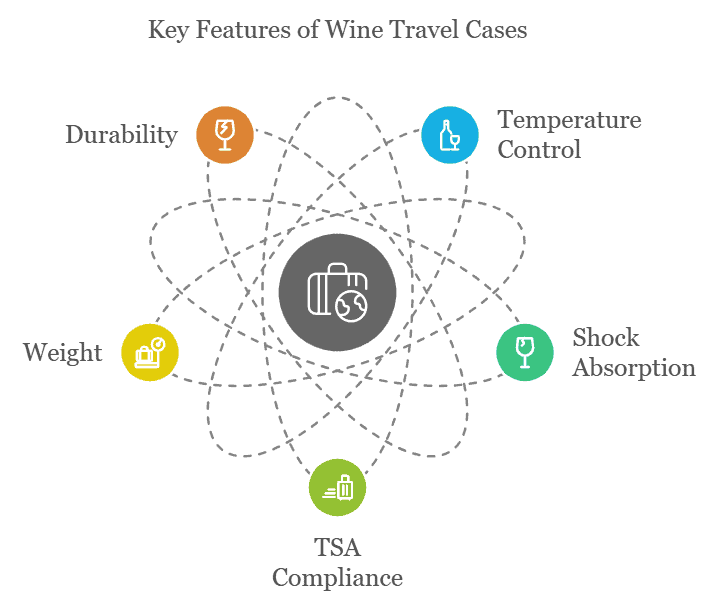
- Essential features include shock absorption, temperature control, and TSA compliance
- Prices range from $50 to $500+ depending on features and capacity
- Hard-shell cases offer maximum protection for air travel
- Consider weight restrictions when choosing a travel case
Types of Wine Travel Cases
Let me tell you about my journey discovering different wine travel cases – it’s been quite an adventure! I started out thinking a simple padded bag would do the trick, but boy, was I wrong. After a heartbreaking incident where my prized Bordeaux didn’t survive a bumpy flight (RIP, beautiful bottle), I’ve become somewhat of an expert on wine transport solutions.
Hard-shell protective cases are the absolute gold standard for serious wine travelers. Think of them as the tank of wine transportation – virtually indestructible and worth every penny if you’re carrying valuable bottles. I’ve personally tested dozens of these bad boys, and they’re especially clutch for air travel.
The padded soft-side carriers are my go-to for local wine tours or short road trips. They’re lighter than hard cases and usually more affordable, plus they’ve got this nice flexibility that lets you squeeze them into tight spaces. Just remember they won’t give you the same level of protection as hard cases.
One game-changing discovery was inflatable wine protectors – these nifty little innovations are perfect for throwing in your suitcase when you’re not sure if you’ll be bringing wine back. They take up practically no space until you need them! Though I’ve gotta warn you – make sure to test the inflation before your trip. Learn from my mistakes!
Rolling wine suitcases have literally saved my back on numerous occasions. For those bigger hauls (hello, wine country shopping sprees!), having wheels makes all the difference. Some even come with neat organizational features like adjustable dividers and extra pockets for your wine opener and tasting notes.
Essential Features to Consider
After nearly ruining a spectacular Pinot Noir during a hot summer road trip, I learned the hard way that temperature control isn’t just a fancy add-on – it’s absolutely essential. Trust me on this one, folks!
The most crucial features I look for now in any wine travel case start with shock absorption. You’d be amazed at how much jostling happens during travel, even when you’re being super careful. I always test the padding by giving the case a gentle shake – if you hear any clinking, that’s a hard pass.
TSA compliance has become my obsession since that awkward moment when I had to repack my wines at the airport security check. The best cases now come with TSA-approved locks and clear documentation about airline regulations. Pro tip: look for cases that specifically mention “TSA-approved” in their descriptions.
Weight is another biggie that often gets overlooked. I made the rookie mistake of buying a gorgeous heavy-duty case, only to realize it ate up half my airline weight allowance before I even packed a single bottle! Now, I always check the empty case weight and do some quick math for fully loaded scenarios.
The durability of materials matters more than you might think. Those heavy-duty zippers and reinforced corners? Worth their weight in gold when you’re rushing through a crowded airport or stuffing the case in an overhead compartment on a train.
Size and Capacity Considerations
I’ve got a funny story about size considerations – I once bought what I thought was the perfect wine travel case for a Napa Valley trip, only to realize it was way too big to fit in my rental car’s trunk! Live and learn, right?
Single bottle carriers are perfect for those special occasions when you’re transporting just one precious bottle. I use mine all the time for dinner parties or when I’m gifting a special vintage. They’re super portable and don’t take up much storage space when not in use.
For serious wine shopping, multi-bottle cases are the way to go. Through trial and error, I’ve found that 6-bottle cases hit the sweet spot for most trips. They’re manageable weight-wise (remember, each bottle adds about 3 pounds), and they usually stay within airline restrictions.
Speaking of airlines – here’s something I wish someone had told me earlier: always check your specific airline’s weight restrictions before you travel. Most carriers limit checked bags to 50 pounds, and those bottles add up quickly! I now keep a little cheat sheet with different airlines’ rules on my phone.
Material and Construction Quality
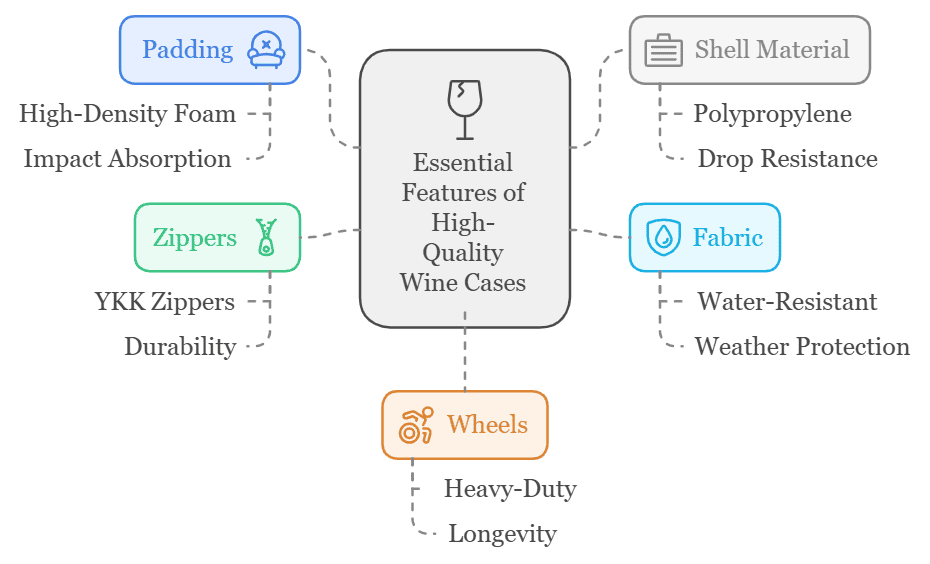
After seeing my fair share of wine casualties due to poor construction, I’ve become something of a materials snob. High-density foam padding isn’t just a nice-to-have – it’s absolutely essential. I learned this lesson the hard way when a cheaper case with basic foam failed to protect my bottles during a particularly turbulent flight.
The polypropylene shells used in high-end cases are seriously impressive stuff. I recently dropped my case (accidentally, of course!) on concrete, and while my heart stopped for a moment, every bottle survived without a scratch. That’s the kind of protection worth investing in!
Water-resistant fabrics are another feature I won’t compromise on anymore. Got caught in a sudden downpour once while walking from a wine tasting to my car – the case that claimed to be water-resistant proved its worth that day! Look for YKK zippers, too – they’re basically the gold standard for durability.
Heavy-duty wheels aren’t just about convenience – they’re about longevity. I’ve had cases where the wheels started wobbling after just a few trips, which is super annoying when you’re running to catch a flight. Now, I always give the wheels a good test run before purchasing.
Temperature Control Features
Let’s talk about keeping your precious wines at the right temperature – something I became obsessed with after a particularly warm Italian wine tour nearly ruined my carefully selected bottles. The right insulation can make or break your wine traveling experience.
Different types of insulation offer varying levels of temperature maintenance. I’ve found that cases with double-wall insulation and thermal barriers tend to perform best. They might be a bit pricier, but they’re worth every penny when you’re trying to protect your wines from temperature fluctuations.
Hot versus cold protection is actually two different beasts. Most cases focus on keeping wines cool, but if you’re traveling through extreme climates, you’ll want something that can handle both. I learned this lesson during a desert road trip – my wines got way too warm despite being in what I thought was a decent case.
Climate considerations should really drive your choice of temperature control features. For instance, if you’re mainly doing wine touring in cooler regions, you might not need the most advanced thermal protection. But for summer travel or warmer climates, look for cases with additional cooling options like gel pack compartments.
Travel Regulations and Compliance
Navigating travel regulations with wine can feel like trying to solve a puzzle blindfolded – trust me, I’ve been there! After nearly having to abandon some precious bottles at customs (thankfully, a kind agent helped me out), I’ve become super diligent about checking regulations beforehand.
TSA guidelines are actually pretty straightforward once you get to know them. The key is having your wines properly packaged and declared. Pro tip: always keep a printout of the current regulations with your case – it’s saved me from some potentially awkward discussions with security staff.
International travel adds another layer of complexity. Each country has different rules about how much wine you can bring in, and some even have restrictions on value rather than just quantity. I always check both departure and arrival country regulations now – I learned that one the hard way!
Documentation is crucial for smooth travel. Keep those receipts, and if you’re traveling with particularly valuable bottles, consider getting them appraised and documented before your trip. It might seem like overkill, but it definitely comes in handy for insurance claims.
Price Range and Value Analysis
When it comes to wine travel cases, I’ve learned that “you get what you pay for” isn’t just a cliché – it’s the gospel truth! Starting with a budget case around $50 might seem tempting (been there, done that), but trust me, it’s worth investing in something more reliable if you’re serious about protecting your wines.
Mid-range solutions between $100-$250 typically offer the best balance of protection and value. These cases usually include essential features like decent insulation and shock absorption without breaking the bank. I’ve found this price range to be the sweet spot for most wine enthusiasts who travel occasionally.
Premium cases ($250-$500+) might seem excessive, but for frequent travelers or those transporting valuable wines, they’re worth every penny. My premium case has paid for itself multiple times over by preventing breakage and temperature damage. Plus, many come with solid warranty coverage – always a good sign of quality.
The long-term investment value really becomes apparent when you consider replacement costs for damaged wines. One broken bottle of premium wine could cost more than a good quality case! I now view my wine travel case as insurance for my wine investments.
Top Recommendations by Travel Type
After years of trial and error (and more than a few wine casualties), I’ve developed a pretty good sense of which cases work best for different types of travel. For air travel, you absolutely can’t beat a hard-shell case with TSA-approved locks and professional-grade padding. The VinGardeValise, Grande 12-Bottle Wine Suitcase has been my trusted companion for many flying adventures.
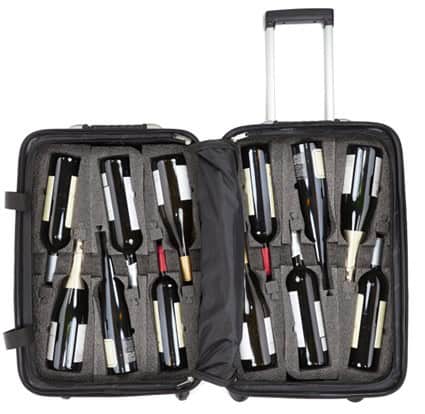
Road trips give you more flexibility with your choice of wine travel case. I love using carriers with extra insulation for these journeys. The Wine Enthusiast 6-Bottle Travel Suitcase has been perfect for those spontaneous weekend getaways to wine country.

Train travel presents its own unique challenges – you need something maneuverable yet sturdy. Rolling cases with good handles work great here. I’ve had fantastic experiences with the Wine Check travel bag, which converts from a roller to a shoulder bag when needed.
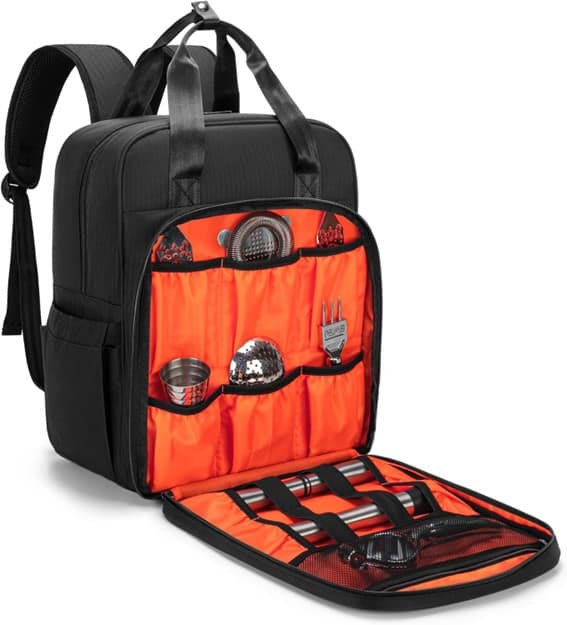
For wine tours, I recommend cases that balance protection with portability. You don’t want to be lugging around something too heavy when you’re hopping between wineries. The CURMIO Bartender Bag, for 6 bottles, made from water-resistant material, has been my go-to for wine country adventures – it’s lightweight but still offers solid protection.
FAQ – Wine Travel Case
- Q: Can I take a wine travel case as carry-on luggage? A: Most airlines require wine to be checked due to liquid restrictions. Always verify with your specific airline.
- Q: How many bottles can a typical wine travel case hold? A: Wine travel cases range from single bottle carriers to cases that hold up to 12 bottles.
- Q: What’s the best material for a wine travel case? A: Hard-shell polypropylene cases with foam padding offer the best protection for air travel.
- Q: How much should I expect to spend on a quality wine travel case? A: Quality cases range from $100-$300, with premium options exceeding $500.
- Q: Are wine travel cases TSA-approved? A: Many are designed to meet TSA guidelines, but check specific models for compliance.
- Q: What features should I prioritize for air travel? A: Focus on shock absorption, sturdy construction, and TSA-approved locks.
- Q: How long do insulated cases maintain temperature? A: Quality insulated cases can maintain temperature for 6-24 hours, depending on external conditions.
- Q: Can wine travel cases be used for other beverages? A: Yes, they can protect any similarly sized bottles, including champagne and spirits.
- Q: What’s the weight limit for most wine travel cases? A: Consider both the case weight (typically 5-15 lbs empty) and airline restrictions when fully loaded.
- Q: Are wheeled wine travel cases worth the extra cost? A: For frequent travelers or those carrying multiple bottles, wheels can significantly improve convenience.
- Q: How do I clean a wine travel case? A: Most cases can be wiped clean with a damp cloth; some have removable, washable liners.
- Q: What’s the difference between soft and hard-shell cases? A: Hard-shell cases offer superior protection but less flexibility; soft cases are lighter and more adaptable.
- Q: Can I store my wine travel case in extreme temperatures? A: Store cases at room temperature to maintain the integrity of protective materials.
- Q: Are there special considerations for international travel? A: Check customs regulations and airline policies for international wine transport.
- Q: How long should a quality wine travel case last? A: A well-maintained case should last 5-10 years with regular use.
Conclusion
Investing in the right wine travel case is essential for any wine enthusiast who loves to explore and collect. By considering the factors we’ve discussed – from protection features to travel compliance – you’ll be well-equipped to choose the perfect case for your needs.
Remember, the best wine travel case is one that not only protects your precious cargo but also suits your specific travel style and requirements.
Happy wine traveling and Cheers!
For your reference, the latest articles by Didi Somm include:
- Smart Wine Cellar Monitors: Best Performers Selected For You
- Expert Guide to Portable Wine Storage: All You Need to Know
- 10 Best Tips For Transporting Wine Safely: Your Expert Guide
- Best Wine Temperature During Transport – All You Need To Know
- Wine Vibration During Transport: Get 7 Expert Tips and More
- Best Portable Wine Coolers – Get Our Expert Tips Here
Important Notice: The information in this article is for general and public information purposes only. It solely reflects Didi Somm’s or his Staff’s opinion, and no responsibility can be assumed for errors or omissions in the service’s contents. For details, please check the Disclaimer at the bottom of the homepage.
