
Did you know that storing wine at the wrong temperature can reduce its lifespan by up to 50%?
As wine enthusiasts, we understand the importance of proper storage conditions for preserving and aging our favorite bottles. Choosing the right wine fridge is crucial whether you’re just starting your collection or looking to upgrade your storage solution.
In this comprehensive guide, I’ll walk you through everything you need to know to choose wine fridge that meets your needs and protects your investment.
Welcome to Didi Somm, and Cheers!
Important Notice: The information in this article is for general and public information purposes only. It solely reflects Didi Somm’s or his Staff’s opinion, and no responsibility can be assumed for errors or omissions in the service’s contents. For details, please check the Disclaimer at the bottom of the homepage.
Key Takeaways
- Temperature control is the most critical factor in wine storage
- Consider your collection size and future growth when selecting capacity
- Dual-zone fridges offer versatility for storing different wine types
- Installation location affects the type of wine fridge you should choose
- Budget considerations should include long-term energy efficiency
- Proper humidity levels are essential for cork preservation
Understanding Wine Storage Basics
Let me tell you, getting wine storage temperatures right is something I learned the hard way after ruining a few precious bottles in my early collecting days.
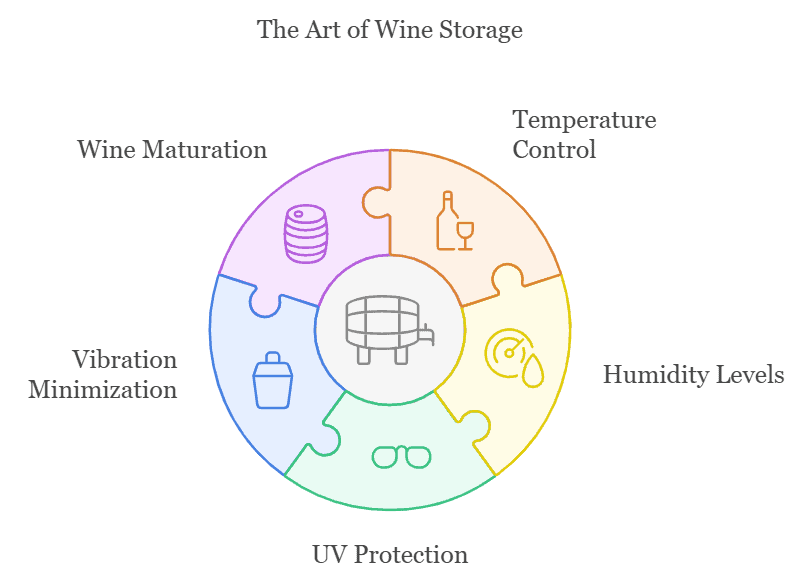
The science behind proper wine storage is fascinating – and crucial. Wine needs to be kept at a consistent temperature between 45-65°F (7-18°C), with 55°F (13°C) being the sweet spot for long-term aging. I’ve found that even small temperature fluctuations can be devastating to wine quality. When temperatures swing up and down, the wine expands and contracts, which can push against the cork and allow unwanted oxygen to seep in.
Speaking of corks, maintaining proper humidity (60-70%) is absolutely essential. I once stored some bottles in a too-dry environment, and the corks dried out and crumbled – a heartbreaking lesson! Light exposure is another silent wine killer. UV rays can trigger chemical reactions that create off-flavors and aromas, which is why traditional wine cellars are dark.
As for storage position, I always keep my bottles horizontal. This keeps the cork moist and maintains its seal, though sparkling wines can handle upright storage for a year or two since the carbon dioxide helps preserve the cork’s moisture.
Types of Wine Fridges Available
Over my years of collecting, I’ve experimented with various wine fridge types and boy, what a learning experience that’s been!
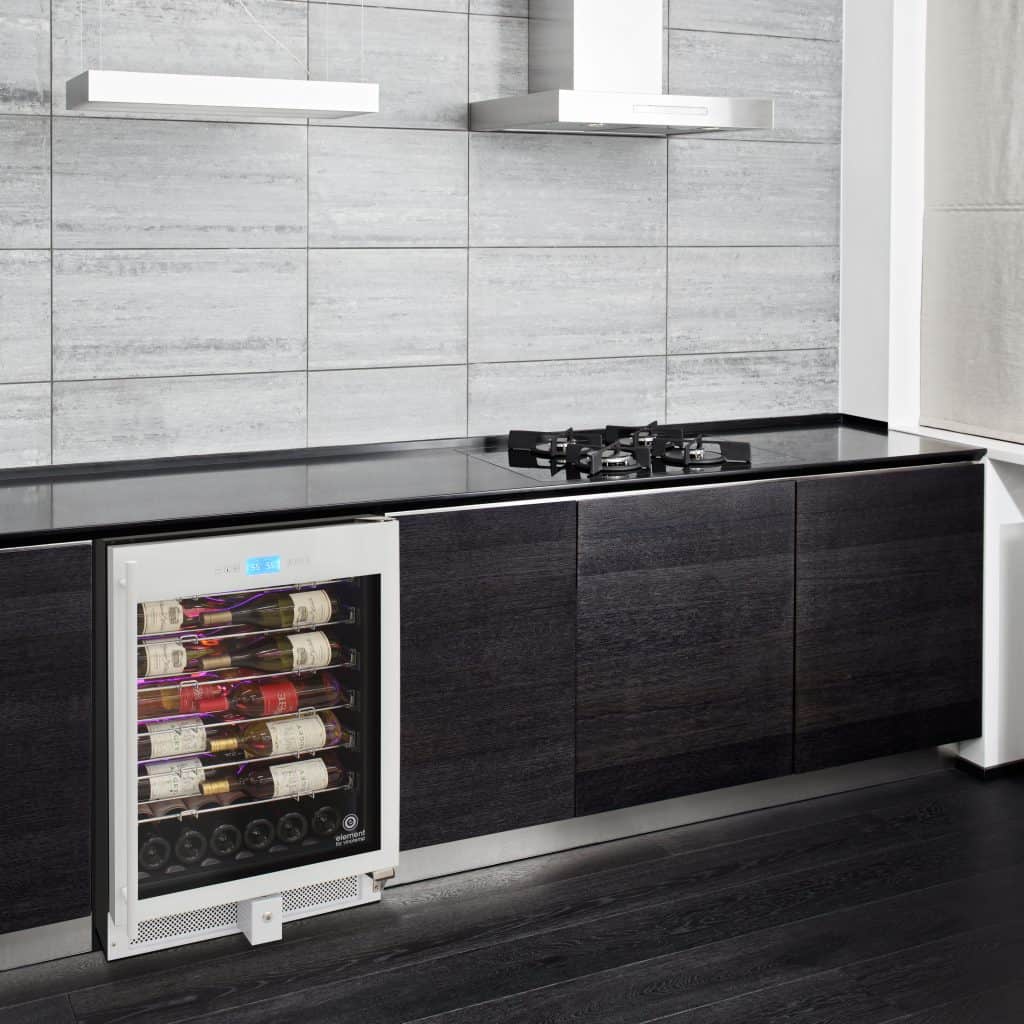
Let’s start with freestanding versus built-in models. Freestanding units are great if you want flexibility in placement, but they need breathing room on all sides. Built-in models, which I eventually chose for my kitchen renovation, are designed to be installed under counters with front-facing ventilation.
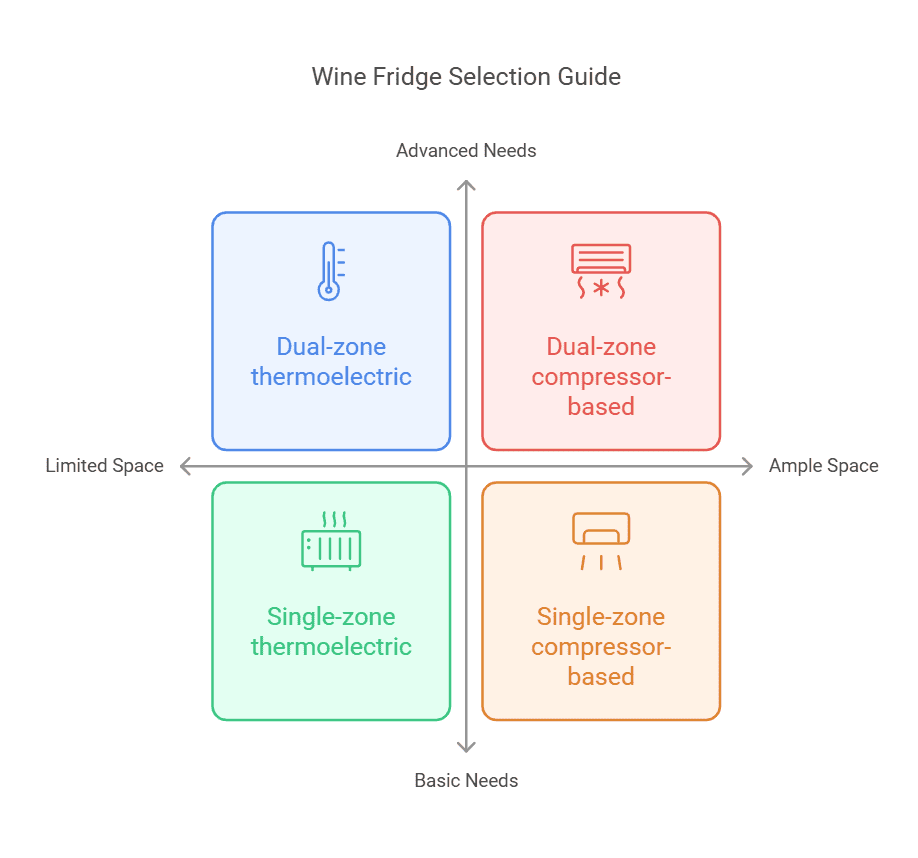
The choice between single-zone and dual-zone cooling really depends on your collection. I started with a single-zone unit, but as my collection grew to include both reds and whites, I upgraded to a dual-zone model that lets me keep whites at 45°F and reds at 55°F.
When it comes to cooling systems, thermoelectric units are whisper-quiet and vibration-free, perfect for smaller collections up to 50 bottles. However, my current compressor-based system, while slightly noisier, maintains temperature much more effectively, especially during hot summers.
Under-counter units are fantastic space-savers, typically holding 30-50 bottles, while full-height units can store 100-300 bottles. Counter-depth versus standard-depth is another consideration – I opted for counter-depth in my kitchen for a sleek, built-in look, though it meant sacrificing a few bottles of capacity.
Affiliate Disclaimer: This page may include Affiliate links, meaning that we get a commission if you decide to purchase through this site at no extra cost to you. Please read our Disclaimer for your info.
Determining the Right Size
Trust me on this one – when it comes to wine fridge size, always go bigger than you think you need!
I started with what I thought was a generous 30-bottle unit, only to find myself running out of space within months. Here’s a pro tip I wish I’d known earlier: Take your current collection size and add 50% to account for future growth.
Don’t forget to consider bottle shapes, too – those gorgeous Burgundy and Champagne bottles take up more space than standard Bordeaux bottles. I’ve found that a good rule of thumb is to assume about 30% of your collection might be larger format bottles.
When calculating space requirements, I always measure my available space three times (learned that one the hard way!) and consider door swing clearance. Shelf configuration is crucial, too – look for adjustable shelves that can accommodate different bottle sizes. My current unit has a mix of sliding and fixed shelves, with a bulk storage section at the bottom for those special cases I couldn’t resist purchasing.
Essential Features to Consider
When I first started exploring wine fridges, I was overwhelmed by all the features available. Now, after years of experience, I know exactly what matters most.
Temperature Control Precision
Temperature control precision is absolutely non-negotiable – you want a unit that maintains temperature within ±1°F. My current fridge has a digital temperature control that’s accurate to 0.1 degrees, and it’s been a game-changer.
Humidity Management
Humidity management is another critical feature that I learned about after finding some dried-out corks in my first basic unit. Look for models with humidity control systems that maintain levels between 60-70%.
UV-Protected Glass Doors
UV-protected glass doors are worth every penny – I once stored some precious Burgundies near a window, and even with tinted glass, the wine aged prematurely.
Vibration Reduction Technology
Vibration reduction technology might seem like a luxury, but it’s essential for long-term storage. Wine doesn’t like to be disturbed, and excessive vibration can impact its aging process.
Digital Displays
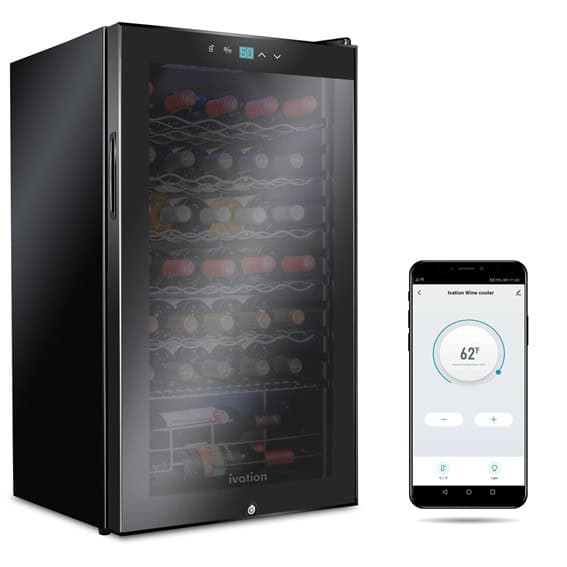
Digital displays make monitoring conditions easy, and security features like locks are crucial if you’re investing in valuable bottles. I actually added a smart monitoring system that alerts me if there are any temperature fluctuations or power outages.
Installation and Placement Guidelines
After installing three different wine fridges in various homes, I’ve learned that proper placement is crucial for optimal performance.
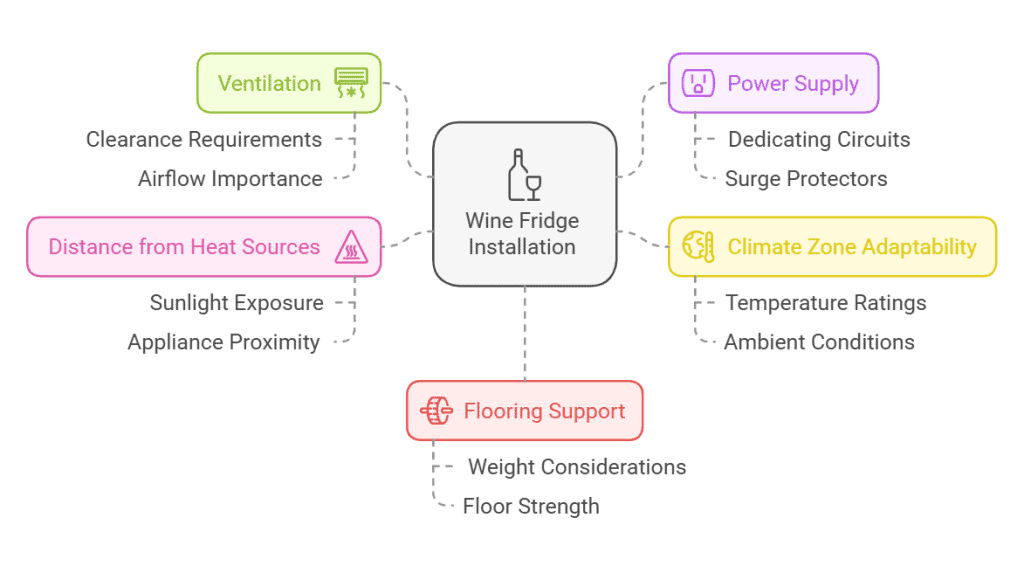
Ventilation is your number one priority – my first fridge struggled because I didn’t leave enough clearance for proper airflow, which made the compressor work overtime. Each unit has specific ventilation requirements, typically needing at least 2-3 inches of clearance on the sides and rear for freestanding models.
Power supply is another critical factor – I always recommend having a dedicated circuit for your wine fridge to prevent overloading and ensure stable power. My current setup includes a surge protector specifically designed for wine fridges.
Climate zone adaptability is essential, too; I live in an area with hot summers, so I made sure to choose a unit rated for ambient temperatures up to 90°F.
Distance from heat sources is crucial – keep your unit away from direct sunlight, ovens, and dishwashers. I learned this the hard way when my first fridge worked overtime because it was too close to my dishwasher.
Don’t forget about flooring support – a fully loaded wine fridge can weigh hundreds of pounds, so ensure your floor can handle the weight.
Budget and Value Considerations
After spending thousands on wine fridges over the years, I’ve learned to look beyond the initial price tag.
A quality wine fridge is an investment in protecting your wine collection. Initial purchase costs can range from $500 for a basic 30-bottle unit to $5,000+ for a premium 300-bottle cabinet, but here’s what I’ve learned: spending more upfront often saves money in the long run.
Energy efficiency is crucial – my current unit is Energy Star rated and costs about $30 less per year to operate than my previous model. Maintenance expenses should also be a factor in your budget. I budget about $100-200 annually for routine maintenance, which has helped prevent costly repairs.
When it comes to warranty coverage, I always opt for extended protection on higher-end units. My latest fridge came with a 5-year warranty that has already paid for itself after a compressor issue was fixed at no cost. Consider the long-term value – quality units from reputable manufacturers typically last 10-15 years with proper maintenance, making them a worthwhile investment for any serious wine collector.
FAQ – Choose Wine Fridge
- Q: What is the ideal temperature for storing wine? A: The optimal temperature range is between 45-65°F (7-18°C), with 55°F (13°C) being perfect for long-term storage.
- Q: Do I need a dual-zone wine fridge? A: If you collect both red and white wines, a dual-zone fridge is recommended as different wines require different serving temperatures.
- Q: How many bottles can a wine fridge hold? A: Capacity ranges from 6 to 300+ bottles, depending on the model. Consider your current collection size plus 30% for future growth.
- Q: What’s the difference between built-in and freestanding wine fridges? A: Built-in units have front ventilation for under-counter installation, while freestanding units require space around them for proper ventilation.
- Q: How much does a quality wine fridge cost? A: Prices range from $200 for small units to $5,000+ for premium models, with mid-range options between $800-2,000.
- Q: Are thermoelectric or compressor cooling systems better? A: Compressor systems are more powerful and efficient for larger collections, while thermoelectric units are quieter and vibration-free but better suited for smaller capacities.
- Q: How long do wine fridges typically last? A: A quality wine fridge should last 10-15 years with proper maintenance.
- Q: What humidity level should a wine fridge maintain? A: The ideal humidity range is 60-70% to keep corks properly moisturized.
- Q: Can I store my wine fridge in the garage? A: Not recommended, as extreme temperature fluctuations in garages can affect performance and energy efficiency.
- Q: How much electricity does a wine fridge use? A: Energy consumption varies, but most units use 100-150 kWh annually, similar to a small refrigerator.
- Q: Should I choose a glass or solid door? A: UV-protected glass doors allow you to showcase your collection, while solid doors offer better temperature stability and energy efficiency.
- Q: What maintenance does a wine fridge require? A: Regular cleaning, door seal checks, and temperature monitoring are essential. Professional servicing is recommended annually.
- Q: Can I store other beverages in my wine fridge? A: While possible, it’s not recommended as wine requires specific temperature and humidity conditions.
- Q: How do I prevent vibration damage to my wines? A: Choose a fridge with anti-vibration features and avoid placing it near appliances that generate vibration.
- Q: What warranty should I look for? A: Look for at least a 2-year warranty on parts and labor, with extended coverage available for premium models.
Conclusion
Selecting the right wine fridge is a crucial decision for any wine enthusiast. By considering factors like size, temperature control, installation requirements, and budget, you can find the perfect unit to protect and preserve your collection.
Based on my own experience, I highly recommend you invest in quality now to ensure your wines age gracefully and maintain their intended flavors for years to come.
Ready to start shopping? Use this guide as your companion in finding the ideal wine fridge that meets all your storage needs!
Enjoy your wine journey, and Cheers!
For your reference, the latest articles by Didi Somm include:
- Commercial Wine Cellar Humidity – Best Expert Advice
- Wine Cellar Lighting Options: Latest Insights And Best Guide
- Commercial Wine Racking Systems: All You Need To Know
- Top Commercial Wine Inventory Management Software: All You Need To Know
- Wine Storage Vibration Control: Best Advice For Commercial Storage
- The Ultimate Wine Refrigerator Guide: Best Expert Tips For You
Important Notice: The information in this article is for general and public information purposes only. It solely reflects Didi Somm’s or his Staff’s opinion, and no responsibility can be assumed for errors or omissions in the service’s contents. For details, please check the Disclaimer at the bottom of the homepage.


