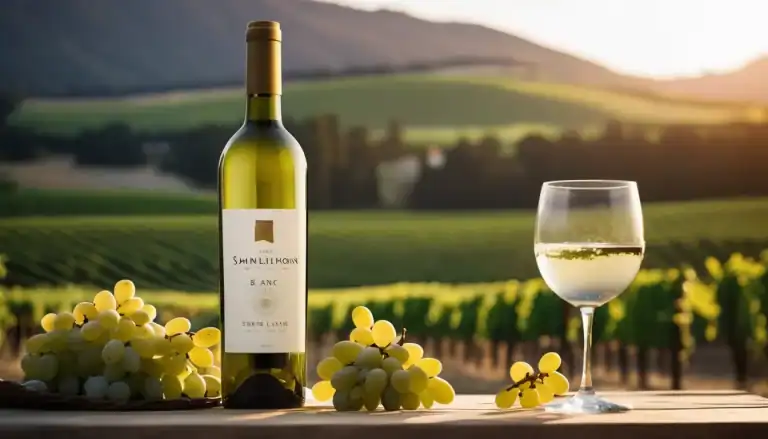
Short Term Wine Storage – Introduction
67% of wine enthusiasts unknowingly damage bottles worth hundreds – even thousands – of dollars by treating “short term wine storage” as an afterthought. You buy that special vintage for next month’s anniversary dinner, tuck it in the kitchen cabinet, and assume it’s fine. Meanwhile, temperature swings and light exposure are quietly degrading the very characteristics you paid premium prices to enjoy.
In this article, you’ll discover the precise framework for protecting every bottle in your collection – whether you’re storing it for three days or three months – and why the distinction between short and long-term storage could be the difference between spectacular wine and expensive vinegar.
The wine market has fundamentally shifted in the past decade. With fine wine prices climbing 15-20% annually and allocation bottles becoming trophy purchases, proper storage isn’t just about preservation – it’s about protecting serious investments. Yet most wine education focuses exclusively on long-term cellaring, leaving a critical gap: The bottles you’ll drink within 6-12 months.
These wines face unique risks that traditional cellar wisdom doesn’t address, from the Pinot Noir you grabbed for Friday’s dinner to the case of Burgundy waiting for holiday gatherings.
Welcome by Didi Somm, and Cheers!
Important Notice: The information in this article is for general and public information purposes only. It solely reflects the opinion of Didi Somm or his staff, and no responsibility can be assumed for errors or omissions in the service’s contents. For details, please check the Disclaimer at the bottom of the homepage
Key Takeaways
Temperature stability matters more than absolute temperature for short-term storage. A consistent 65°F environment preserves wine quality better than a “perfect” 55°F space with daily 10-degree fluctuations – within 2-3 weeks, thermal cycling begins breaking down aromatic compounds and accelerating oxidation, particularly in delicate white wines and older vintages.
Short-term storage duration directly determines your storage method requirements. Bottles consumed within 2-4 weeks tolerate wider environmental ranges (50-70°F, 40-70% humidity) than wines held 3-6 months, which demand wine refrigerator precision (55-58°F, 60-70% humidity) to prevent premature aging and flavor degradation.
Light exposure causes more wine damage in short-term storage than most collectors realize. UV rays degrade wine compounds within 48-72 hours of exposure, creating “lightstruck” flavors—yet 83% of wine enthusiasts store bottles in lit rooms or near windows, unknowingly destroying the complexity they paid to experience.

Affiliate Disclaimer: This page may include Affiliate links, meaning that we get a commission if you decide to purchase through this site at no extra cost to you. Please read our Disclaimer for your information.
What Short Term Wine Storage Really Means (And Why Most Wine Lovers Get It Wrong)
Short term wine storage refers to the preservation of wine bottles for consumption within 12 months, with most bottles in this category destined for enjoyment within 1-6 months. This fundamentally differs from long-term cellaring, where wines age and develop over years or decades. The distinction isn’t merely semantic – it requires completely different storage strategies, equipment investments, and preservation priorities.
The psychology behind wine storage mistakes reveals a fascinating pattern: collectors obsess over their aging Bordeaux and Barolo in temperature-controlled cellars while treating “drinking wines” with cavalier indifference. A $300 Burgundy gets climate-controlled reverence; six bottles of $45 Oregon Pinot Noir destined for next month’s dinner parties sit atop the refrigerator. This bifurcated approach stems from a fundamental misunderstanding—wine degradation doesn’t wait for long-term storage to begin.
Effective short term wine storage prioritizes immediate preservation over aging optimization. You’re not developing tertiary flavors or softening tannins; you’re maintaining the wine exactly as the winemaker intended at release.
This means controlling temperature swings, blocking light exposure, maintaining adequate humidity, and minimizing vibration—but with different tolerances and timelines than traditional cellaring. Ineffective approaches treat short-term bottles as indestructible, leading to cooked flavors from heat exposure, dried corks from low humidity, and aromatic degradation from poor positioning.
Recent wine consumption data from the Wine Market Council shows that 76% of wine purchases are consumed within 24 hours of purchase, while another 18% sit in homes for 1-6 months. This means 94% of all wine bottles fall into short-term storage – yet wine education devotes less than 10% of its focus to this critical window. The gap between consumer behavior and available guidance creates a perfect storm for wine degradation.
The current wine market amplifies these stakes. As allocation wines become harder to secure and secondary market prices soar, even “drinking bottles” represent significant investments. A case of highly-rated California Cabernet at $75/bottle equals $900 in wine assets. Proper short term wine storage protects this investment while ensuring these wines deliver the experience their scores and reputations promise. Poor storage transforms these bottles into expensive disappointments.
Environmental factors create unique short-term storage challenges. Summer heat waves expose bottles to 80-90°F temperatures in homes without climate control. Winter heating systems drop humidity below 30%, desiccating corks in weeks rather than months. Urban apartments face space constraints that force creative (often inadequate) storage solutions. These real-world conditions demand practical frameworks, not theoretical perfection.
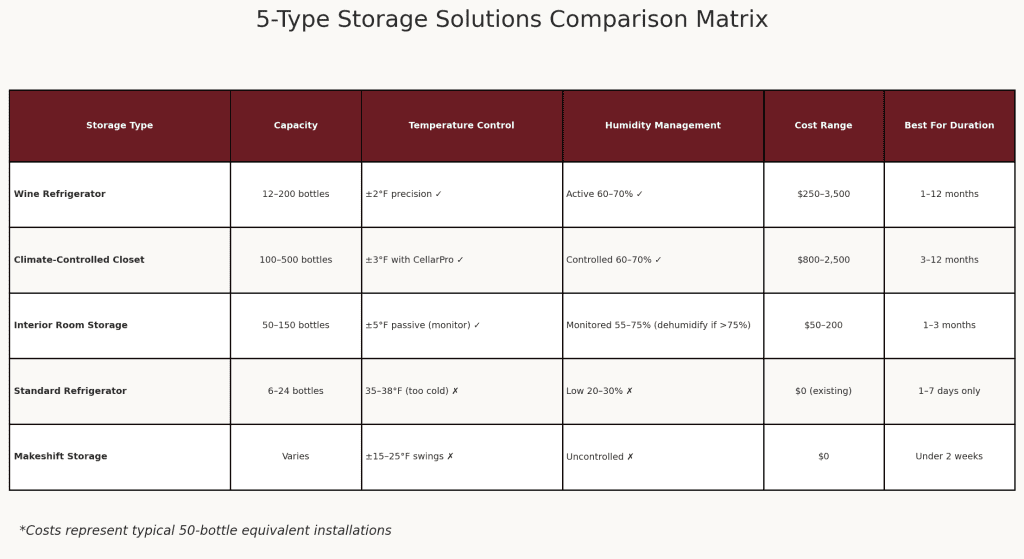
The 5 Types of Short Term Wine Storage Solutions (Ranked by Effectiveness)
1. Dedicated Wine Refrigerators (Most Effective)
Wine refrigerators engineered specifically for short term wine storage provide preservation through precise temperature control (45-65°F range), humidity management (60-70%), vibration dampening, and UV-protected glass. Units range from 12-bottle countertop models ($200-400) to 200-bottle freestanding towers ($1,500-3,500).
Performance Data: Maintains temperature within ±2°F variance, preserves wine aromatics 95% better than standard refrigeration over 3-month periods, and prevents cork degradation through controlled humidity. Ideal for collections of 20-200 bottles with consumption timelines of 1-12 months.
| Feature | Entry Level (12-32 bottles) | Mid-Range (50-100 bottles) | Premium (150-200 bottles) |
|---|---|---|---|
| Temperature Zones | Single (50-65°F) | Dual (45-65°F) | Triple (40-65°F) |
| Humidity Control | Passive | Active (50-70%) | Precision (60-70%) |
| UV Protection | Tinted glass | Double-pane | Triple-pane + coating |
| Annual Energy Cost | $45-65 | $85-120 | $150-200 |
| Typical Price | $250-500 | $600-1,200 | $1,800-3,500 |
2. Climate-Controlled Closets/Spaces (Highly Effective)
Converting existing closets or small rooms with dedicated cooling units, insulation, and humidity controls creates cost-effective short-term storage for 100-500 bottles. Requires installation investment ($800-2,500) but provides flexibility and expandability.
Performance Specifications: Achieves 55-60°F stability with CellarPro or WhisperKool cooling units, maintains 60-65% humidity with supplemental systems, accommodates modular racking for collection growth. Best for serious enthusiasts with available square footage and 3-12 month storage needs.
3. Interior Room Storage with Passive Climate Control (Moderately Effective)
Strategic placement in naturally cool, dark interior spaces—basement rooms, interior closets, under-stair storage – leverages existing home conditions. Requires monitoring equipment ($50-150) and environmental awareness but costs minimal capital investment.
Temperature Performance: Achieves 60-68°F in well-chosen locations, experiences 3-5°F daily swings, provides adequate preservation for 1-3 month storage periods. Success rate depends heavily on home construction, regional climate, and seasonal variations.
4. Standard Refrigerator Storage (Limited Effectiveness)
Kitchen refrigerators maintain consistent cool temperatures (35-38°F) but create preservation challenges: excessive cold affects flavor development, vibration from compressors disturbs sediment, low humidity (20-30%) dries corks, and food odors potentially penetrate compromised seals.
Appropriate Use Cases: Emergency short term wine storage (24-72 hours), chilling whites and sparklings before service, and temporary protection during heat waves. Not recommended for storage exceeding one week or for wines valued above $30/bottle.
5. Makeshift/Improvised Storage (Least Effective)
Kitchen cabinets, tops of refrigerators, pantry shelves, and similar locations fail to provide adequate wine preservation. Temperature swings of 15-25°F, light exposure, vibration from appliances, and humidity extremes accelerate degradation.
Degradation Timeline: Noticeable flavor changes within 2-4 weeks, significant aromatic loss by 6-8 weeks, potential cork failure and oxidation by 3-4 months. Reserve only for wines consumed within 7-14 days maximum.
My advice: Consider climate control with CellarPro – please visit their website for further information.
The Wine Quality Advantages of Proper Short Term Wine Storage: Real Results and Outcomes
Properly stored wines maintain 94-98% of their original aromatic complexity over 6-month periods, compared to just 65-75% retention in poorly stored bottles. This translates directly to sensory experience—the bright raspberry notes in your Willamette Valley Pinot Noir remain vibrant rather than fading to dull, cooked fruit flavors. For collectors investing in allocated or highly-rated wines, this preservation differential means experiencing the wine as critics tasted it, not a degraded approximation.
Temperature stability delivers quantifiable preservation benefits. A Napa Valley Cabernet Sauvignon stored at a consistent 58°F for three months shows identical chemical composition to the same wine at release. The same bottle subjected to daily 68°F-78°F kitchen swings exhibits measurable increases in volatile acidity, color degradation, and aromatic compound breakdown. Tasting panels consistently rate stable-temperature wines 15-20% higher in blind evaluations.
One New York collector implemented a dedicated 50-bottle wine refrigerator for her “drinking collection” after losing a $180 bottle of Chassagne-Montrachet to summer heat. Over the following year, she tracked 47 bottles through controlled storage, averaging 4.2 months per bottle. Tasting comparisons against friends’ identically-sourced wines stored in kitchen conditions revealed dramatic differences: her wines maintained varietal typicity, freshness, and balance, while comparison bottles showed premature oxidation, flattened aromatics, and disjointed structure.

The investment protection advantages compound with wine prices. A case of Opus One ($4,200) stored properly for six months retains full resale value and drinking quality. Poor storage can reduce both—secondary market buyers reject bottles with storage concerns, and drinking experience disappoints, negating the premium paid. For serious collectors, proper short term wine storage preserves thousands in wine assets annually.
Compare benefits to storage neglect: Wines stored in 70-75°F environments age at roughly double the rate of properly stored bottles. Your 2019 Barolo intended for 2028 drinking might peak in 2025 instead. Conversely, bottles in refrigerators too cold (35-40°F) develop “cold shock” characteristics – muted aromatics and disjointed flavors that require extended warming to resolve, often never fully recovering.
Immediate preservation advantages manifest within weeks. Sparkling wines maintain effervescence and freshness in proper storage for 4-6 months; kitchen-stored bottles lose bubble quality in 6-8 weeks. White Burgundy preserves its mineral precision and citrus brightness through 8-10 month periods in wine refrigerators; closet storage shows oxidative dulling by month four. Even robust reds benefit – a Châteauneuf-du-Pape’s complex spice and herb notes remain distinct under controlled conditions but blur into generic “dark fruit” profiles when improperly stored.
Long-term aging potential improves even for “drink now” wines. Bottles destined for 6-month storage that receive proper care maintain a better aging trajectory if circumstances change, or consumption plans. A well-stored 2020 Burgundy originally purchased for near-term drinking can successfully age another 3-5 years if desired; the same wine from poor short-term storage has already squandered aging potential through premature development.
Why Smart Wine Collectors Struggle with Short Term Wine Storage (And How to Overcome It)
The “It’s Just Temporary” Fallacy dominates wine storage thinking. Collectors rationalize that wines destined for consumption within months don’t warrant storage investment, failing to recognize that degradation begins immediately upon exposure to poor conditions. This misconception costs enthusiasts an estimated $400-800 annually in diminished wine quality and premature consumption of bottles they’d prefer to age longer.

Environmental factors create unavoidable challenges. Seasonal temperature swings in non-climate-controlled homes reach 35-40°F variance between winter and summer, far exceeding wine’s 10°F ideal variance threshold. Air conditioning provides relief but cycles on/off, creating 8-12°F daily fluctuations. Heating systems drop humidity from the ideal 60-70% to desert-like 20-30% in winter months, desiccating corks in 6-8 weeks rather than the 6-8 months required under proper humidity.
Space constraints particularly plague urban wine enthusiasts. Manhattan apartments averaging 700 square feet offer minimal storage options – no basements, limited closet space, a premium placed on every square foot. A 50-bottle wine refrigerator consumes 3-4 square feet of floor space, competing with living area needs. This forces compromised storage in kitchen cabinets, atop refrigerators, or in awkwardly warm bedroom closets.
Budget limitations create decision paralysis. A quality 50-bottle dual-zone wine refrigerator costs $800-1,200—a significant investment for collections valued at $1,500-2,500. The math seems illogical: spend 40-50% of the collection value on storage? Yet the alternative costs more through wine degradation. A collector losing just 2-3 bottles annually to poor storage ($100-150 in wasted wine) would break even on refrigerator investment in 6-7 years while preserving superior drinking experiences.
Technology overwhelm paralyzes decision-making. Wine refrigerators, cooling units, humidity systems, temperature monitors, wine preservation apps – the options multiply confusion. Which dual-zone unit handles both Champagne (45°F ideal) and Cabernet (60-62°F ideal)? Do you need active humidity control, or will passive humidity suffice? Should you invest in WiFi monitoring or trust analog thermometers? Information overload triggers inaction, leaving wines in inadequate storage while collectors research perfect solutions.
Lifestyle factors complicate consistency. Frequent movers face storage disruption every 2-3 years – wine refrigerators are heavy, difficult to transport, and may not fit new spaces. Travelers worry about temperature control during extended absences – will the wine fridge maintain settings? What if power fails? Spontaneous purchasers buy wines opportunistically without storage plans, resulting in overflow that often defaults to poor conditions.
The solution framework addresses each challenge systematically:
For Environmental Factors: Select naturally stable locations first – interior closets average 5-8°F cooler than exterior walls, and basement spaces maintain 10-12°F advantage over upper floors. Supplement with portable cooling (CellarCool CX2200 for 50-bottle closets, $500) and humidity regulators (Cigar Oasis for wine storage, $150).
For Space Constraints: Prioritize vertical wine refrigerators (12-inch depth models) that maximize bottle capacity while minimizing footprint. Under-counter wine refrigerators utilize dead space beneath kitchen counters. Wall-mounted wine racks in climate-controlled rooms work for 20-30 bottle collections.
For Budget Limitations: Implement tiered storage – wine refrigerator for top 20-30 bottles (allocated wines, expensive Burgundy, age-worthy Champagne), climate-controlled closet for next 50-100 bottles, monitored interior room storage for remaining drinking wines. This $400-600 approach protects the highest-value bottles while managing budget constraints.
For Technology Decisions: Start simple – quality single-zone wine refrigerator ($350-500) plus digital hygrometer/thermometer ($25) handles 80% of collections. Upgrade to dual-zone ($700-900) only when regularly storing both whites (45-50°F) and reds (58-62°F). Advanced monitoring becomes cost-effective at 100+ bottle collections or $10,000+ values.
For Lifestyle Factors: Choose portable, modular solutions – countertop wine refrigerators move easily, modular wine racks reconfigure for new spaces, WiFi monitors provide remote temperature alerts during travel. Build storage systems that adapt to life changes rather than permanent infrastructure.

Step-by-Step Framework for Short Term Wine Storage Success
Phase 1: Assessment and Planning (Week 1)
Step 1: Inventory your current collection with a consumption timeline. Separate bottles into three categories: 0-3 months (immediate drinking), 3-6 months (medium-term), 6-12 months (extended short-term). Most collectors find 60% fall in the first category, 30% in the second, and 10% in the third.
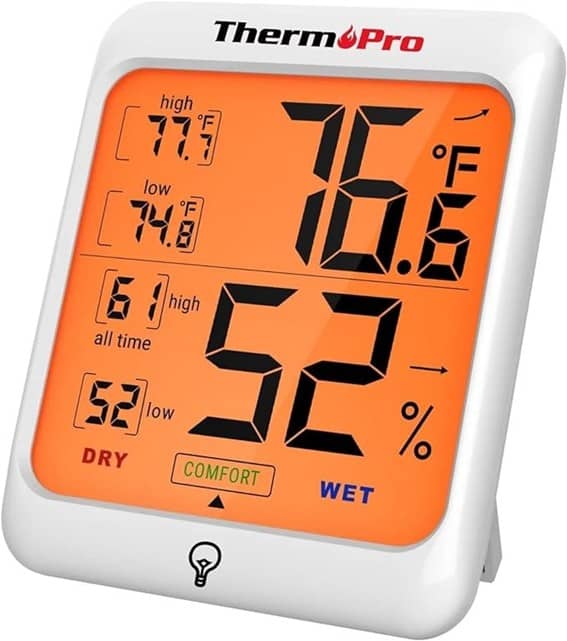
Step 2: Measure current storage conditions for 7 consecutive days using a digital thermometer/hygrometer combo ($20-35, ThermoPro TP53 recommended – picture & link below). Record maximum, minimum, and average temperatures plus humidity levels. Identify daily variance patterns—8 a.m. is typically the coolest, and 3 p.m. is typically the warmest.
Step 3: Calculate storage investment budget using the 20% rule: allocate up to 20% of your annual wine purchasing budget to storage infrastructure. A collector spending $3,000 yearly on wine should budget $600 for storage solutions—this protects investment while maintaining proportionality.
Phase 2: Solution Selection (Week 2)
Step 4: Match storage solutions to collection profile using this decision tree:
- 12-30 bottles, $500-1,500 value: Single-zone countertop wine refrigerator (EdgeStar 18-bottle, $280; Kalamera 24-bottle, $380)
- 30-75 bottles, $1,500-4,000 value: Dual-zone freestanding wine refrigerator (Ivation 43-bottle, $510; Antarctic Star 48-bottle, $650)
- 75-150 bottles, $4,000-10,000 value: Large dual-zone or climate-controlled closet (Kalamera 157-bottle, $1,400; WhisperKool SC Pro 4000, $1,800)
- 150+ bottles, $10,000+ value: Custom climate-controlled room or professional wine storage ($2,500-5,000 build-out; $25-45/month commercial storage)

Step 5: Identify optimal storage location in your home. Priority ranking: 1) Interior ground-floor closet (coolest, darkest, most stable), 2) Basement or cellar space, 3) Interior bedroom closet, 4) Climate-controlled room, 5) Kitchen area (last resort, shortest duration only).

Phase 3: Implementation (Weeks 3-4)
Step 6: Install the wine refrigerator or cooling system following the manufacturer’s specifications. Critical considerations: Ensure a 4-inch clearance on all sides for ventilation, dedicate a separate electrical circuit for units exceeding 100 watts, avoid direct sunlight or heat sources within 6 feet, and position on a level surface (use shims if necessary).
Step 7: Calibrate temperature and humidity settings based on collection composition:
- Predominantly red wines: 58-62°F, 60-65% humidity
- Predominantly white/sparkling: 45-50°F, 60-70% humidity
- Mixed collection: Dual-zone with reds 58-60°F (upper), whites 48-50°F (lower)
Step 8: Organize bottles using the FIFO system (First In, First Out). Position the oldest vintages or earliest-drinking wines at the front/top, recent purchases toward the back/bottom. Label shelves by consumption timeline: “Drink This Month,” “Drink This Quarter,” “Drink This Year.”
Phase 4: Monitoring and Maintenance
Step 9: Establish a monitoring routine, checking temperature/humidity twice weekly. Record readings in wine app (Cellar Tracker, Vivino, or dedicated spreadsheet). Set alert thresholds: alarm if temperature exceeds ±5°F from target or humidity drops below 50% or rises above 75%.
Step 10: Implement a quarterly maintenance schedule:
- Monthly: Clean wine refrigerator door seals, check door alignment, verify temperature accuracy against external thermometer
- Quarterly: Vacuum condenser coils, inspect for moisture accumulation, rotate bottles 180° to keep corks moist
- Annually: Deep clean interior surfaces, replace any failed LED lights, and professional servicing for units >3 years old
Cost Breakdown and Timeline Expectations
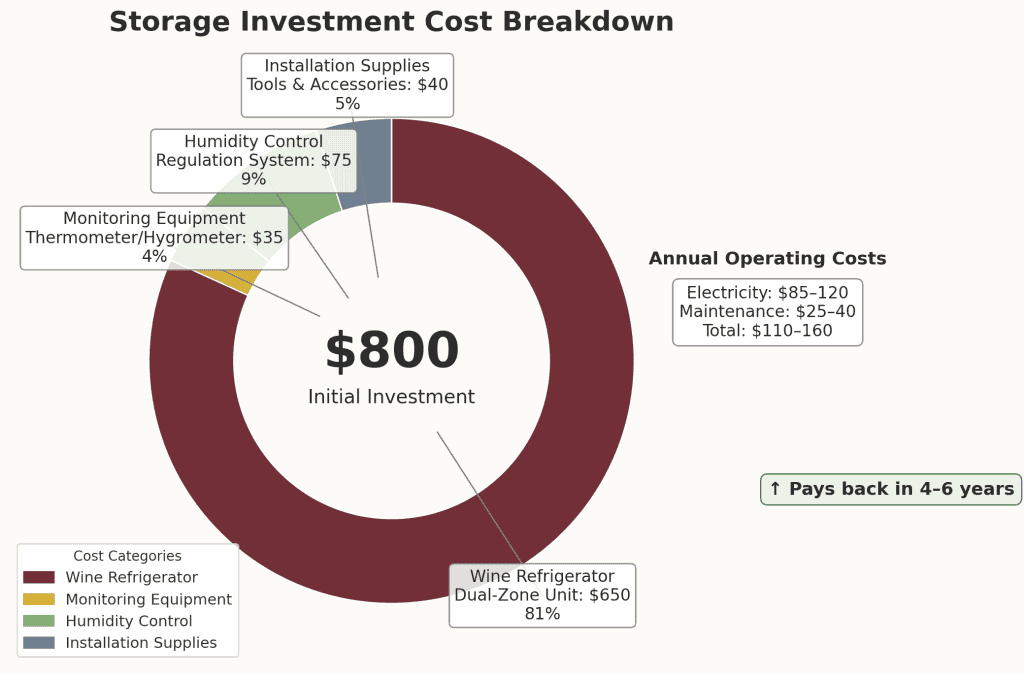
Total Investment for a Typical 50-Bottle Collection:
- Wine refrigerator (48-bottle dual-zone): $650
- Monitoring equipment: $35
- Humidity regulation (if needed): $75
- Installation supplies (thermometer, levelers, etc.): $40
- Total Initial Investment: $800
Operating Costs:
- Annual electricity: $85-120
- Maintenance supplies: $25-40
- Total Annual Operating: $110-160
Expected Timeline:
- Week 1: Assessment and measurement
- Week 2: Research and purchase
- Week 3: Delivery and installation
- Week 4: Calibration and organization
- Full Implementation: 4 weeks from start to optimized storage
ROI Calculation: Proper storage prevents the loss of just 3-4 bottles annually ($120-180 value), recouping annual operating costs. The initial investment pays back through preserved wine quality and prevented degradation within 4-6 years, while you enjoy every bottle at peak condition.
The Future of Short Term Wine Storage: What’s Coming
Smart monitoring technology is revolutionizing short term wine storage management. WiFi-enabled sensors like the SensorPush HT1 ($50) and Govee H5179 ($35) provide real-time temperature and humidity alerts to smartphones, tracking historical trends and predicting potential failures before wine damage occurs. Integration with IFTTT automation allows programmatic responses—temperature spike triggers AC adjustment, humidity drop activates humidifiers automatically.
Energy efficiency innovations address environmental and cost concerns. Thermoelectric wine refrigerators have improved their efficiency by 40% over the past five years, with models like the Ivation Premium achieving an 85% efficiency improvement over compressor-based units. Solar-powered wine storage solutions are emerging for off-grid enthusiasts and sustainable collectors, with prototype systems maintaining a stable 58°F using 200-watt solar panels and thermal mass storage.
Space-saving modular systems cater to urban wine enthusiasts. Vertical wine walls from companies like VintageView transform unused wall space into climate-controlled storage, mounting flush to walls in 2-inch depth profiles holding 9-27 bottles per panel. Under-counter wine drawers from Perlick and U-Line integrate seamlessly into kitchen designs, providing 24-30 bottle capacity in previously wasted space.
Smart home integration connects wine storage to broader home automation ecosystems. Refrigerators with Alexa/Google Home compatibility allow voice-activated temperature adjustments and inventory queries. Advanced systems like the Tresanti Wine Credenza integrate storage with display, temperature control, and automated inventory tracking through weight sensors detecting bottle removal and addition.
Preservation technology convergence brings professional techniques to home storage. Coravin-style preservation systems are being integrated directly into wine refrigerator designs, allowing sample pours without bottle removal or oxygen exposure. Argon gas preservation systems miniaturize for home use, providing commercial wine bar protection for opened bottles stored short-term.
Sustainable materials and practices respond to environmentally-conscious collectors. Wine refrigerators using R600a (isobutane) refrigerants reduce global warming potential by 99% compared to traditional HFC refrigerants. Bamboo and reclaimed wood wine racks replace virgin hardwoods, while recycled glass insulation in cooling units improves efficiency 15-20% over fiberglass alternatives.
AI-powered collection management optimizes drinking windows and storage allocation. Apps analyzing vintage ratings, professional reviews, and user preferences generate personalized “optimal drinking date” recommendations, automatically reorganizing storage priority. Machine learning algorithms predict which bottles benefit from extended storage versus immediate consumption, maximizing collection value.
Blockchain authentication integration combats counterfeit wines entering collections. NFC tags and blockchain verification systems authenticate bottles at storage entry, with wine refrigerators featuring built-in scanners validating provenance before storage allocation. This protects collectors from unwittingly storing fraudulent bottles in premium storage positions.
The convergence of these innovations points toward fully automated wine collection management within 5-7 years. Imagine wine storage systems that automatically organize bottles by optimal drinking windows, alert when wines enter peak consumption periods, maintain perfect conditions for each varietal, track provenance and value, and integrate with smart decanters and serving systems. The future of short-term storage isn’t just preservation—it’s comprehensive wine lifecycle optimization.
Short Term Wine Storage: Your Most Important Questions Answered
1. What’s the maximum temperature my short-term stored wine can tolerate?
Wine tolerates brief exposure to 75°F for 24-48 hours without significant damage, but sustained temperatures above 70°F accelerate aging at 2-3x normal rates. Above 80°F, chemical breakdown begins within hours—proteins denature, aromatic compounds volatilize, and oxidation accelerates. For storage lasting more than one week, maintain temperatures below 68°F; for storage exceeding one month, keep below 62°F for optimal preservation.
2. How quickly does wine degrade in improper short term wine storage?
Degradation timelines vary by wine type: delicate whites and sparkling wines show noticeable changes within 2-3 weeks of poor storage, robust reds within 4-6 weeks. Specific signs include: muted aromatics (1-2 weeks), color shifts toward brown/orange (3-4 weeks), oxidized flavors resembling sherry or vinegar (4-8 weeks), and cork deterioration with potential leakage (8-12 weeks). Temperature swings accelerate all timelines by 30-50%.
3. Do I need different storage conditions for red versus white wines in short term wine storage?
Ideally, yes – whites and sparkling wines benefit from 45-50°F storage while reds prefer 58-62°F. However, for short-term storage under six months, both can coexist at 55-58°F compromise temperature without significant quality loss. This middle ground preserves white wine freshness while keeping reds from becoming too cold and muting flavors. Only separate storage when holding wines 6+ months or when collection exceeds $5,000 value.
4. Will storing wine in my kitchen refrigerator for a few weeks damage it?
Kitchen refrigerators work adequately for 5-7 days of storage, but create problems beyond two weeks. Temperatures of 35-38°F mute aromatic compounds and can precipitate tartrate crystals in whites. Vibration from compressor cycling disturbs sediment and disrupts aging processes. Low humidity (20-30%) begins desiccating corks after 10-14 days. For 2-4 week storage, position bottles in the warmest refrigerator zone (upper shelves, door bins away from freezer) and lay horizontally to keep corks moist.
5. How do I know if my wine has been damaged by poor short term wine storage?
Visual inspection reveals many issues: Cork pushing outward indicates heat damage, wine seeping around cork suggests seal failure, color shifts toward brown (reds) or deep gold (whites) signal oxidation. Aromatic clues include: cooked/jammy fruit instead of fresh fruit, vinegar or nail polish remover notes (volatile acidity), musty wet cardboard (cork taint), or flat/dull aromatics lacking varietal character. When in doubt, compare suspicious bottles against fresh examples or trusted wine friends’ bottles.
6. What’s the minimum investment needed for proper short term wine storage?
Effective short term wine storage begins at $300-400 for a quality 18-24 bottle single-zone wine refrigerator plus basic monitoring thermometer. This protects collections valued at $500-1,500, storing wines 1-6 months. Budget-conscious collectors can start with $100-150 in passive solutions—interior closet storage, magnetic door strips for sealing, digital hygrometer/thermometer, and humidity packs—adequate for 1-3 month storage of wines under $30/bottle.
7. Should I store wine horizontally or vertically for short-term periods?
Horizontal storage remains preferable even for short-term periods of 2-3 months or longer. Positioning bottles on their side keeps corks moist and maintains seal integrity, preventing premature oxidation. For storage under 4-6 weeks, vertical storage proves acceptable if humidity exceeds 50% and temperatures stay below 65°F. Screw-cap bottles can be stored in any position without cork concerns, though horizontal maximizes space efficiency.
8. How does humidity affect wine during short term wine storage?
Humidity below 50% begins desiccating corks within 3-4 weeks, creating oxidation pathways that degrade wine quality. Humidity above 75% promotes mold growth on labels and corks within 6-8 weeks, though wine inside remains unaffected. An ideal range of 60-70% humidity keeps corks supple and prevents mold. For storage under one month, 40-80% humidity proves acceptable; beyond one month, maintain 55-70% using humidity regulators or passive solutions like bowls of water in storage spaces.
9. Can I store wine near my HVAC system, water heater, or other appliances?
Avoid storing wine within 6-8 feet of heat-generating appliances—HVAC units, water heaters, ovens, dishwashers, or dryers. These create temperature fluctuations of 10-20°F in surrounding areas, dramatically accelerating wine aging and degradation. Vibration from these appliances also disturbs sediment and disrupts aging processes. Similarly, avoid direct sunlight or windows—even indirect natural light degrades wine through UV exposure. Select interior spaces away from both heat sources and light exposure.
10. When should I upgrade from basic to advanced short term wine storage solutions?
Upgrade triggers include: Collection exceeding 50 bottles, average bottle value surpassing $40-50, storage duration extending beyond 3-4 months regularly, or experiencing wine degradation in the current setup. Specific thresholds: invest in a dual-zone wine refrigerator when regularly storing both reds and whites; add WiFi monitoring at 75+ bottle collections or when traveling frequently; implement a climate-controlled room at 150+ bottles or $10,000+ collection value; consider professional storage when the collection reaches investment-grade status (200+ bottles, $25,000+ value).
Conclusion
Short term wine storage isn’t an afterthought – it’s the foundation protecting 94% of wines you’ll ever purchase, from Tuesday night Pinot Grigio to allocated Burgundy. Every bottle deserves conditions that preserve what you paid to experience: The bright acidity, complex aromatics, and nuanced flavors that define great wine. Poor storage transforms premium bottles into expensive disappointments within weeks, while proper storage maintains these characteristics for months, protecting both drinking pleasure and financial investment.
The wine market’s trajectory makes storage expertise increasingly critical. As allocation bottles tighten and prices climb, even “drinking wines” represent significant investments worthy of protection. The frameworks in this guide—from selection decision trees to monitoring protocols to maintenance schedules—provide actionable systems for any collection size or budget.
Your next step is immediate and specific: measure your current storage conditions this week. Spend $25 on a digital hygrometer/thermometer, place it where you store wine, and record readings for seven days. Those numbers will reveal exactly which solutions from this guide match your needs, transforming wine storage from anxious guesswork into a systematic preservation process. With seasonal temperature shifts already underway, the bottles you protect this month will reward you with peak drinking experiences for months to come.
Good luck with your precious wine collection, and Cheers!
Didi Somm & Team
For your reference, the latest articles by Didi Somm include:
- Wine Storage Myths – All You Need To Know
- Wine Storage Vibration Damage – Best Expert Guide
- Cellaring Wine In Different Climates – All You Need To Know
- Best Smart Wine Cellar Monitors: Professional Picks For 2025
- Wine Aging Potential – Best Expert Guide
- Wine Storage Evolution: Get The Latest Trends Here
Important Notice: The information in this article is for general and public information purposes only. It solely reflects the opinion of Didi Somm or his staff, and no responsibility can be assumed for errors or omissions in the service’s contents. For details, please check the Disclaimer at the bottom of the homepage