Introduction
67% of wine collectors make the wrong storage choice in their first purchase – and many don’t realize it until a prized bottle is ruined. I know because I was one of them.
When I started my wine journey, I purchased what I thought was a “wine cabinet” from a big-box retailer, loaded it with several cases of age-worthy Bordeaux, and waited. Two years later, I opened a bottle expecting complexity and depth – instead, I found a flattened, oxidized disappointment. The problem? I’d bought a wine cooler marketed as a cabinet, and the lack of proper humidity control had slowly dried out every cork in my collection. That single mistake cost me over $2,000 in ruined wine.
That painful lesson sparked my obsession with understanding the nuances of wine storage. Over 15 years of collecting, I’ve tested dozens of units from brands such as EuroCave, Vintec, and many others. And here’s what I’ve learned: The wine storage cabinet vs wine fridge distinction matters enormously – but not in the way most people think.
The truth is, manufacturers and retailers use these terms interchangeably, creating confusion that leads collectors straight into the same trap I fell into. But there are real, meaningful differences that affect how your wine ages, how long it lasts, and ultimately, how it tastes when you finally pop the cork.
In this comprehensive guide, I’ll cut through the marketing noise and break down exactly what separates these two storage options – so you can protect your collection and avoid the costly mistakes I made. Let’s get to what actually matters.
Welcome by Didi Somm & Cheers!
Important Notice: The information in this article is for general and public information purposes only. It reflects the opinion of Didi Somm or his staff solely, and no responsibility can be assumed for errors or omissions in the service’s content. For details, please check the Disclaimer at the bottom of the homepage.

What Is a Wine Storage Cabinet?
A wine storage cabinet is a purpose-built piece of furniture designed for the long-term aging and preservation of wine. Think of it as a miniature wine cellar contained within an elegant piece of cabinetry. These units prioritize creating and maintaining the ideal cellar conditions: consistent temperature, proper humidity, minimal vibration, and protection from light.
Key Characteristics of Wine Storage Cabinets
Premium wine storage cabinets typically feature:
- Active humidity management (maintaining 50-70% relative humidity)
- Precision temperature control (±1°F variance)
- Vibration-dampening compressors or absorption cooling systems
- UV-protected glass or solid doors
- Quality wood or metal construction designed as furniture
- Capacity for long-term aging (5-20+ years)
Brands like EuroCave, Le Cache, Transtherm, and Wine Guardian represent the gold standard in this category. These units are engineered for serious collectors who view their wine as an investment worth protecting.
For more information, please check our recent article, Best Wine Fridge Brands – The Ultimate Comparison For 2025
Pro Tip: True wine storage cabinets often feature “winter mode” or heating elements that prevent temperatures from dropping too low in cold environments – a feature rarely found in standard wine fridges.
What Is a Wine Fridge?
A wine fridge (also called a wine cooler or wine refrigerator) is an appliance designed primarily to chill wine to serving temperature. While many models offer storage capabilities, their core function is different from a storage cabinet. Wine fridges prioritize cooling efficiency and convenience over creating perfect long-term aging conditions.
Key Characteristics of Wine Fridges
Standard wine fridges typically feature:
- Thermoelectric or basic compressor cooling
- Temperature ranges optimized for serving (45-65°F)
- Dual-zone options for reds and whites at different temperatures
- Limited or no humidity control
- Sleek, modern designs for kitchen integration
- Capacity for short to medium-term storage (months to a few years)
Popular wine fridge brands include NewAir, Kalamera, Wine Enthusiast, and Frigidaire. These units excel at keeping everyday drinking wines at the perfect temperature and often integrate beautifully into kitchen cabinetry.
Wine Storage Cabinet vs Wine Fridge: The Critical Differences
Now let’s examine the factors that truly separate these two categories. Understanding these differences will help you determine which solution matches your needs.
Temperature Stability
| Factor | Wine Storage Cabinet | Wine Fridge |
|---|---|---|
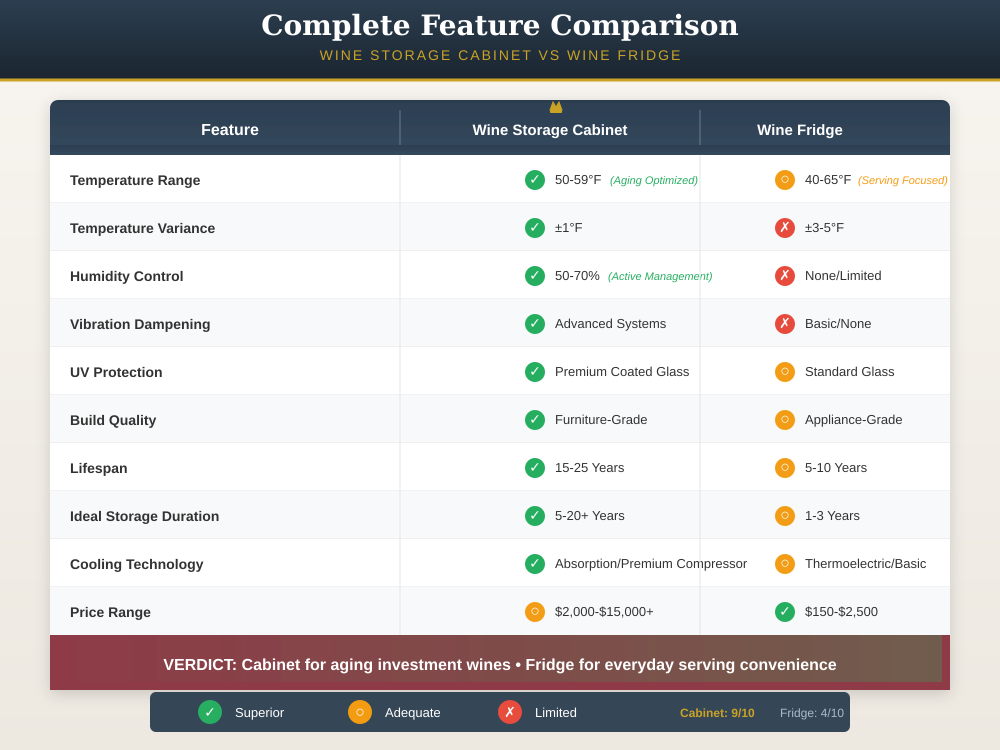
| Temperature Range | 50-59°F (optimal aging) | 40-65°F (serving focused) |
| Variance | ±1°F | ±3-5°F |
| Recovery Time | Slow, gradual | Fast cycling |
| Consistency | Exceptional | Moderate |
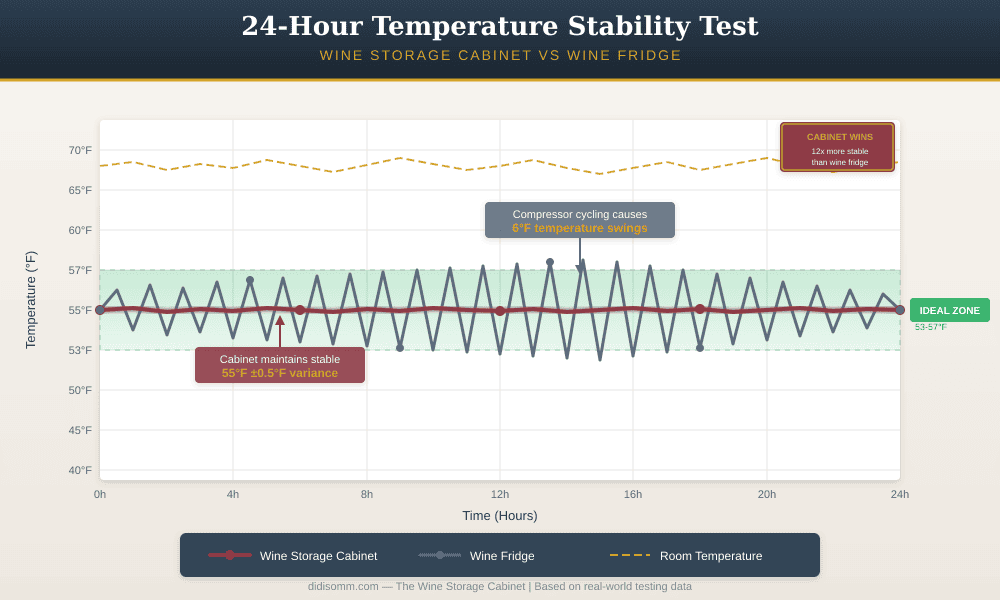
Wine storage cabinets maintain rock-steady temperatures with minimal fluctuation. This consistency is crucial for long-term aging, as temperature fluctuations accelerate chemical reactions in wine and can lead to premature aging or off-flavors.
Wine fridges cycle more frequently to maintain temperature, creating minor fluctuations that don’t matter for short-term storage but can impact wines stored for years.
Humidity Control – Wine Storage Cabinet vs Wine Fridge
This is where the rubber meets the road in the wine storage cabinet vs wine fridge debate.
Wine storage cabinets actively manage humidity, typically maintaining levels between 50-70%. This prevents corks from drying out—the primary cause of oxidation and premature wine death. Many premium cabinets include water reservoirs, humidity trays, or integrated humidification systems.
Wine fridges rarely include humidity control. The refrigeration process naturally removes moisture from the air, which can dry corks over time. Some users place bowls of water inside their wine fridges as a workaround, but this is imprecise at best.
Expert Note: I learned this lesson the hard way. After losing several bottles to dried corks in my first wine fridge, I now consider humidity control non-negotiable for any wine I plan to age more than two years.
For more detailed information, please check the recent article, Wine Fridge Humidity Control: Get Insights And Best Advice

Vibration Management – Wine Storage Cabinet vs Wine Fridge
Wine contains sediment and delicate chemical compounds that can be disrupted by vibration. Over time, constant vibration prevents sediment from settling properly and may accelerate unwanted chemical reactions.
Wine storage cabinets employ vibration-dampening technology, including:
- Absorption cooling systems (no compressor vibration)
- Isolated compressor mounts
- Rubber gaskets and dampening materials
Wine fridges often use standard compressors that create noticeable vibration. While this isn’t catastrophic for everyday wines, it’s not ideal for long-term aging of fine wines.
Build Quality and Aesthetics – Wine Storage Cabinet vs Wine Fridge
Wine storage cabinets are designed as furniture pieces. They feature:
- Hardwood frames and quality veneers
- Elegant glass doors with UV protection
- Interior lighting that showcases your collection
- Prices ranging from $2,000 to $15,000+
Wine fridges prioritize functionality and affordability:
- Metal and plastic construction
- Sleek, appliance-style designs
- Built-in or freestanding options for kitchen integration
- Prices ranging from $200 to $2,000
Cost Comparison – Wine Storage Cabinet vs Wine Fridge
Let’s be direct about the investment required:
| Category | Entry Level | Mid-Range | Premium |
|---|---|---|---|
| Wine Storage Cabinet | $2,000-3,500 | $3,500-7,000 | $7,000-15,000+ |
| Wine Fridge | $150-400 | $400-1,000 | $1,000-2,500 |
The price difference is substantial, but so is the level of protection. Think of it this way: a quality wine storage cabinet costs less than a single case of premium Burgundy but protects your entire collection for decades.

Which One Do You Actually Need – Wine Storage Cabinet vs Wine Fridge?
Here’s my honest assessment based on years of experience helping collectors make this decision:
Choose a Wine Storage Cabinet If:
- You collect age-worthy wines (Bordeaux, Burgundy, Barolo, vintage Champagne)
- You plan to age bottles for 5+ years
- Your collection value exceeds $5,000
- You live in a climate with temperature extremes
- You don’t have access to a proper cellar
- You view wine as an investment worth protecting
Choose a Wine Fridge If:
- You primarily drink wines within 1-2 years of purchase
- Your collection consists mainly of everyday drinking wines
- You need convenient serving-temperature storage
- Your budget is under $1,500
- You want built-in kitchen integration
- You have a separate solution for long-term aging
The Hybrid Approach
Many serious collectors, myself included, use both. I have a EuroCave cabinet for my age-worthy bottles and investment wines, plus a dual-zone wine fridge in my kitchen for everyday bottles ready to drink. This combination offers the best of both worlds: proper aging conditions for special bottles and convenient access to drinking wines.
For more detailed information, please check the recent article, Best Wine Refrigerators For Aging – Your Expert Guide For 2025

Top Recommendations in Each Category -“Wine Storage Cabinet vs Wine Fridge”
Based on my testing and research, here are my top picks:
Best Wine Storage Cabinets
- EuroCave Pure Series — The industry benchmark for humidity and temperature control
- Le Cache Contemporary Series — Beautiful furniture-grade construction with reliable performance
- Wine Guardian — Commercial-grade reliability in residential sizes
Best Wine Fridges
- Vintec V40 — Best humidity performance in a wine fridge
- Wine Enthusiast VinoView — Excellent dual-zone option
- Kalamera 24″ — Best value for built-in installation
Common Mistakes to Avoid
Over the years, I’ve seen collectors make these errors repeatedly:
- Buying based on capacity alone — A 200-bottle wine fridge isn’t better than a 50-bottle cabinet if you’re aging fine wine
- Ignoring humidity specifications — If the manufacturer doesn’t mention humidity control, it probably doesn’t have it
- Placing units in garages or sunrooms — Ambient temperature extremes stress any unit
- Choosing thermoelectric for large collections — These units struggle in warm environments
- Assuming all “wine cabinets” are equal — Marketing terms vary wildly; check actual specifications

FAQs -Wine Storage Cabinet vs Wine Fridge
Can I age wine long-term in a wine fridge?
You can store wine in a wine fridge for 1-3 years without major issues, but true long-term aging (5+ years) requires humidity control that most wine fridges lack. Without proper humidity, corks dry out, leading to oxidation. If you plan to age wine seriously, invest in a proper wine storage cabinet or add humidity management to your fridge.
What’s the ideal temperature for storing wine?
For long-term aging, maintain 53-57°F (12-14°C). This range slows chemical reactions while allowing gradual, positive development. Wine fridges often default to serving temperatures (45°F for whites, 65°F for reds), which are too cold or warm for optimal aging. Storage cabinets typically maintain the ideal aging range automatically.
Is a dual-zone wine fridge the same as a wine cabinet?
No. Dual-zone wine fridges offer two temperature compartments – typically one for red and one for white serving temperatures. This is convenient for serving, but doesn’t address humidity control or vibration dampening. A wine storage cabinet focuses on creating cellar conditions for aging, not serving convenience.
How long do wine storage cabinets last?
Quality wine storage cabinets from reputable manufacturers last 15-25 years with proper maintenance. Many feature modular cooling units that can be replaced without replacing the entire cabinet. Wine fridges typically last 5-10 years before compressor failure or efficiency degradation.
Can I convert a regular refrigerator into wine storage?
I don’t recommend it. Standard refrigerators operate at 35-40°F—too cold for wine – and have extremely low humidity (under 30%). They also produce significant vibration and aren’t designed for the gentle, consistent cooling wine requires. The cost of a quality wine fridge is worth it compared to risking your collection.
Conclusion
The wine storage cabinet vs wine fridge decision ultimately comes down to your collecting goals and the value of what you’re protecting. If you’re serious about aging wine and building a collection worth preserving, a proper wine storage cabinet is an investment that pays dividends every time you open a perfectly aged bottle.
For everyday wine storage and serving convenience, a quality wine fridge serves admirably – just don’t expect it to create true cellar conditions.
My recommendation? If your collection includes any bottles you’re planning to hold for five years or more, prioritize a wine storage cabinet for those special wines. You can always add a wine fridge later for your drinking stock. Your future self – savoring a perfectly aged vintage – will thank you for making the right choice today.
Cheers to protecting your collection!
Didi Somm & Team
The latest articles by Didi Somm include:
- Cellaring Wine In Different Climates – All You Need To Know
- Best Smart Wine Cellar Monitors: Professional Picks For 2025
- Wine Aging Potential – Best Expert Guide
- Wine Storage Evolution: Get The Latest Trends Here
- Short Term Wine Storage: All You Need To Know
- Wine Storage Cabinet Guide: What You Need To Know
Important Notice: The information in this article is for general and public information purposes only. It reflects the opinion of Didi Somm or his staff solely, and no responsibility can be assumed for errors or omissions in the service’s content. For details, please check the Disclaimer at the bottom of the homepage.