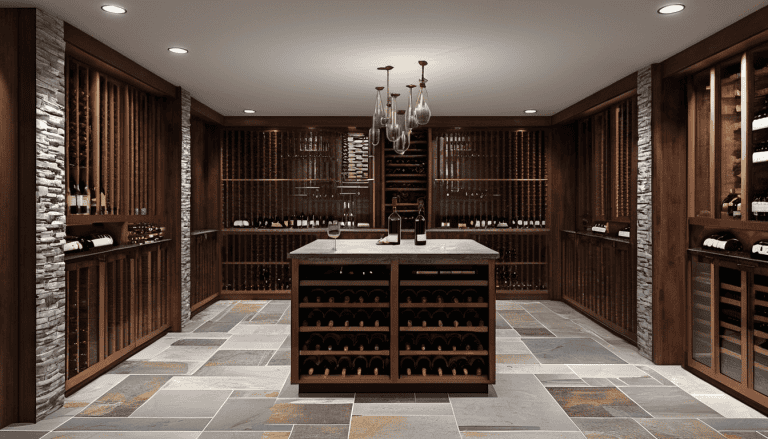
Have you ever wondered if that expensive wine fridge was really worth the investment? Or perhaps you’ve been storing your bottles upright because someone once told you it was better that way?
When it comes to wine storage, misinformation abounds! As a passionate wine enthusiast with over two decades of experience, I’ve encountered countless myths that lead wine lovers astray.
In this comprehensive guide, we’ll separate fact from fiction and debunk the most persistent wine storage myths that continue to circulate. Whether you’re a casual enthusiast or a serious collector, understanding proper storage techniques can mean the difference between a transcendent tasting experience and a disappointing one!
Welcome to Didi Somm, and Cheers!
Important Notice: The information in this article is for general and public information purposes only. It solely reflects Didi Somm’s or his Staff’s opinion, and no responsibility can be assumed for errors or omissions in the service’s contents. For details, please check the Disclaimer at the bottom of the homepage.
Key Takeaways
- Temperature fluctuations, not absolute temperature, pose the greatest threat to wine quality
- Light exposure damages wine faster than most collectors realize
- Not all wines benefit from aging – many are meant to be enjoyed young
- Wine refrigerators offer significant advantages over standard kitchen refrigerators
- Proper humidity levels (50-70%) are crucial for long-term cork health and wine preservation
- Vibration concerns are legitimate but often exaggerated for casual collectors
- Storage position (horizontal vs. vertical) matters differently for various closure types
Affiliate Disclaimer: This page may include Affiliate links, meaning that we get a commission if you decide to purchase through this site at no extra cost to you. Please read our Disclaimer for your information.
The Temperature Myth: “All Wine Must Be Stored at Exactly 55°F”
I can’t tell you how many times I’ve watched new wine collectors panic about their storage temperature. “My wine fridge is reading 57°F! Is my collection ruined?” Trust me, your wines are just fine. That magical 55°F number that gets tossed around actually has practical origins – it’s roughly the natural temperature of deep European cellars where wine was traditionally stored. But here’s the thing: it’s not some magical threshold where wine suddenly transforms.
In my early collecting days, I was absolutely obsessed with maintaining exactly 55°F. I’d check my thermometer three times daily and adjust my settings constantly. What a waste of energy! After speaking with several winemakers and doing some serious research, I learned that different wine varieties actually prefer different temperature ranges. Most reds are perfectly happy between 55-65°F, while whites can go as low as 45°F for longer-term storage.
What matters far more than hitting that exact number is temperature stability. Wine absolutely hates temperature fluctuations! I once stored a case of beautiful Burgundy in my spare room where the temperature swung between 65°F during the day and 55°F at night. Six months later, I opened a bottle to find the wine had aged prematurely, losing all its vibrant fruit characteristics. The chemistry makes sense—these fluctuations speed up the complex reactions happening in the bottle.
You don’t need expensive equipment for stable storage. I’ve helped friends create perfectly decent storage solutions using inexpensive insulation materials in a closet. Even a styrofoam cooler in a consistently cool spot works better than an expensive fridge in a room that gets hot! The bottom line: aim for consistency within an appropriate range rather than obsessing over that mythical perfect number.

The Refrigerator Fallacy: “Your Kitchen Fridge Works Just Fine”
Let me tell you about the time I ruined a $75 bottle of Chablis by keeping it in my kitchen fridge for three weeks. I thought I was being smart saving it for a special occasion, but when I finally opened it, the wine tasted flat and had developed some funky aromas. Yep, my regular refrigerator had completely zapped the life out of that beautiful wine!
Your kitchen fridge seems like a logical place to store wine, but it’s actually designed to do almost the exact opposite of what wine needs. Standard refrigerators maintain a frigid 35-38°F – way too cold for wine storage- and they’re incredibly dry inside. This super-low humidity (usually around 20%) causes corks to shrink, allowing oxygen to seep in and spoil your wine. I learned this the hard way after finding several dried-out, loose corks in bottles I’d kept in the fridge too long.
The constant vibration from your refrigerator compressor is another wine killer. When I moved to an apartment near a subway line, I noticed my wines aged faster than normal. A winemaker friend explained that vibration agitates the compounds in wine, speeding up chemical reactions. Your kitchen fridge creates similar vibrations 24/7! Those compressors kick on and off all day, gently shaking your precious bottles.
Every time you open your kitchen fridge door, the temperature fluctuates dramatically. After tracking my own fridge with a digital thermometer, I was shocked to see 15°F swings throughout the day! For everyday drinking wines that you’ll consume within a few days, the regular fridge is totally fine. But anything you’re saving longer than a week deserves better treatment. Even an inexpensive wine cooler provides a much more stable environment.
The Aging Misconception: “All Wines Improve With Age”
I’ll never forget the disappointment on my buddy Mark’s face when he finally opened that bottle of Columbia Valley Riesling he’d been saving for five years. He’d been so proud of his patience, keeping it for a “special occasion,” only to find a shadow of what was once a vibrant, aromatic wine. I hated being the one to tell him that particular wine was meant to be enjoyed within two years of release.
This myth about all wines getting better with age is probably the most persistent one I encounter. The truth? About 90% of all wines produced globally are designed to be consumed within 1-3 years of release. Only a small percentage of wines have the structural components necessary for positive long-term development. I made this mistake plenty in my early wine-loving days, “saving” bottles that were actually declining in quality while I waited.
The chemistry behind aging is fascinating. Wines need sufficient tannins, acidity, and concentration to evolve positively over time. Think of these elements as natural preservatives. Without them, wine simply deteriorates rather than develops complexity. You can actually spot aging potential without being an expert—look for higher acidity, tannin structure, and concentrated fruit in reds, while whites need pronounced acidity and some residual sugar helps too.
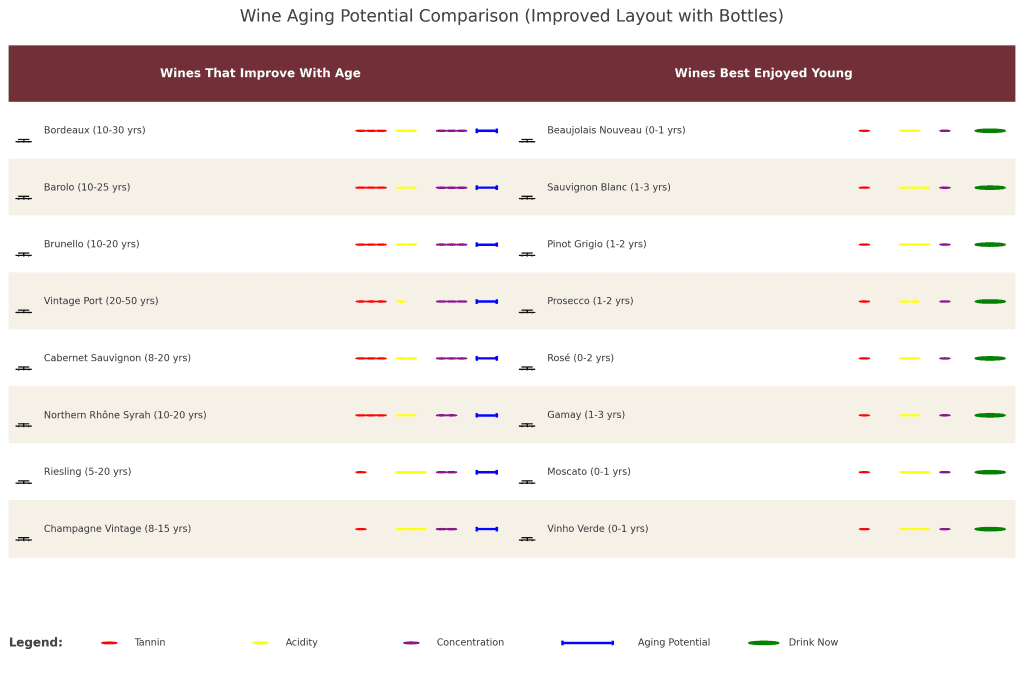
Some wines that people mistakenly age include most Sauvignon Blancs, Prosecco, and light-bodied reds like Beaujolais Nouveau. I’ve seen friends proudly cellar these, only to discover they’ve lost all their fresh, fruity appeal. When a wine is past its prime, you’ll notice the fruit flavors diminish, colors turn brownish, and vibrant aromas fade into muted, sometimes vinegary notes. Remember, aging doesn’t improve wine—it changes it, and only certain wines change for the better!
The Cork Contention: “All Wine Must Be Stored on Its Side”
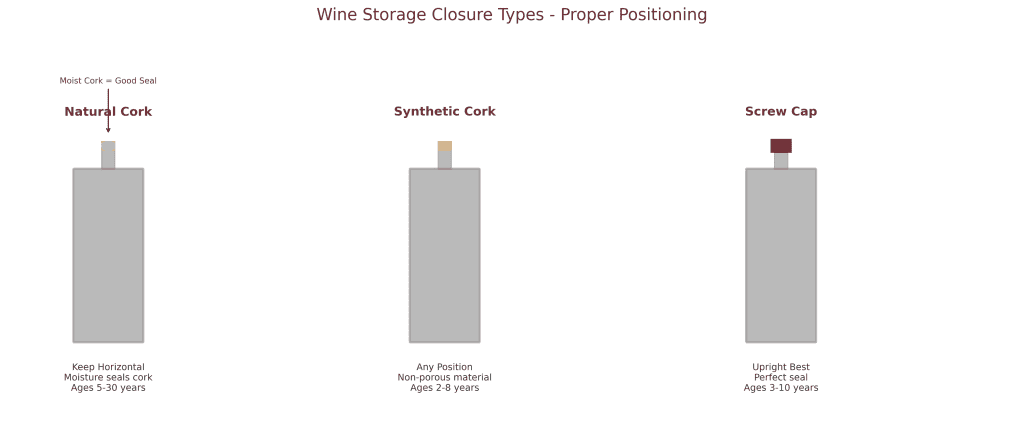
I still chuckle thinking about my first “wine rack” – a repurposed CD tower where I proudly displayed my bottles horizontally. I was so convinced this was the only proper way to store wine! While I wasn’t completely wrong, I’ve since learned this rule isn’t as universal as I once thought. The horizontal storage guideline really only applies to wines sealed with natural cork.
The science makes perfect sense when you understand it. Natural corks need to stay moist to maintain their seal, and horizontal storage keeps the wine in contact with the cork, preventing it from drying out and shrinking. I learned this lesson the hard way after storing some nice Bordeaux upright for about six months. When I finally opened one, the cork had dried and shrunk just enough to let in small amounts of oxygen -turning my lovely wine into something more like sherry!
But here’s where people get confused: Screw caps, synthetic corks, and glass closures don’t benefit from horizontal storage at all. These closure types don’t rely on moisture to maintain their seal. I wasted precious wine fridge space for years, laying my screw-cap New Zealand Sauvignons on their sides! For these bottles, vertical storage works perfectly fine and actually saves space.
The timeframe for when vertical storage becomes problematic with natural corks is longer than most people think. For everyday drinking wines you’ll consume within a few months, standing them upright isn’t a disaster. I now use a hybrid approach in my collection – traditional corks go horizontal, everything else stands upright in the back rows. Modern cork technology has improved dramatically, too. Today’s high-quality corks have better elasticity and seal capability than those made even a decade ago, making them somewhat more forgiving of less-than-perfect storage conditions.
The Light Exposure Myth: “Only UV Light Damages Wine”
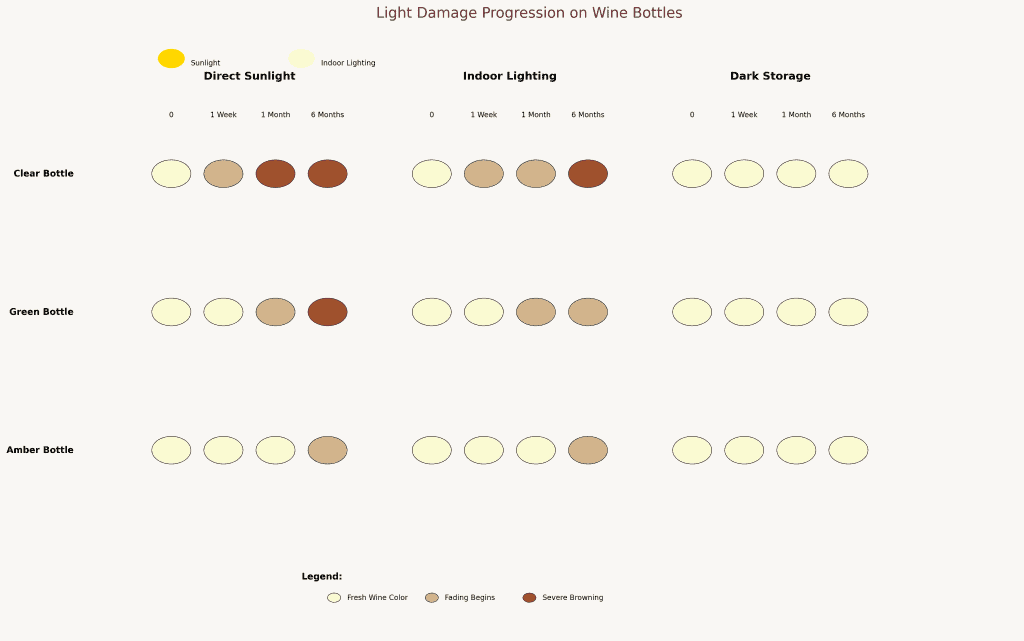
I used to keep a cute little wine rack on my kitchen counter, thinking as long as it wasn’t in direct sunlight, my bottles were safe. Boy, was I wrong! After noticing that my white wines in clear bottles consistently developed a strange, cooked-cabbage smell after a few weeks, I finally connected the dots. Even the regular fluorescent lighting in my kitchen was enough to damage the wine! This was my introduction to the phenomenon winemakers call “light strike.”
While UV light (like direct sunlight) is definitely the worst offender, damaging wine in as little as an hour, all light sources can harm wine if exposed for enough time. Regular indoor lighting might take weeks rather than hours, but the chemical reactions are essentially the same. I’ve become something of a light exposure detective since that kitchen counter disaster! The science is pretty straightforward – light energy triggers reactions with amino acids in the wine, creating sulfur compounds that smell like wet cardboard or even skunk.
White wines and rosés are particularly vulnerable to light damage because they lack the protective polyphenols that red wines have in abundance. Within this category, wines like Champagne, Prosecco, and Sauvignon Blanc are especially susceptible. I learned a handy trick from a sommelier friend: if you can read a newspaper through the bottle, the wine inside is at high risk for light damage. Those beautiful, clear glass bottles that show off a wine’s color? They’re essentially the worst packaging for long-term quality!
Spotting light-damaged wine before opening is tricky, but sometimes you’ll notice the wine’s color has changed – becoming brownish for whites or brick-colored for reds prematurely. After opening, that distinct “off” aroma is unmistakable. My solution? Simple – I keep all bottles in their original boxes or a closed cabinet. Even a kitchen towel draped over exposed bottles works in a pinch! Remember, when it comes to wine storage, darkness is your friend.
The Humidity Debate: “Humidity Doesn’t Matter for Wine Storage”
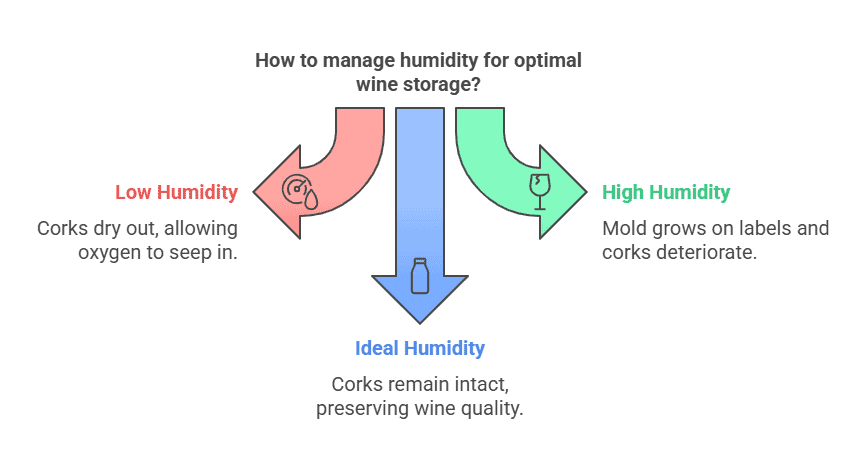
When I moved from rainy Seattle to bone-dry Arizona, I noticed something alarming happening to my wine collection. After just a few months, corks were starting to protrude from some bottles, while others looked sunken in. That’s when I truly understood the impact of humidity on wine storage – something I’d previously dismissed as fussy collector talk!
The relationship between humidity and cork integrity is direct and critical. Natural cork is bark, after all, and like all plant materials, it responds to environmental moisture. In my desert home with humidity often below 20%, corks were drying out and shrinking, breaking their seal with the bottle and allowing oxygen to seep in. Conversely, a friend in Florida with humidity constantly above 80% had issues with mold growing on her labels and even some corks deteriorating from too much moisture!
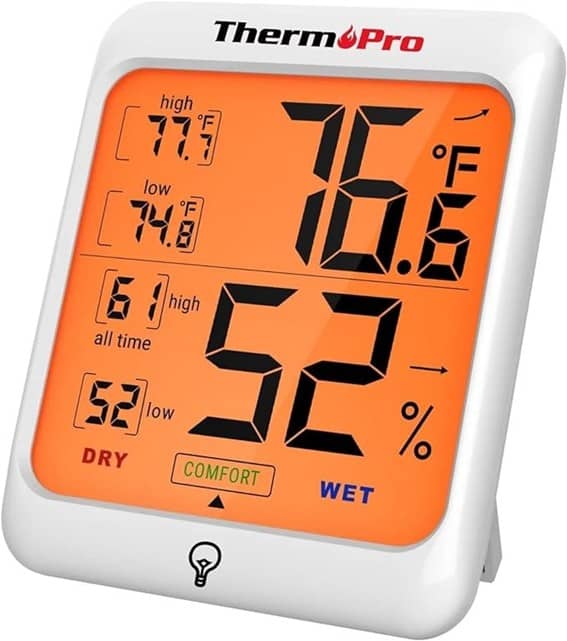
The ideal range is pretty forgiving—somewhere between 50-70% relative humidity. Too low, and corks dry out; too high, and you risk mold. I invested in an inexpensive hygrometer (under $15) and was shocked to discover my storage area was sitting at just 30% humidity. My budget solution? A simple pan of water placed at the bottom of my wine cabinet, which brought levels up to a respectable 55%. For larger spaces, a small humidifier works wonders.
Regional considerations matter too! In very dry climates like mine, humidity is a constant battle, while in naturally humid areas, dehumidification might be necessary. One persistent myth I’ve encountered is that humidity somehow affects the wine itself through the glass—this is completely false. Glass is impermeable; humidity only affects the cork and external packaging. I learned to focus my efforts on cork protection rather than worrying about the wine inside being “too dry” or “too humid,” which simply isn’t possible through an intact bottle.
The Vibration Controversy: “Vibration Concerns Are Exaggerated”
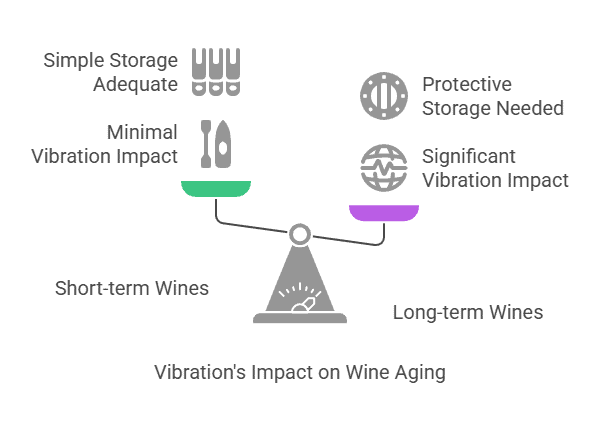
I used to think wine collector friends were being precious when they talked about protecting their bottles from vibration. That changed after I stored half a case of nice Barolo next to my washing machine for a year (small apartment problems!). The bottles subjected to regular spin cycles aged noticeably faster than their identical twins stored in a quieter spot. The difference was shocking—duller fruit flavors and significantly more sediment had developed in the vibrated bottles.
The science behind vibration damage actually makes a lot of sense. Wine contains complex compounds that are constantly interacting. When you introduce regular vibration, you’re essentially speeding up these chemical reactions. Think of it like shaking a snow globe – you’re disrupting the natural settling process. Constant low-level vibration, like from a nearby refrigerator or HVAC system, can subtly impact wine development over time. The high-frequency intermittent vibrations from things like subways or washing machines seem to be even more disruptive.
Living in my downtown apartment presented real vibration challenges. After some experimenting, I found that placing wine racks on rubber anti-vibration mats (the kind used under washing machines) made a noticeable difference. For serious collectors, foam-lined wine cabinets provide excellent isolation. One clever friend uses simple foam pipe insulation cut lengthwise to cradle valuable bottles, creating a DIY shock absorption system for under $10.
Here’s where I think the controversy gets overblown: for everyday drinking wines you’ll consume within a year, minor vibrations probably won’t make a noticeable difference. I no longer stress about walking heavily near my wine fridge! But for age-worthy wines that you’re keeping for 5+ years, vibration protection becomes genuinely important. The effects are cumulative – a little vibration over a long time can significantly impact how gracefully a wine develops complexity and softens its tannins.
The Investment Misconception: “Expensive Storage Solutions Are Always Better”
I almost fell victim to wine storage marketing when I first started collecting seriously. That glossy catalog showcasing a $5,000 temperature-controlled cabinet had me convinced it was the only way to properly care for my growing collection. Thankfully, a veteran collector friend set me straight before I maxed out my credit card! Some of the best wine storage solutions aren’t the ones with the heftiest price tags.
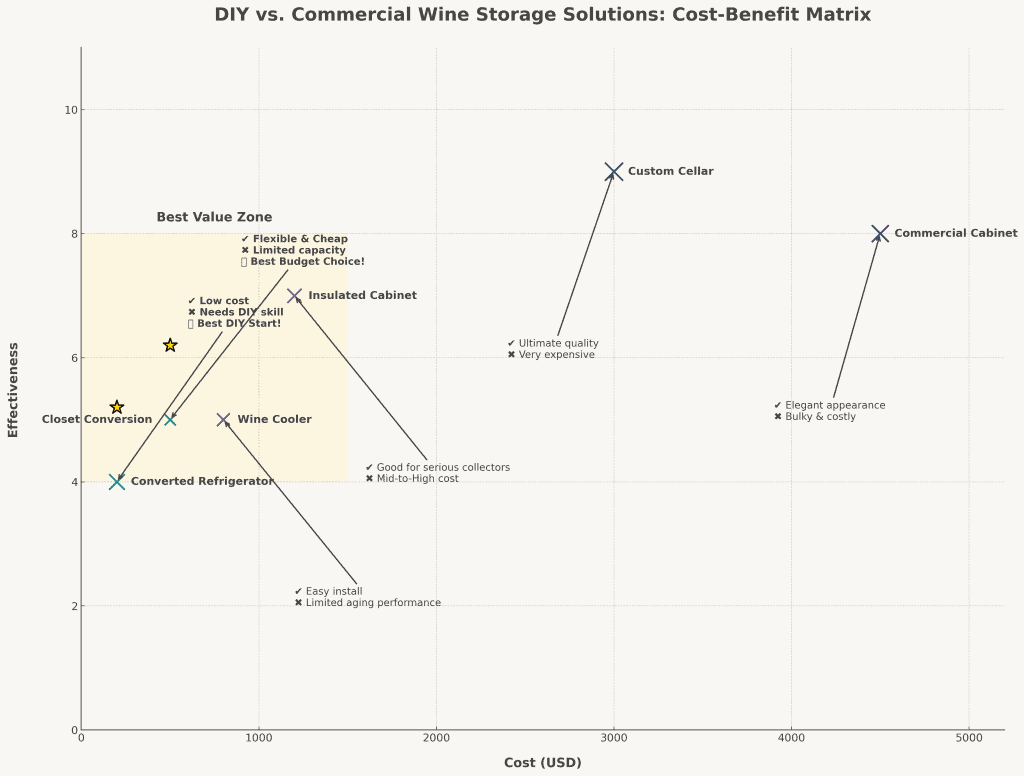
Let me be clear – quality storage matters, but the correlation between price and effectiveness isn’t always strong. After visiting dozens of home cellars over the years, I’ve seen $300 setups outperform $3,000 ones simply because they better addressed the fundamental needs: consistent temperature, appropriate humidity, darkness, and minimal vibration. I’ve been using a converted closet with basic insulation and a small cooling unit for years now – total cost around $600 – and my wines are aging beautifully.
The ROI calculation for wine storage isn’t straightforward. If you’re storing primarily everyday bottles under $20 that you’ll drink within a year, an expensive solution will never pay for itself. My rule of thumb: your storage investment should be proportional to the value and aging timeframe of your collection. Spending $2,000 on storage for a $500 wine collection just doesn’t make financial sense!
Some of the most effective DIY solutions I’ve seen include converted refrigerators using external temperature controllers (about $150 total), insulated garden sheds in temperate climates, and even buried coolers for folks with the right ground temperature. I’ve also noticed certain features on high-end units provide minimal actual benefit – those UV-protected glass doors look great but add hundreds to the price tag when a solid door works better anyway!
LED lighting and fancy display shelving are nice aesthetically, but they don’t improve storage conditions at all. Remember, wine doesn’t care how pretty its home is – just how stable and appropriate the environment remains.
FAQ – Wine Storage Myths
1. Is it really necessary to store wine on its side? This depends on the closure type. Cork-sealed bottles benefit from horizontal storage to keep the cork moist and expanded, preventing oxygen ingress. However, screw cap bottles and those with synthetic closures can be stored in any orientation without issue.
2. What temperature fluctuations are actually harmful to wine? Daily fluctuations of more than 3-5°F can be damaging over time. Seasonal changes that happen gradually are less concerning than rapid daily shifts. The most harmful scenario is repeated cycling between warm and cool temperatures.
3. Can I store red and white wines together at the same temperature? Yes, all wines can be safely stored at 55°F (13°C). The different serving temperatures for red and white wines are distinct from storage temperatures. You can store all wine types together and then adjust the serving temperature as needed.
4. How long can I keep wine in my regular kitchen refrigerator? For everyday drinking wines, 1-2 weeks in a kitchen refrigerator won’t cause noticeable damage. However, fine wines or those meant for aging should not be kept in a standard refrigerator for more than a few days.
5. Does wine need to “breathe” during storage? No, this is a common misconception. Wine needs protection from oxygen during storage. “Breathing” or aeration is beneficial only just before or during consumption, not during storage.
6. Will storing wine near strong-smelling foods ruin it? Yes, this is actually true and not a myth. Wine can absorb odors through corks over time, especially if the corks are permeable or of lower quality. Keep strong-smelling items away from your wine storage area.
7. Is a wine cellar necessary for proper wine storage? No, a dedicated cellar is not necessary. What matters are the storage conditions: appropriate temperature, humidity, darkness, and minimal vibration. These can be achieved in various spaces or with wine refrigerators.
8. Can I store opened wine bottles for later consumption? Yes, but with limitations. Most wines will stay fresh for 3-5 days when properly resealed and refrigerated. Vacuum pumps and inert gas preservers can extend this period somewhat, but won’t work indefinitely.
9. Does the orientation of the label matter when storing wine? Label orientation is purely aesthetic and has no impact on wine quality. However, keeping labels visible makes inventory management easier and reduces handling, which is beneficial.
10. Is it harmful to move wine bottles frequently once they’re in storage? Yes, excessive movement can disrupt the natural aging process and disturb sediment in older red wines. While occasional gentle movement won’t cause harm, frequent disruption should be avoided.
11. Do wine preservation systems like Coravin really work? Yes, systems that extract wine while replacing the volume with inert gas do effectively preserve remaining wine for weeks or months, though results vary by wine type and system quality.
12. Are wine refrigerators worth the investment? For anyone with more than a few bottles they intend to keep for more than a month, a wine refrigerator offers significant protection compared to regular storage. The value increases with the quality and aging potential of your wines.
13. Can wine be stored in the garage or attic? Generally, no. These spaces typically experience extreme temperature fluctuations that are harmful to wine. Unless climate-controlled, garages and attics are among the worst places to store wine.
14. Does storing wine near electronics or appliances cause problems? It can, primarily due to vibration and heat generation. Equipment with motors or compressors creates vibrations, while many electronics emit heat that can affect nearby wine storage.
15. Is it true that all wine improves until it suddenly declines? No, this is a misconception. Most wines have a gradual peak followed by a gradual decline. Very few wines improve indefinitely before suddenly “falling off a cliff” in quality.
Conclusion
Debunking these common wine storage myths doesn’t just save you from potential disappointment – it might also save you money on unnecessary equipment while helping you focus on what truly matters for wine preservation.
Remember that wine storage isn’t about perfection but about minimizing the factors that accelerate aging or cause faults. By understanding the science behind these myths, you can make informed decisions that balance practicality with proper preservation techniques.
Whether you’re a casual wine enthusiast or a dedicated collector, I hope these clarifications help you enjoy your wines at their best! Have you been following any of these myths unknowingly? Share your wine storage surprises in the comments below!
Enjoy your precious wine collection, and Cheers!
For your reference, the latest articles by Didi Somm include:
- Wine Refrigerator Accessories 2025: The Ultimate Guide For You
- Under-Counter Wine Refrigerators In 2025: Best Advice For You
- Best Wine Fridge Brands – The Ultimate Comparison For 2025
- How to Preserve Wine: A Beginner’s Guide (2025)
- Wine Aging Potential – Best Expert Guide
- Review: Best Wine Humidity Controllers (2025)
Important Notice: The information in this article is for general and public information purposes only. It solely reflects Didi Somm’s or his Staff’s opinion, and no responsibility can be assumed for errors or omissions in the service’s contents. For details, please check the Disclaimer at the bottom of the homepage.