Having lived in an environment where wine always played an important part in culture, I have only discovered non alcoholic wines recently. When embarking on a personal diet, I have tried non alcoholic wine as an effective way to reduce my calorie intake.
In the beginning, I was skeptical whether non alcoholic wine could offer that complex, enjoyable flavor without the alcohol content. After trying several varieties and to my surprise, I concluded that high-quality non alcoholic wines can deliver a pleasant drinking experience.
However, many myths and misconceptions surrounding this growing type of beverage still exist, and the motivation for switching to non alcoholic wine can be manifold. I still enjoy traditional wines, but less than before, and I go for non alcoholic wine to maintain my diet.
Below, I will bust five of the biggest myths about non alcoholic wines and share some insights based on my research. I hope you’re curious to learn more about non- or low-alcohol wines.
Welcome to Didi Somm and Cheers!
Important Notice: The information in this article is for general and public information purposes only. It solely reflects Didi Somm’s or his Staff’s opinion, and no responsibility can be assumed for errors or omissions in the service’s contents. For details, please check the Disclaimer at the bottom of the homepage.
Main Takeaways
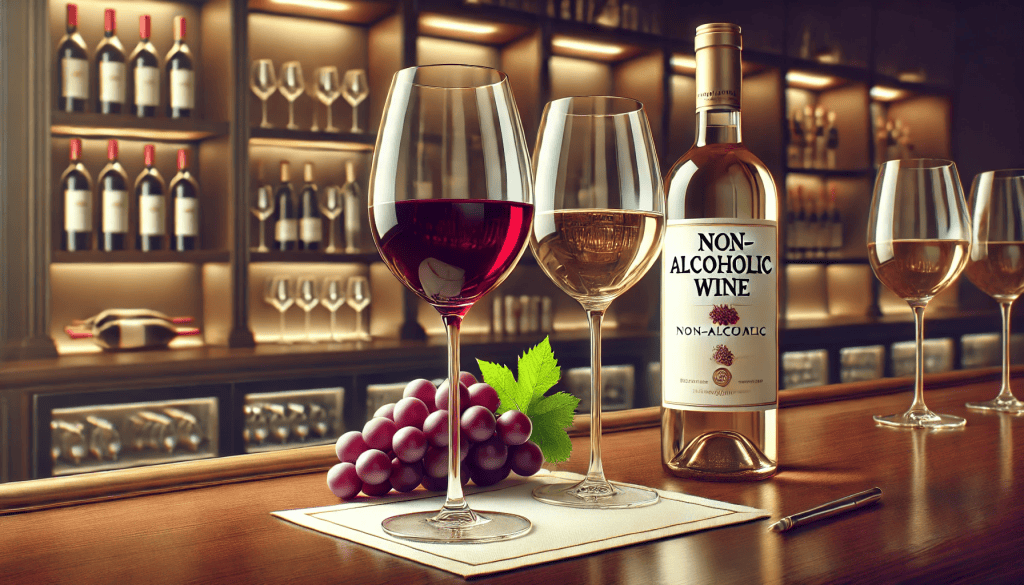
The key points to keep in mind about non-alcoholic wines are:
Traditional winemaking methods are applied before removing the alcohol through specialized processes.
Some reputable brands match or exceed the taste of standard wines.
Non alcoholic wines provide some additional health benefits compared to standard wines.
Availability is increasing at stores and restaurants as consumer demand grows.
Don’t dismiss them until you’ve tried some high-quality options – “a common truth, isn’t it.”
Myth #1: They Taste Like Grape Juice
One of the most common criticisms of dealcoholized wine is that it tastes like flat, sugary grape juice. But that couldn’t be further from the truth for well-made, dealcoholized wine.
Like regular wines, the grapes are crushed, pressed, and fermented using the traditional fermentation process. Only after this traditional process is the alcohol gently removed through vacuum distillation or reverse osmosis. This allows the wine to retain its natural flavors, aromas, acidity, and tannins from the grapes.
So, while lower-quality non-alcoholic wines may taste overly sweet or one-note, well-crafted ones can achieve impressive complexity, nuance, and balance.
Myth #2: They’re Just a Fad
When I first encountered non-alcoholic wines years ago, I assumed they were a passing trend – a fad fueled by the growing “sober curious” movement – but not a new beverage category that was here to stay. Well, I was wrong!
High-quality non-alcoholic wines have been produced for decades, just in relatively small quantities. With the change in drinking habits in recent years and consumers looking for alternatives to alcoholic beverages, the demand has skyrocketed. Major wine producers have noticed and ramped up non-alcoholic lines to meet this demand.
What was once a niche product is rapidly going mainstream, and well-known wine regions worldwide are now producing high-quality, non-alcoholic versions of their flagship varietals. Bars, restaurants, and retail stores are expanding their non alcoholic selections. All this isn’t a fleeting fad but reflects a real shift in how we consume beverages. Non-alcoholic wines are here to stay.
Myth #3: They’re Unhealthy
Some believe that processing out the alcohol strips out all of the potential health benefits of regular wines. Well, this is not accurate for well-crafted dealcoholized wines.
During the de-alcoholization process, skilled producers preserve many of the antioxidant compounds, like polyphenols, that give traditional wine some of its health benefits, including promoting heart health, reducing inflammation, and more.
Additionally, non-alcoholic wines don’t contain the empty calories from alcohol and tend to be much lower in calories and carbs than regular wines. This makes them a better option for people watching their weight or sugar intake. For comparison, 1 glass of traditional red wine has approx. 150 calories compared to approx. 30 calories for 1 glass of non-alcoholic wine, depending on the type of wine.
Of course, non alcoholic wine shouldn’t be viewed as a health tonic. But when enjoyed in moderation as part of a balanced diet, it can be a healthier way to experience the joys of wine without the alcohol.
Personal Tip: To learn more about this topic and related health benefits, I recommend reading the following site: Good Stuff Drinks

Myth #4: They’re Hard to Find
Until a few years ago, dealcoholized wines were difficult to get, but that has rapidly changed with the increase in production. You can find a growing selection of alcohol free wines at many grocery stores, liquor stores, and even restaurants or bars.
So, while you may not find the same breadth of options as standard wines in your area, sourcing high-quality non-alcoholic wines has gotten significantly easier in recent years, with an ever-expanding universe of specialty non-alcoholic wine retailers and online stores to choose from.
Myth #5: They’re Overpriced
Given the extra production steps required to remove alcohol from wines and their niche, I first assumed non-alcoholic wines would be generally more expensive. However, the reality shows that many popular non-alcoholic wines these days are quite affordable and priced competitively compared with standard wines.
While some higher-end, premium non-alcoholic wines have a higher price tag, there are also plenty of perfectly enjoyable non-alcoholic wines available for $10-15 or less per 750ml bottle.
FAQ – Non alcoholic wine
1. What does non alcoholic wine stand for?
Most are labeled “alcohol-free” if they contain less than 0.5% ABV, though they may have trace amounts. Some brands produce wines with 0.0% ABV.
2. How is the alcohol removed?
Standard methods include vacuum distillation, reverse osmosis, spinning cone columns, and specialized filters/membranes.
3. Can they be aged like regular wines?
Some premium non-alcoholic wines undergo barrel-aging or oak chip treatments similar to standard wines.
4. What styles/varieties are available?
Non-alcoholic wines span all major styles – red, white, rosé, sparkling, sparkling rosé, dessert wines, and many classic varietals.
5. Are they vegan/vegetarian-friendly?
Many are vegan/vegetarian, but this can vary by brand, so it’s best to check labels.
6. How long will open bottles last?
Generally, it is 5-7 days refrigerated in an airtight container, the same as traditional wine.
7. Can they cause hangovers?
No, non-alcoholic wines do not contain enough alcohol to cause hangovers.
8. Are they gluten-free?
Most are gluten-free by nature of their production, but certifications vary by brand.
9. Can they be consumed during pregnancy?
Most experts say non alcoholic wine is okay in moderation during pregnancy, but it’s best to check with your doctor.
10. Can kids drink them?
Non-alcoholic wines, even those with minimal alcohol levels, are intended for adult consumption. Most recommend limiting them to those aged 21 and older.
11. Can they be used in cooking?
Absolutely. Non-alcoholic wines add a great flavor dimension when cooking, just like regular wines.
12. Are they allowed for certain religions?
Guidelines vary, but many non-alcoholic wines meet the criteria for permitted beverages in certain faiths.
13. Do they have calories/carbs?
Yes, but far less than alcoholic wines since they don’t contain alcohol calories. Levels vary, but generally, 10-40 cals per glass.
14. How do they compare taste-wise to alcoholic wines?
They can achieve impressive complexity and balance similar to standard wines when well-made.
15. Where are the best places to buy them?
Liquor stores, wine shops, some grocery stores, and online retailers specializing in non-alcoholic wine.

Conclusion
In recent years, the volume and variety of non-alcoholic wines have rapidly increased due to growing consumer demand. Advanced production methods have improved the quality, and today’s non-alcoholic wines show an impressive flavor complexity and balance comparable to standard wines. To verify these facts, I have tasted a variety and concluded that the above arguments, combined with the undeniable health benefits, make them a viable alternative to traditional wines.
As consumer demand increases, non-alcoholic wines become more widely available and affordable. I hope your curiosity has increased and you will try some well-crafted non-alcoholic wines.
Enjoy, and Cheers!
For your reference, the latest articles by Didi Somm include:
- 10 Expert Insights on “How Long Does Wine Last Unopened”
- Wall Wine Rack Ideas – 5 Expert Tips for You
- How Many Calories in a Bottle of Wine? – Find Out Here
- What Wine Goes with Salmon? Discover 11 Expert Tips
- Mini Wine Fridge – Best Selection of up to 18 Bottles
- What Temperature Should Red Wine Be Stored At? – 7 Expert Tips
Important Notice: The information in this article is for general and public information purposes only. It solely reflects Didi Somm’s or his Staff’s opinion, and no responsibility can be assumed for errors or omissions in the Service’s contents – for details, please check the Disclaimer at the bottom of the homepage.