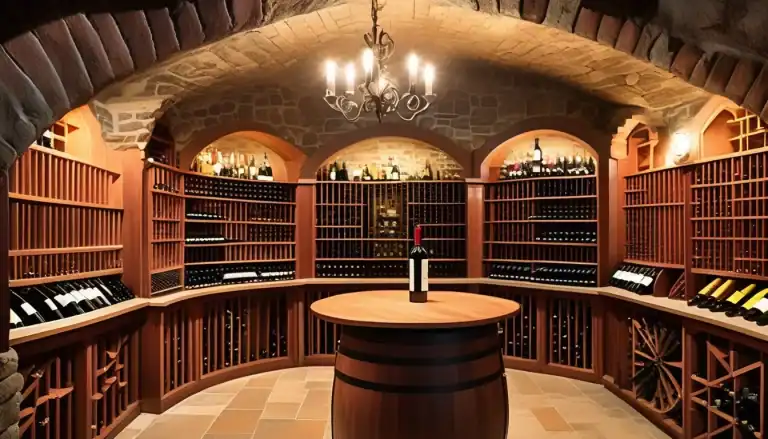
Picture this: You’re descending the stairs to your wine cellar, anticipation building with each step. As you reach the bottom, you’re greeted not just by rows of carefully curated bottles, but by a cozy, inviting space designed for savoring every sip. Welcome to your very own wine cellar tasting room!
Did you know that 44% of wine enthusiasts consider a dedicated tasting area essential for fully appreciating their collection? It’s not just about storage anymore – it’s about creating an experience.
In this guide, we’ll walk you through the process of transforming a corner of your cellar into a haven for wine lovers. From lighting tricks that make your Merlot shimmer to furniture choices that’ll have your guests lingering over that last glass of Chardonnay, we’ve got you covered.
Let’s uncork the possibilities and dive into creating your dream tasting space!
Welcome to Didi Somm, and Cheers!
Important Notice: The information in this article is for general and public information purposes only. It solely reflects Didi Somm’s or his Staff’s opinion, and no responsibility can be assumed for errors or omissions in the service’s contents. For details, please check the Disclaimer at the bottom of the homepage.
Key Takeaways
- A well-designed tasting room enhances the wine experience
- Proper lighting is crucial for both ambiance and wine evaluation
- Comfortable seating and appropriate furniture are essential
- Temperature and humidity control are vital for wine preservation
- Thoughtful decor can elevate the overall atmosphere
- Proper glassware and tasting tools are important for wine appreciation
Choosing the Perfect Location
When I first started planning my wine cellar tasting room, I thought any ol’ corner would do. Boy, was I wrong! After a few missteps (like putting it next to the noisy furnace), I learned some valuable lessons about choosing the perfect spot.
First things first, take a good hard look at your existing cellar space. You want an area that’s easy to get to but not in the way of your main wine storage. Trust me, you don’t wanna be squeezing past guests every time you need to grab a bottle!
Natural light can be tricky. I once had a small window in my tasting area, thinking it’d be nice and cozy. Turns out, direct sunlight and wine don’t mix well. If you’ve got windows, think about how you’ll manage the light to protect your precious vino.
Ventilation is key, folks. Nobody wants to sip Cabernet in a stuffy room. I learned this the hard way during a summer tasting that felt more like a sauna. Now, I’ve got a small, quiet fan that keeps the air moving without disrupting the ambiance.
And don’t forget about traffic flow! My first layout had guests bumping elbows every time someone wanted to stand up. Not cool. Think about how people will move around the space, especially when you’re hosting a tasting party.
Designing the Layout
Alright, let’s talk about designing your wine tasting area layout. This is where the rubber meets the road, folks. I remember when I first tackled this – I was like a kid in a candy store, but with no idea where to start!
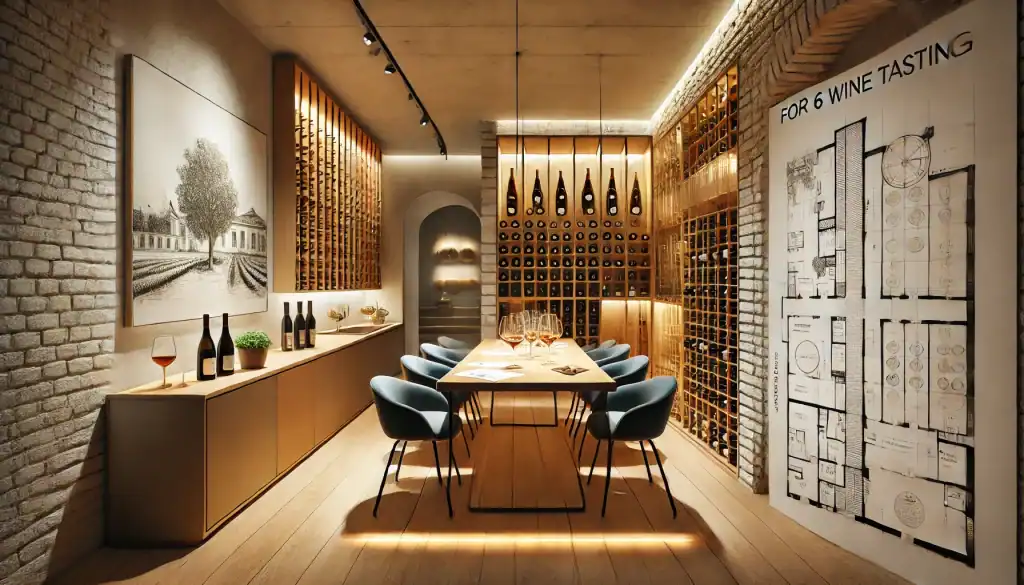
First up, size matters. You don’t want to feel like sardines in a can, but you also don’t need a ballroom. I found that about 100 square feet comfortably fits a tasting table for 4-6 people. Of course, adjust based on your space and needs.
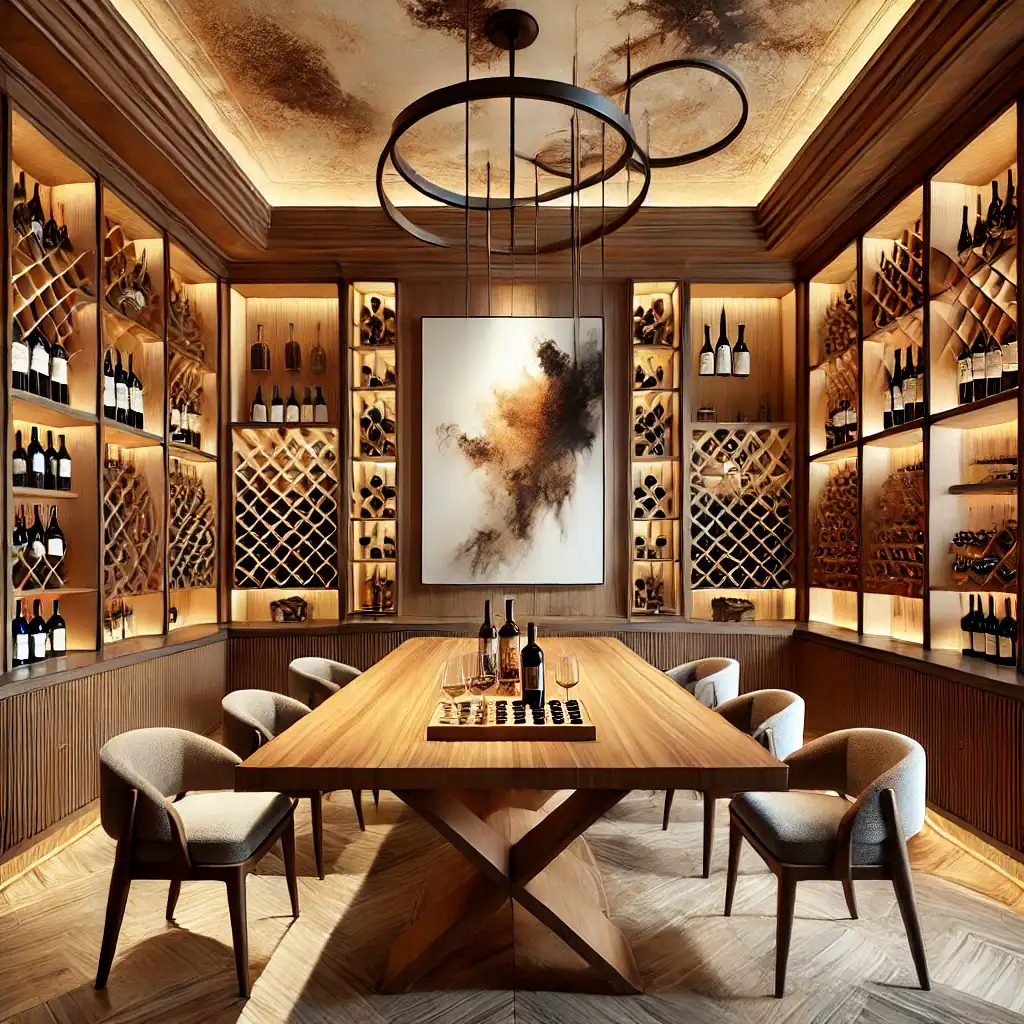
Now, the heart of your tasting area: the table or bar. This is where the magic happens! I went with a sturdy oak table that’s seen more wine spills than I care to admit. Whatever you choose, make sure it’s easy to clean and has enough space for glasses, bottles, and tasting notes.
Don’t forget storage! I learned the hard way that fumbling for the right glass or corkscrew can really kill the mood. Now I’ve got a sleek cabinet that keeps everything within arm’s reach. Trust me, your future self will thank you.
Think about creating different zones. I’ve got my tasting area, a cozy corner for lounging, and a small storage space for featured wines. It’s like a mini wine theme park! If you’ve got the room, a prep area or kitchenette is a game-changer. I added a small sink and mini-fridge, and it’s been a lifesaver for rinsing glasses and chilling whites.
Lighting Solutions for Ambiance and Function
Lighting in your wine-tasting room is like the secret ingredient in a great recipe – it can make or break the whole experience. Trust me, I learned this the hard way when I hosted my first tasting under harsh fluorescent lights. Talk about a mood killer!
First things first, dimmable overhead lighting is your best friend. I installed a simple chandelier with a dimmer switch, and it’s been a game-changer. One moment you’re examining the color of a Pinot Noir, the next you’re creating a cozy ambiance for sipping and chatting.
Warm, soft lighting is key for setting the mood. I’ve got a couple of wall sconces that give off this golden glow – it makes everyone look like they’re in a fancy wine commercial! But be careful not to go too dim. You don’t want your guests squinting at their glasses or tripping over chair legs.
Now, here’s a pro tip: task lighting is crucial for proper wine evaluation. I’ve got a couple of adjustable LED lamps that I can point at the tasting table. They’re perfect for when you want to really examine the color and clarity of your wine.
Oh, and don’t underestimate the power of LED strip lights! I added some under my wine racks, and let me tell you, it looks like something out of a high-end wine shop. Plus, it helps when you’re trying to find that specific bottle without turning on all the lights.

Selecting Furniture and Seating
Choosing the right furniture for your wine tasting room is like picking the perfect wine pairing – it can elevate the whole experience. I remember when I first started, I thought any old table and chairs would do. Boy, was I in for a surprise!
Let’s start with the tasting table. This is the centerpiece of your room, so don’t skimp here. I learned the hard way that a flimsy table and red wine don’t mix. Now I’ve got a solid oak table that’s seen more wine spills than a vineyard during harvest, and it still looks great. Make sure whatever you choose is sturdy and easy to clean.
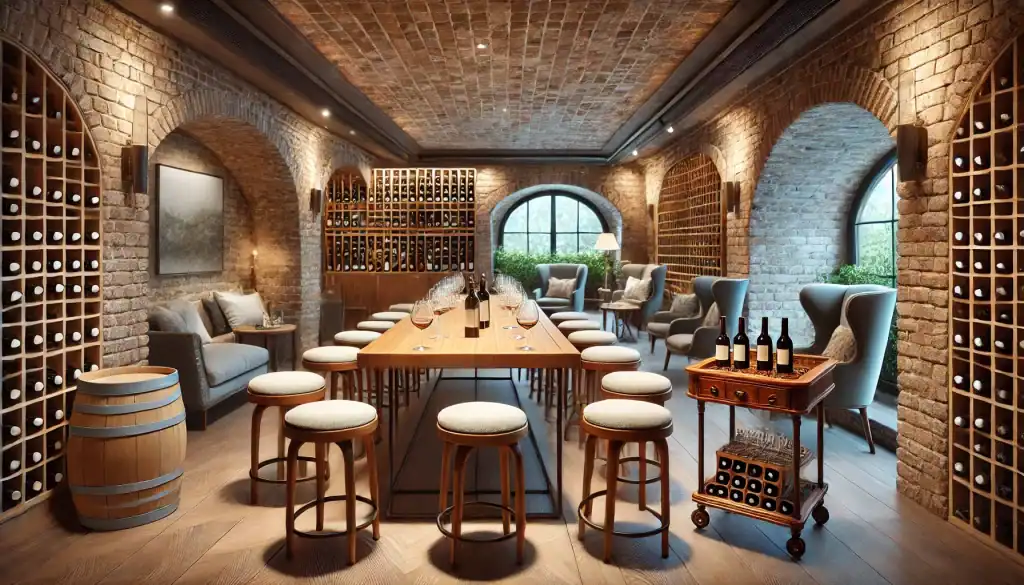
When it comes to seating, comfort is key. I started with some cheap folding chairs and quickly realized my guests were more focused on their aching backs than the wine. Now I’ve got a mix of cushioned stools for the tasting table and some comfy armchairs for lounging. Trust me, your guests will thank you.
Don’t forget about a cozy lounge area! This is where the real magic happens – where people can relax with a glass and chat. I’ve got a small sofa and a couple of armchairs arranged around a low table. It’s perfect for those times when a tasting turns into an all-evening affair.
A wine cart or serving station is a game-changer. I picked up an antique bar cart at a flea market, and it’s not only functional but adds a touch of vintage charm. It’s great for holding decanters, extra glasses, and those bottles you’re planning to open next.
Temperature and Humidity Control
Let’s talk about temperature and humidity control in your wine tasting room. This is one area where I really goofed up when I first started. I thought, “Hey, it’s a cellar, it’ll naturally be cool and damp, right?” Wrong! I ended up with a bunch of cooked wines and moldy labels. Not exactly the sophisticated vibe I was going for.
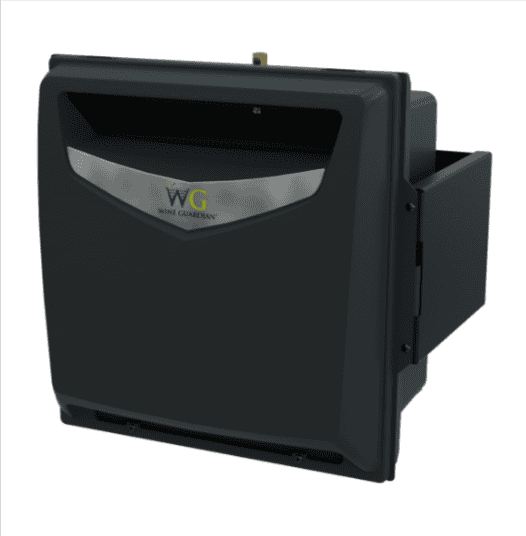
First things first, you need a separate climate control system for your tasting area. I installed a small, quiet unit that keeps the temperature steady without sounding like a jet engine. Trust me, nothing ruins a tasting faster than having to shout over the AC.
Now, here’s the tricky part – maintaining that perfect temperature range. You want it cool enough to keep your wines happy (around 55-65°F is ideal), but not so chilly that your guests are shivering. I found that 60°F is the sweet spot for both wine and people.
Humidity is another beast altogether. Too dry, and your corks will shrink, letting air into your bottles. Too damp, and you’re hosting a mold party. I learned to keep it around 60-70% humidity. A small humidifier or dehumidifier can work wonders here.
Insulation is key, especially if your tasting area is part of a larger cellar. I added some extra insulation between my tasting room and main storage area. It helps maintain different temperatures and keeps your tasting space feeling cozy. Oh, and consider a glass partition – it’s not just for looks! It helps with climate control and gives your space a real high-end feel.
Decor and Aesthetics
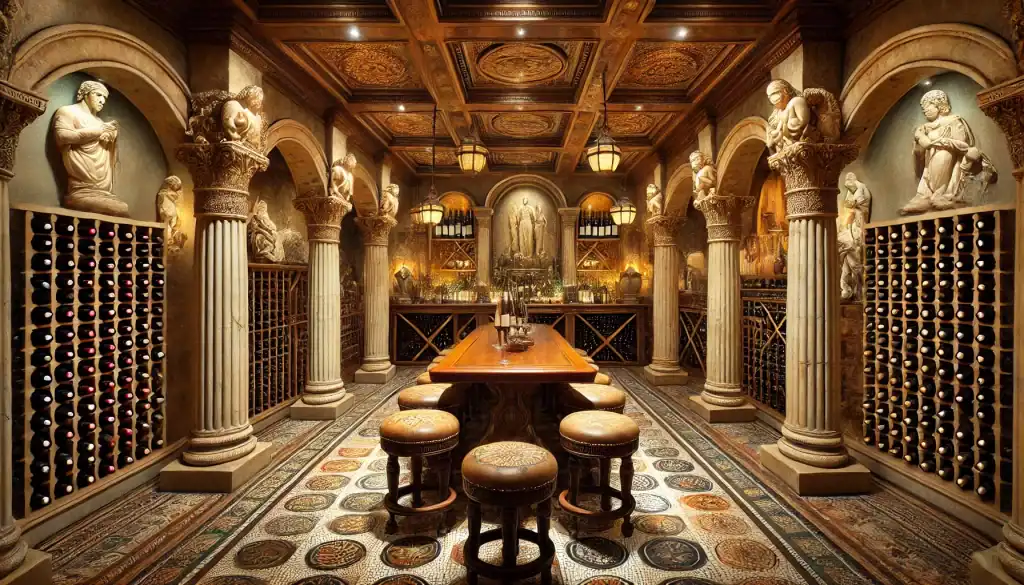
When it comes to decorating your wine tasting room, it’s all about creating a vibe that makes you and your guests want to linger over that last glass. I remember when I first started, I went a little overboard with the whole “wine theme” thing. Let’s just say there were grape-shaped everything and more corks than I knew what to do with!
First off, think about a theme or style that flows with the rest of your home. You don’t want your tasting room to feel like it’s from another planet. I ended up going for a rustic Tuscan look, with warm terracotta walls and some wrought iron accents. It feels cozy and transports you to wine country the moment you step in.
Now, don’t be afraid to show off your wine passion! I’ve got a few vintage wine posters that I picked up at flea markets – they add a pop of color and are great conversation starters. And those unique wine accessories you’ve collected over the years? Display ’em proudly! I’ve got an old-school corkscrew collection that always gets people talking.
Color is key in creating the right atmosphere. Rich, warm tones like deep reds, earthy browns, and golden yellows can make your space feel inviting and intimate. I painted one wall a deep burgundy, and it’s like it gives the whole room a warm hug.
Don’t forget about texture! A plush rug underfoot, some velvet curtains, or a rough-hewn wooden beam can add depth and interest to your space. I added a cork wall covering to one area – it looks super cool and helps with acoustics. Just remember, whatever you choose should be easy to clean. Wine spills happen, even in the fanciest of tasting rooms!
Essential Equipment and Accessories
Alright, let’s talk about the tools of the trade – the essential equipment and accessories for your wine tasting room. When I first started out, I thought all I needed was a corkscrew and some glasses. Oh, how naive I was!
First things first, invest in good quality wine glasses. And I mean different types for different varietals. I started with a set of universal glasses, but quickly realized that a Burgundy glass can make a world of difference for your Pinot Noir. Now I’ve got a collection that would make a sommelier proud – and yes, they do take up a lot of storage space!
A wine fridge is a game-changer. I used to just pull bottles from my cellar, but serving temperature is crucial for enjoying wine at its best. I got a dual-zone fridge that lets me keep whites and reds at their ideal serving temps. Trust me, it’s worth every penny.
Now, what about those half-empty bottles at the end of a tasting? I learned the hard way that recorking doesn’t cut it. I now use a vacuum pump system to remove air from opened bottles. It’s saved me from pouring out more wine than I care to admit.
Don’t forget the accessories! A good decanter isn’t just for show – it can really open up a young red. And an aerator? Pure magic for those wines that need a little coaxing. Oh, and always have a few drip rings on hand. They’ve saved my tablecloth more times than I can count.
Lastly, consider how you’ll keep track of your tastings. I started with a paper notebook, but now I use a wine app on my tablet. It’s great for taking notes, keeping track of my inventory, and even has food pairing suggestions. Plus, no more trying to decipher my wine-stained handwriting!

FAQ – Wine Cellar Tasting Room
- Q: How much space do I need for a wine cellar tasting room? A: While sizes can vary, aim for at least 100-150 square feet to comfortably accommodate a tasting table and seating for 4-6 people.
- Q: What’s the ideal lighting for a wine-tasting area? A: Opt for dimmable, warm lighting with a color temperature of around 2700K-3000K. Include task lighting for proper wine evaluation.
- Q: Can I create a tasting area in a small wine cellar? A: Yes! Even a corner with a small table and a couple of stools can serve as a cozy tasting nook in a compact cellar.
- Q: What type of flooring is best for a wine cellar tasting room? A: Durable, easy-to-clean options like stone, tile, or sealed concrete work well. Avoid carpets, which can trap odors and spills.
- Q: How do I control the temperature in my tasting area? A: Install a separate climate control system or use a glass partition to maintain a slightly warmer temperature (55-65°F) than your main storage area.
- Q: What essential furniture do I need for a tasting room? A: At a minimum, you’ll want a sturdy tasting table or bar, comfortable seating, and storage for glassware and accessories.
- Q: How can I incorporate technology into my tasting room? A: Consider adding a smart TV for virtual tastings, a tablet for wine inventory management, or a Bluetooth speaker system for background music.
- Q: What are some budget-friendly ways to create a tasting area? A: Repurpose existing furniture, use creative lighting solutions, and focus on a few key decorative elements to keep costs down.
- Q: How do I ensure proper ventilation in my tasting room? A: Install a small exhaust fan or ensure your climate control system includes air circulation to prevent stale air and mold growth.
- Q: What types of glasses should I have in my tasting room? A: Stock a variety of glasses suitable for red, white, and sparkling wines. Universal tasting glasses are also a versatile option.
- Q: How can I make my tasting room more eco-friendly? A: Use LED lighting, opt for sustainable materials in furniture and decor, and consider a wine preservation system to reduce waste.
- Q: What’s the best way to display wine in the tasting area? A: Use wall-mounted racks, custom shelving, or a small wine fridge to showcase select bottles while maintaining proper storage conditions.
- Q: How do I create a multi-functional space in my tasting room? A: Include a folding table for larger gatherings, or add a desk area for studying wine literature when not hosting tastings.
- Q: What are some unique decor ideas for a wine-tasting room? A: Consider a cork accent wall, repurposed barrel furniture, wine-themed artwork, or a chalkboard wall for tasting notes.
- Q: How can I make my tasting room more accessible for guests? A: Ensure proper lighting on stairs, provide sturdy handrails, and consider adding a small elevator if your cellar is difficult to access.
Conclusion
Creating a wine cellar tasting room is more than just carving out a space – it’s about crafting an experience. From the soft glow of perfectly chosen lighting to the comfort of well-selected seating, every element plays a role in elevating your wine journey.
Remember, this is your sanctuary, a place where vintages come to life and memories are bottled alongside your favorite wines. As you embark on this exciting project, let your passion for wine guide your decisions.
Whether you’re hosting intimate tastings or simply unwinding after a long day, your personalized tasting room will be the crown jewel of your home wine cellar. So, raise a glass to new beginnings and toast to the amazing experiences that await in your very own wine haven.
Cheers to creating a space where every sip tells a story!
For your reference, the latest articles by Didi Somm include:
- Best Home Wine Cellar Cooling Systems in 2024: 5 Expert Tips
- How to Maintain Proper Wine Cellar Ventilation: Best Expert Tips
- Best Wine Cellar Doors: Balancing Design and Functionality
- The Best Wine Racks for Home Cellars: A Comprehensive Guide
- 5 Best Wine Cellar Flooring Options: Our Expert Guide
- Best Wine Cellar Cooling Units For Your Home in 2024: Expert Report
Important Notice: The information in this article is for general and public information purposes only. It solely reflects Didi Somm’s or his Staff’s opinion, and no responsibility can be assumed for errors or omissions in the service’s contents. For details, please check the Disclaimer at the bottom of the homepage.