Did you know that storing wine at the wrong temperature can dramatically alter its taste and aging potential?
According to a study by the International Wine and Food Society, even a 5-degree fluctuation can significantly impact wine quality! As a wine enthusiast for many years, I’ve seen countless collectors struggle with their wine fridge settings.
Here, we explore all the essential knowledge related to wine fridge temperature settings and how to maintain the perfect environment for your precious wine collection.
Welcome to Didi Somm, and Cheers!
Important Notice: The information in this article is for general and public information purposes only. It solely reflects Didi Somm’s or his Staff’s opinion, and no responsibility can be assumed for errors or omissions in the service’s contents. For details, please check the Disclaimer at the bottom of the homepage.
Key Takeaways
- Red wines generally need storage temperatures between 55-65°F (13-18°C)
- White wines and sparkling wines require cooler temperatures of 45-55°F (7-13°C)
- Dual-zone wine fridges offer optimal storage for both red and white wines
- Humidity levels should be maintained between 60-70%
- Temperature stability is crucial for long-term wine storage
Understanding Wine Storage Temperature Basics
Let me tell you, understanding wine storage temperature was a real game-changer in my journey as a wine collector.
After watching a $200 bottle of Bordeaux turn into expensive vinegar due to improper storage, I learned my lesson the hard way! The science behind wine aging is fascinating – temperature directly affects the chemical reactions that develop those complex flavors we love.
Here’s what I’ve discovered after years of experience: Consistent temperature is absolutely crucial, even more than hitting an exact number on the thermometer. I’ve found that keeping wine between 53-57°F is ideal, but what really matters is avoiding those pesky temperature swings.
Think of your wine as a living thing that’s sensitive to its environment. When temperature fluctuates dramatically, it causes the wine to expand and contract, potentially allowing oxygen to seep past the cork.
One of the biggest mistakes I see fellow collectors make is confusing serving temperature with storage temperature. Trust me, just because you like your Cabernet at 65°F doesn’t mean it should be stored at that temperature!
The impact of temperature fluctuations can be devastating – I’ve seen collections ruined by storing wine in garages or kitchens where temperatures bounce around like a ping-pong ball.
Key Points – Summary
| Aspect | Details |
|---|---|
| Importance of Proper Storage | Prevents wine from turning into vinegar and preserves its quality over time. |
| Ideal Storage Temperature | 53-57°F is optimal for most wines. |
| Key Rule | Consistency is more important than hitting an exact temperature. Avoid temperature fluctuations. |
| Why Temperature Matters | It affects the chemical reactions that develop the wine’s complex flavors. |
| Effect of Fluctuations | Causes wine to expand and contract, potentially allowing oxygen to seep past the cork. |
| Common Mistake | Confusing serving temperature (e.g., 65°F for Cabernet) with storage temperature. |
| Risks of Improper Storage Locations | Areas like garages or kitchens with fluctuating temperatures can ruin wine collections. |
| Wine as a “Living Thing” | Wine is sensitive to its environment, requiring careful handling to preserve its integrity. |
Optimal Temperature Ranges for Different Wine Types
After spending years fine-tuning my wine storage approach, I’ve developed a pretty solid understanding of temperature requirements for different wines. Let me break it down for you!
For red wines, I’ve found that 55°F is the sweet spot for long-term storage. My Cabernets, Merlots, and Syrahs have been aging beautifully at this temperature. When it comes to white and rosé wines, I keep them slightly cooler at around 50°F.
I learned this lesson after storing some premium Chardonnays at red wine temperatures – they aged too quickly and lost their crisp character. Champagne and sparkling wines are particularly fussy (aren’t they always?), and I’ve had the best results storing them between 47-50°F to preserve those precious bubbles.
For dessert wines like my favorite Sauternes, I maintain a consistent 55°F, which allows them to develop their honey-like complexity without accelerating the aging process.
Speaking of aging, here’s a pro tip I wish I’d known earlier: regardless of the wine type, long-term aging is best achieved at a steady 55°F. This temperature slows down the aging process just enough while allowing the wine to develop those gorgeous tertiary flavors.
| Wine Type | Optimal Storage Temperature | Reason |
|---|---|---|
| Red Wines | 55°F (13°C) | Ideal for aging Cabernets, Merlots, and Syrahs beautifully over time. |
| White & Rosé Wines | 50°F (10°C) | Maintains their crisp character and prevents premature aging. |
| Champagne & Sparklings | 47-50°F (8-10°C) | Preserves bubbles and prevents flavor degradation. |
| Dessert Wines (e.g., Sauternes) | 55°F (13°C) | Allows honey-like complexity to develop without accelerating the aging process. |
| “Pro Tip” for All Wines | 55°F (13°C) | Best for long-term aging to slow the process and develop complex tertiary flavors. |
Affiliate Disclaimer: This page may include Affiliate links, meaning that we get a commission if you decide to purchase through this site at no extra cost to you. Please read our Disclaimer for your info.
Setting Up Your Wine Fridge Zones
Boy, did I learn some valuable lessons when setting up my first wine fridge!
After upgrading from a basic single-zone unit to a dual-zone model, I discovered that proper zone configuration makes all the difference. The beauty of dual-zone fridges is that you can maintain different temperature zones for various wine types, but here’s the catch – you need to understand temperature stratification.
Hot air rises, and cold air sinks, which means the temperature can vary by several degrees from top to bottom, even within the same zone. Through trial and error, I’ve perfected my bottle arrangement strategy: I store full-bodied reds at the top where it’s slightly warmer, whites and sparklers at the bottom where it’s coolest, and medium-bodied wines in the middle.
The key to using temperature zones effectively is to think about your drinking habits. I keep my ready-to-drink wines in zones that are closer to serving temperature, while my aging wines stay in the optimal storage zones.
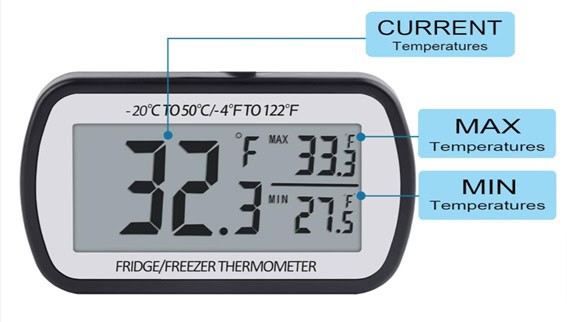
For monitoring, I’ve installed small digital thermometers at different heights in each zone because the built-in display doesn’t always tell the whole story.
Pro Tip: Please check the AEVETE Digital Fridge Thermometer with magnetic back – it is perfect for this task.
Maintaining Proper Temperature Control
Getting the temperature right is just the beginning – maintaining it consistently is where the real challenge lies!
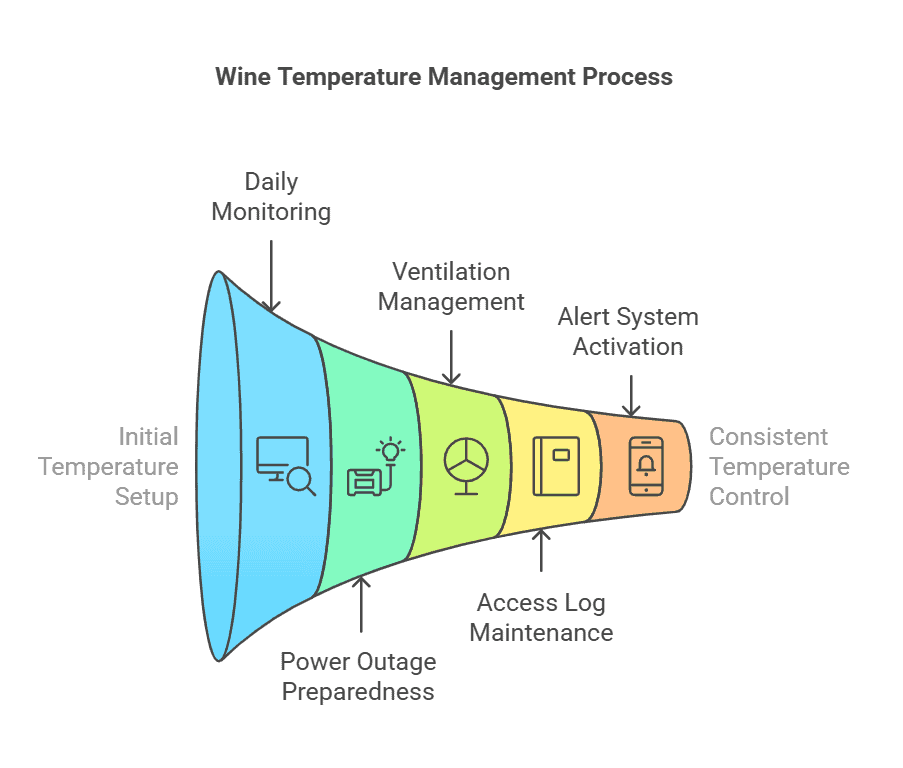
I’ve developed a pretty foolproof system for monitoring my wine fridge temperatures after some nerve-wracking close calls. Every morning, I check my digital monitoring system (worth every penny, by the way) to ensure everything’s running smoothly.
Power outages used to keep me up at night until I invested in a backup generator specifically for my wine fridge – might seem like overkill, but it’s saved my collection more than once!
One interesting thing I’ve noticed is that seasonal changes can affect fridge performance, even indoors. During summer months, I make sure there’s plenty of ventilation around the unit to prevent it from working too hard.
The biggest challenge I faced was dealing with temperature recovery after opening the door. Pro tip: I now keep a log of when I access the fridge and try to consolidate my bottle retrievals to minimize temperature fluctuations.
The digital monitoring system I installed sends alerts to my phone if the temperature strays outside my set parameters, giving me peace of mind when I’m away.
Advanced Temperature Management Tips
After over a decade of collecting wine, I’ve picked up some advanced temperature management techniques that have really upped my game.
First things first – don’t trust your wine fridge’s temperature display blindly. I learned this the hard way when I discovered a 4-degree difference between the display and actual temperature! Now, I calibrate my wine fridge settings every three months using a professional-grade thermometer.
Energy efficiency has become a major focus for me, too, especially after seeing my electricity bills spike during summer months. I’ve found that strategic placement of the fridge away from direct sunlight and heat sources, combined with regular coil cleaning, makes a huge difference in performance.
When it comes to temperature zoning strategies, I’ve developed a system where I map out “hot spots” and “cold spots” within each zone using multiple thermometers. This helps me place bottles more strategically based on their specific temperature needs.
Professional maintenance has been a game-changer – I schedule semi-annual checkups with a specialized technician who checks the seals and cooling system and calibrates everything perfectly. It’s not cheap, but considering the value of my collection, it’s absolutely worth it.
| Frequency | Task | Details |
|---|---|---|
| Ongoing | Monitor Actual Temperature | Fridge displays can be off by several degrees. A separate thermometer helps verify the actual temperature. |
| Every 3 Months | Calibrate Wine Fridge Regularly | Do not rely solely on the fridge’s temperature display; calibrate every three months with a professional-grade thermometer to ensure accuracy. |
| Seasonally | Optimize Energy Efficiency | Place the fridge away from direct sunlight and heat sources, and clean coils regularly to enhance performance and reduce energy costs. |
| As Needed | Use Temperature Zoning | Map “hot spots” and “cold spots” within the fridge using multiple thermometers and place bottles strategically based on their temperature needs. |
| Twice a Year | Schedule Professional Maintenance | Arrange semi-annual checkups with a specialized technician to check seals, cooling systems, and calibrate for optimal performance. |
FAQ – Wine Fridge Temperature Settings
- What is the ideal temperature for storing red wine?
The ideal storage temperature for red wine is between 55-65°F (13-18°C), with 55°F being optimal for long-term aging. - Can I store white and red wines at the same temperature?
Yes, all wines can be stored at 55°F (13°C), though whites are typically served cooler and may be stored slightly cooler for short-term storage. - How often should I check my wine fridge temperature?
Monitor your wine fridge temperature at least weekly, ideally using a separate thermometer for accuracy. Set up digital alerts if your unit has this capability. - What temperature fluctuations are acceptable for wine storage?
Temperature fluctuations should not exceed 3-5°F (1.5-2.5°C) per day. Consistent temperature is more important than precise temperature. - Why does my wine fridge display different temperatures at different spots?
Temperature stratification is natural – warm air rises, and cold air sinks. This is why proper bottle arrangement and regular maintenance are crucial for even temperature distribution. - Should I adjust my wine fridge temperature seasonally?
No, wine fridges should maintain consistent temperatures year-round. They’re designed to compensate for seasonal ambient temperature changes. - What happens if my wine fridge loses power?
Keep the door closed to maintain temperature as long as possible. If a power outage exceeds 24 hours, consider temporary alternative storage solutions. - Is it normal for temperature to rise when I open the door?
Yes, brief temperature increases when accessing your wine fridge are normal. Modern units are designed to recover quickly to set temperature. - How do I know if my wine fridge temperature display is accurate?
Use a separate thermometer to verify the displayed temperature. Place it at different levels within the fridge and monitor for 24 hours. - What’s the best temperature setting for champagne storage?
Store champagne and sparkling wines at 50-55°F (10-13°C) for optimal preservation of bubbles and flavor development. - How does humidity relate to wine fridge temperature?
Humidity levels should be maintained between 60-70%. Lower temperatures typically result in higher humidity levels, which is beneficial for cork health. - Can I store opened wine bottles in my wine fridge?
Yes, but store them upright and at serving temperature rather than storage temperature, and consume within 3-5 days for best results. - What’s the ideal temperature difference between zones in a dual-zone wine fridge?
Typically, maintain a 10-15°F difference between zones, with the cooler zone at 45-50°F (7-10°C) for whites and the warmer zone at 55-65°F (13-18°C) for reds. - How long should I wait after installation before storing wine?
Allow your wine fridge to run for 24 hours at desired temperature before storing wine to ensure temperature stability. - What temperature should I set for vintage wine storage?
Store vintage wines at a consistent 55°F (13°C), which is ideal for long-term aging regardless of wine type. This temperature slows the aging process while allowing proper development.
Conclusion
Proper temperature management is crucial for preserving your wine collection’s quality and value.
By following these guidelines and maintaining consistent temperature settings in your wine fridge, you’ll ensure your wines age gracefully and maintain their intended characteristics.
After all, I truly believe that investing time in proper temperature control today will reward you with better-tasting wines tomorrow!
Enjoy your precious wine collection, and Cheers!
For your reference, the latest articles by Didi Somm include:
- The Ultimate Wine Refrigerator Guide: Best Expert Tips For You
- How To Choose The Perfect Wine Fridge: A Beginner’s Guide 2025
- Wine Fridge Vs Regular Refrigerator – Best Expert Guide
- Top 5 Dual-Zone Wine Refrigerators: Best Expert Guide for You
- Best Energy-Efficient Wine Fridges: Get Expert Tips And Advice
- How to Clean Wine Refrigerator: Best Expert Guide
Important Notice: The information in this article is for general and public information purposes only. It solely reflects Didi Somm’s or his Staff’s opinion, and no responsibility can be assumed for errors or omissions in the service’s contents. For details, please check the Disclaimer at the bottom of the homepage.