
Did you know that wine consumption in the United States reached 1.1 billion gallons in 2023?
As wine enthusiasts, we’re always looking for creative ways to transport our favorite bottles safely and stylishly. Whether you’re heading to a dinner party or planning a picnic, DIY wine carriers add a personal touch to your wine presentation.
I’ve spent years exploring various DIY solutions, and I’m excited to share these innovative ideas that combine functionality with creative expression!
Welcome to Didi Somm, and Cheers!
Important Notice: The information in this article is for general and public information purposes only. It solely reflects Didi Somm’s or his Staff’s opinion, and no responsibility can be assumed for errors or omissions in the service’s contents. For details, please check the Disclaimer at the bottom of the homepage.
Key Takeaways
- Learn to create sustainable wine carriers using readily available materials
- Master basic construction techniques for sturdy and reliable carriers
- Discover creative ways to personalize your wine carriers
- Understand essential safety considerations for wine transportation
- Save money while creating unique, conversation-starting pieces
Essential Materials and Tools for DIY Wine Carriers
Let me tell you, after years of crafting wine carriers, I’ve learned that starting with the right materials makes all the difference!
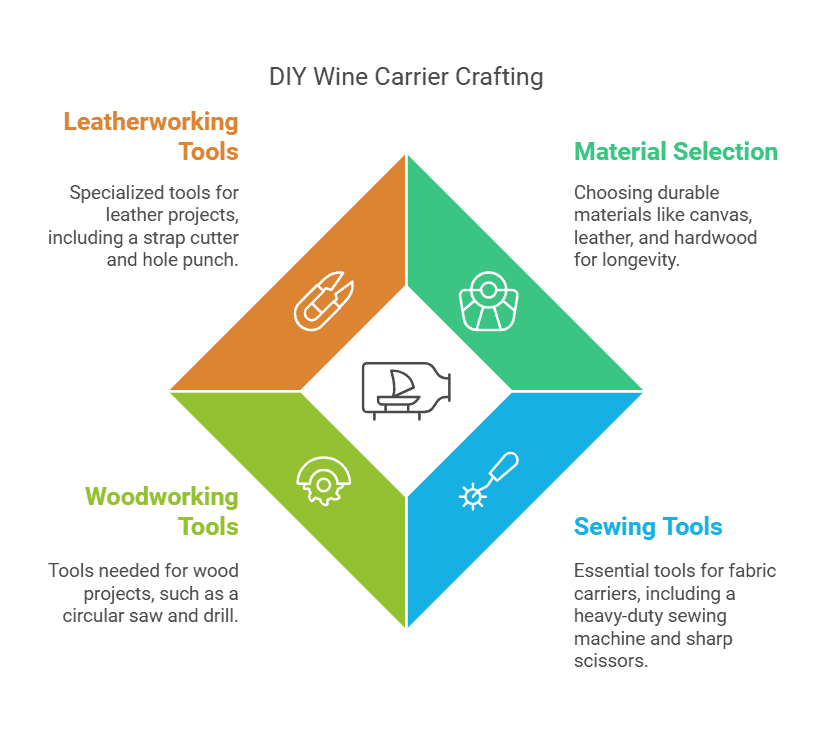
My first attempt using flimsy fabric was a disaster – two broken bottles later, I knew better. Now, I always start with heavy-duty materials like 12-ounce canvas, full-grain leather (4-5oz weight), or 1/2-inch hardwood like oak or walnut.
For fabric carriers, you’ll need a heavy-duty sewing machine with leather needles (size 90/14 or larger), sharp scissors, and a rotary cutter with a self-healing mat. If you’re working with wood, essential tools include a circular saw, a drill with various bits, and wood glue rated for outdoor use. I’ve found that leather projects require specialized tools like a strap cutter, hole punch, and edge beveler – trust me, they’re worth the investment!
Here’s a money-saving tip: while store-bought carriers can run $50-200, DIY versions typically cost $15-40 in materials. When selecting materials, always opt for water-resistant options. I love using cork fabric as an eco-friendly alternative – it’s naturally antimicrobial and looks fantastic!
Basic Construction Techniques
After countless attempts at perfecting construction methods, I’ve developed some foolproof techniques that haven’t failed me yet.
For fabric carriers, start by cutting your main pieces with a 1/2-inch seam allowance – I learned this the hard way when my first few projects came apart at the seams!
When working with wood, I use box joints or rabbeted corners reinforced with brass screws for maximum durability.
The game-changer for leather carriers? Double-stitching with waxed thread using a saddle stitch pattern. Don’t skip reinforcing stress points – I add rivets at handle attachments and use interfacing or additional fabric layers at the bottom.
For waterproofing, I’ve had great success with beeswax treatments on fabric and marine-grade spar urethane for wood projects.
Pro Tip: Let all waterproofing treatments cure for at least 48 hours before use – I once rushed this step and ended up with a sticky mess all over my favorite white shirt!
Creative Design Ideas and Inspiration
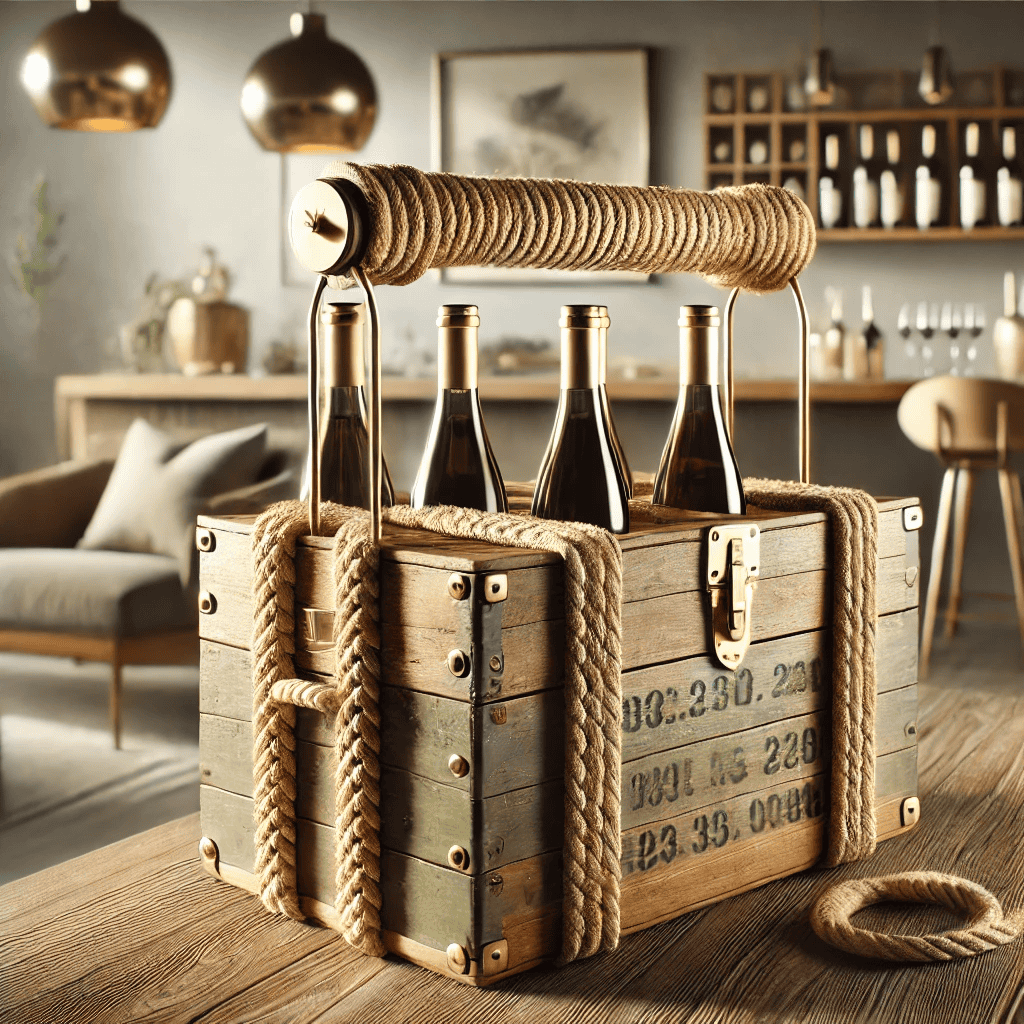
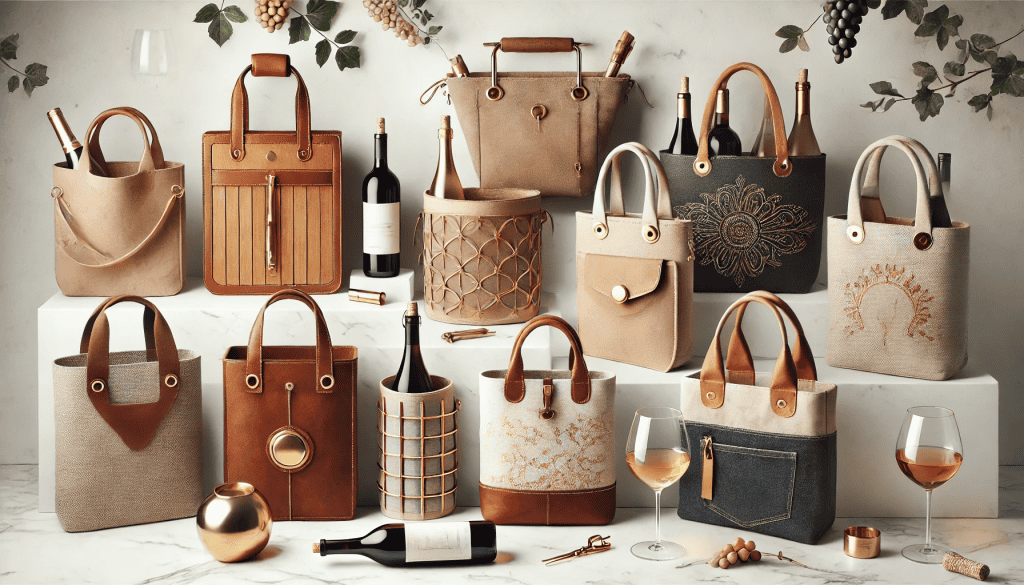
Oh boy, do I love getting creative with wine carrier designs! My absolute favorite project was transforming an old ammunition box into a rustic wine carrier using sisal rope handles and brass hardware.
The secret to making wooden carriers stand out? Add personality with pyrography or carved designs. For leather totes, I create adjustable dividers using thick felt and leather straps with chicago screws – this lets you customize the interior for different bottle sizes.
One of my most popular designs started as an experiment with old jeans; I deconstructed them and created a quilted pattern with added insulation. The thermal protection comes from a layer of Reflectix between the outer fabric and lining.
My proudest creation? Converting a vintage Samsonite suitcase into a six-bottle carrier complete with custom foam inserts and a refurbished leather handle. The key is thinking outside the box – almost any sturdy container can become a unique wine carrier!
Customization and Personalization
Nothing beats the feeling of creating a truly personalized wine carrier! I’ve spent countless hours experimenting with different decorative techniques, and let me share what really works.
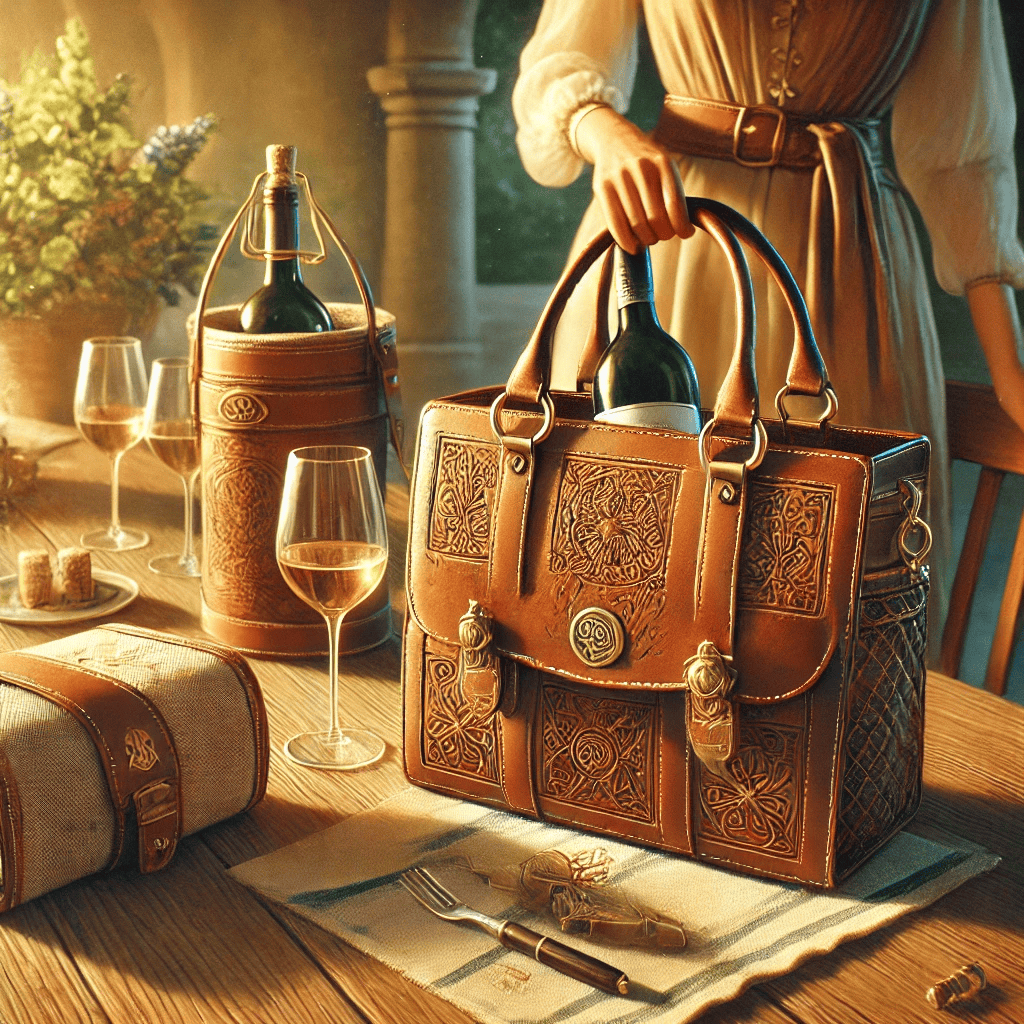
Leather carriers come alive with stamped patterns or pyrography – just practice on scrap pieces first (learn from my expensive mistakes!). For fabric carriers, I love using fabric paint or embroidery to add monograms. My go-to color combinations include navy with tan leather accents or forest green with brass hardware.
Want to make your carrier extra special? Add a hidden message or date in an unexpected spot, like under the handle or inside a pocket. For wedding gifts, I often incorporate pieces of meaningful fabric or create matching wine charms.
The secret to professional-looking results? Take your time with the finishing details – clean edges, straight stitching, and properly sealed materials make all the difference.
Safety and Protection Features
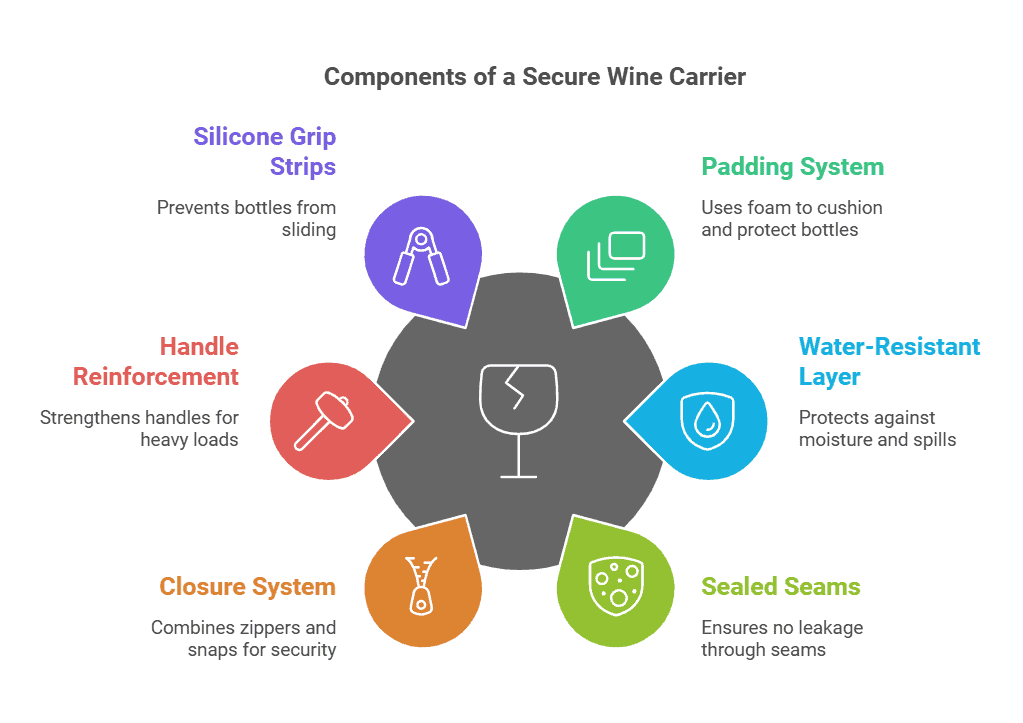
Safety features might not be the most exciting part of creating wine carriers, but they’re absolutely crucial! After a heartbreaking incident where a bottle of 1982 Bordeaux met its demise, I developed a foolproof padding system. I use 1/2-inch high-density foam for base protection, combined with 1/4-inch foam dividers between bottles. The game-changer was discovering that cross-shaped dividers provide better stability than straight ones.
For weather protection, I always incorporate a water-resistant outer layer and sealed seams. The most secure closure system I’ve found combines heavy-duty YKK zippers with magnetic snaps as backup. Handle reinforcement is non-negotiable – I use double-layered leather or webbing, secured with box stitching and rivets at stress points.
My latest innovation? Adding silicone grip strips inside the base to prevent bottles from sliding. Remember, a well-protected wine carrier isn’t just about preventing breakage – it’s about giving you peace of mind when transporting your precious cargo!
FAQ – DIY Wine Carriers
- What materials work best for DIY wine carriers? Answer: The best materials include heavy-duty fabric, leather, wood, and reinforced canvas, depending on your design preference and usage needs.
- How much does it cost to make a DIY wine carrier? Answer: Costs typically range from $15-50, depending on materials chosen and design complexity.
- How many wine bottles can a DIY carrier typically hold? Answer: Most DIY designs accommodate 1-4 bottles, though some custom designs can hold up to 6 bottles.
- Do I need special tools to make a wine carrier? Answer: Basic tools like scissors, measuring tape, and a sewing machine (for fabric designs) are sufficient for most projects.
- How long does it take to make a DIY wine carrier? Answer: Simple designs take 2-3 hours, while more complex projects might require 6-8 hours.
- Can DIY wine carriers protect bottles from breaking? Answer: Yes, when properly constructed with adequate padding and reinforcement.
- What’s the best way to waterproof a DIY wine carrier? Answer: Use waterproof materials or apply waterproofing sprays/treatments appropriate for your chosen material.
- How do I clean my DIY wine carrier? Answer: Cleaning methods vary by material – fabric carriers are usually machine washable, while leather needs specific leather cleaners.
- Can I sell my DIY wine carriers? Answer: Yes, but research local regulations regarding alcohol-related products and proper business licensing.
- What’s the most durable material for DIY wine carriers? Answer: Full-grain leather and hardwood are among the most durable materials for long-lasting carriers.
- How do I prevent bottles from clinking together? Answer: Use padded dividers or individual bottle sleeves within the carrier.
- Can I make a temperature-controlled wine carrier? Answer: Yes, by incorporating insulation materials and thermal liners in your design.
- What’s the easiest DIY wine carrier for beginners? Answer: A simple tote-style fabric carrier with basic padding is ideal for beginners.
- How do I ensure my DIY carrier is sturdy enough? Answer: Use reinforced stitching and strong materials, and test the carrier with water bottles before using it with wine bottles.
- Can I make a collapsible wine carrier? Answer: Yes, using flexible materials and clever folding designs for easy storage.
Conclusion
Creating your DIY wine carrier is not just a practical project – it’s an opportunity to showcase your creativity while ensuring your favorite wines travel safely. Whether you choose a simple fabric design or an elaborate wooden construction, DIY wine carriers make perfect conversation starters at social gatherings.
Remember to prioritize safety and functionality in your design while letting your personal style shine through. Ready to start crafting? Grab your materials, and let’s create something unique that’ll make every wine-sharing moment even more special!
Enjoy creating your DIY Wine Carrier, and Cheers!
For your reference, the latest articles by Didi Somm include:
- Portable Wine Cooler Reviews: 7 Best Expert Tips
- RV Wine Storage: Best Tip When On The Road
- How To Pack A Wine Picnic Basket Like A Pro: Find Out Here
- Outdoor And Camping Wine Storage Hacks: Your Best Expert Guide
- Best Insulated Wine Tote Bags: Our Expert Tips for You
- Compact Wine Racks: Expert Advice On Best Use Of Space
Important Notice: The information in this article is for general and public information purposes only. It solely reflects Didi Somm’s or his Staff’s opinion, and no responsibility can be assumed for errors or omissions in the service’s contents. For details, please check the Disclaimer at the bottom of the homepage.
