Did you know that wine consumption in home settings has increased by 27% since 2020?
As wine collections grow, many enthusiasts find themselves facing a common dilemma – their trusty small wine fridge just isn’t cutting it anymore. I’ve been there myself, and I know the excitement (and slight anxiety!) of upgrading to a larger unit.
Whether you’re a budding collector or a seasoned enthusiast, this comprehensive guide will walk you through everything you need to know about the best wine storage conditions for your precious wines and answer the questions “How to upgrade wine fridge.
Welcome to Didi Somm, and Cheers!
Important Notice: The information in this article is for general and public information purposes only. It solely reflects Didi Somm’s or his Staff’s opinion, and no responsibility can be assumed for errors or omissions in the service’s contents. For details, please check the Disclaimer at the bottom of the homepage.
Affiliate Disclaimer: This page may include Affiliate links, meaning that we get a commission if you decide to purchase through this site at no extra cost to you. Please read our Disclaimer for your info.
Key Takeaways
- Assess your current and future collection size before choosing a new unit
- Consider space requirements and installation logistics
- Evaluate temperature zones and cooling technology options
- Factor in energy efficiency and long-term operating costs
- Plan for proper wine transfer and temperature adjustment periods
Signs It’s Time to Upgrade Your Wine Fridge
Let me tell you about the moment I realized my trusty 28-bottle wine fridge wasn’t cutting it anymore. I was trying to squeeze in a case of amazing Bordeaux I’d found at an estate sale, playing Tetris with my bottles like a desperate wine hoarder! That’s when it hit me – these storage struggles weren’t just occasional anymore. The signs had been there for months: the constant reorganizing, the slight temperature fluctuations I’d noticed on my digital thermometer (yeah, I’m that person), and the fact that I had started storing some bottles in my regular fridge (wine collector blasphemy, I know!).
After years of helping other collectors upgrade their storage solutions, I’ve learned that running out of space is just the tip of the iceberg. Those temperature fluctuations you might be noticing? They’re actually a huge red flag. My old unit used to swing between 52-58°F, when it should have stayed rock-solid at 55°F. And don’t even get me started on the energy bills – these older, smaller units often work overtime trying to maintain temperature, especially if they’re packed to the gills.
The real game-changer for me was when I started collecting both reds and whites more seriously. Having everything at the same temperature wasn’t ideal, and I found myself wishing for those fancy dual-zone capabilities. If you’re noticing these signs, trust me, it’s time to think bigger. Just last month, one of my clients ignored the warning signs of their aging unit – weird clicking sounds, inconsistent cooling – and ended up with a collection of cooked wines. Don’t let that be you!

Assessing Your Wine Storage Needs
When I first started planning my upgrade, I made the classic rookie mistake of only counting my current bottles. Big oops! Here’s what experience has taught me: Take your current collection size and add at least 30% for future growth. In my case, I had 85 bottles but ended up choosing a 120-bottle unit – and wouldn’t you know it, I filled that extra space within a year!
Space Planning
Space planning is crucial, and I learned this the hard way. I spent weeks measuring every nook and cranny of my dining room, creating a detailed floor plan with masking tape (my partner thought I’d lost it!). But here’s the thing – those measurements saved me from making a costly mistake. Did you know that a 100-bottle wine fridge needs roughly 38 inches of width and 27 inches of depth? Plus, you’ll want to account for proper ventilation space.
Budget Setting
The budget conversation isn’t always fun, but it’s essential. I recommend setting aside $1,500-3,500 for a quality larger unit. Remember to factor in not just the purchase price but also installation costs, potential electrical upgrades (I had to add a dedicated circuit), and even resale value. Think about the types of wines you’re collecting, too – if you’re into aging wines, you’ll want a unit with precise temperature control and humidity management, which might push you toward the higher end of the budget range.
| Key Factor | Details |
|---|---|
| Collection Growth | Add at least 30% to your current collection size for future growth. |
| Space Planning | Measure space carefully; a 100-bottle unit needs ~38 inches width & 27 inches depth, plus ventilation space. |
| Budget Considerations (Total: $1,500 – $3,500) |
|
| Wine Type Considerations | Aging wines need precise temperature & humidity control, increasing cost. |
Choosing the “Right” Larger Wine Fridge
After my adventures in wine fridge shopping (and boy, what a journey that was!), I’ve learned that choosing the right unit is like picking the perfect wine – it’s all about understanding the nuances. I remember spending countless hours comparing specs, reading reviews, and, yes, even making a massive spreadsheet that my wine buddies still tease me about. But you know what? That research paid off big time.
Cooling Technology
Let’s talk cooling technology because this is where I really goofed up with my first upgrade. I initially chose a thermoelectric unit because it was quieter and seemed more energy-efficient. Well, surprise! While these units work great for smaller collections, they struggle with larger capacities. I ended up switching to a compressor-based system, which maintains temperature much more consistently, especially during those scorching summer months when my previous unit couldn’t keep up. These days, I recommend compressor systems for any unit over 50 bottles.
Single vs. Dual Zone
The single vs. dual zone debate is another hot topic, and I’ve been on both sides of this fence. Currently, I’m on team dual-zone all the way. My 75/25 split configuration (75% red wine storage at 55°F, 25% white wine storage at 46°F) has been a game-changer for my collection.
Brands
When it comes to brands, I’ve found that EuroCave, Sub-Zero, and Wine Enthusiast consistently deliver on their promises.
Warranties
Look for warranties that cover at least 3-5 years – trust me, I learned this lesson after dealing with a faulty control board that wasn’t covered under a one-year warranty.
Installation and Space Requirements
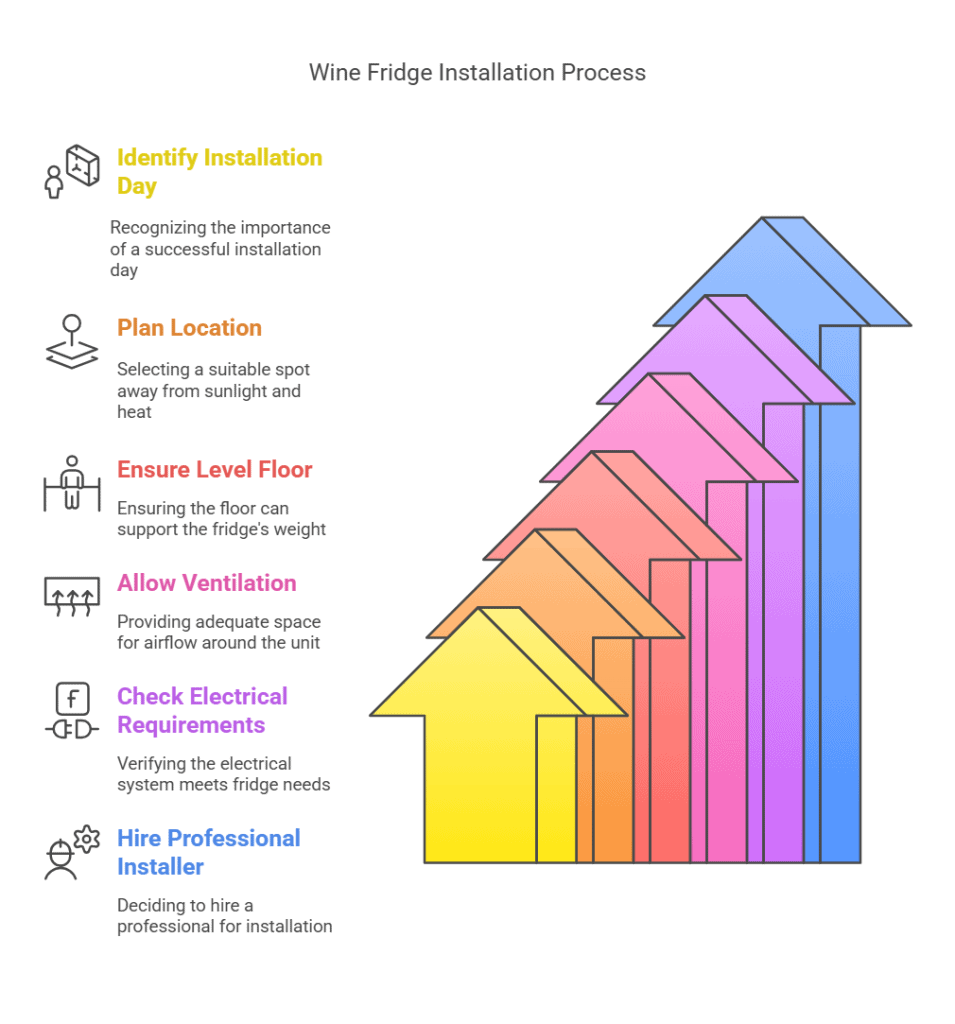
Oh boy, let me tell you about installation day – it’s an experience you’ll want to get right the first time! My first large wine fridge installation was quite the adventure, complete with a too-narrow doorway, an overheated delivery crew, and one very nervous me. Now I know better, and I’m going to save you from making the same mistakes I did.
First things first – location planning is absolutely crucial. You’ll want to pick a spot away from direct sunlight and heat sources (my first mistake was placing it too close to my kitchen’s heat vent – rookie error!).
The floor needs to be level and strong enough to support the weight – we’re talking about 300-500 pounds when fully loaded. I actually had to reinforce my flooring with additional support, which wasn’t in my original budget but was totally worth it for peace of mind.
Ventilation is another critical factor that often gets overlooked. Your unit needs proper airflow to function efficiently – I recommend leaving at least 2-3 inches on each side and 4-5 inches at the back.
Pro Tip: A pro tip from someone who learned the hard way: Check your electrical requirements before the installation day! Most larger units need a dedicated 120V circuit, and some even require 220V. I ended up having to reschedule my installation (and pay an extra fee) because I hadn’t upgraded my electrical system beforehand.
These days, I always recommend hiring a professional installer – yes, it’s an extra expense, but it’s worth every penny for the proper setup and peace of mind.
Transferring Your Wine Collection
Moving day for your wine collection is like orchestrating a delicate ballet – every move matters! I’ll never forget transferring my first serious collection; I was so nervous I actually wrote down a step-by-step plan (and yes, I still use a modified version of that same plan today!). The key is to take your time – this isn’t a process you want to rush.
Temperature adjustment is crucial, and I learned this through a nail-biting experience. When I first set up my new unit, I was eager to load it up immediately. Big mistake! Now, I always wait a full 24 hours after installation to let the temperature stabilize. During the transfer, I use a wine suitcase with foam inserts to move bottles in small batches, keeping them as stable as possible. It’s worth investing in some good handling equipment – trust me, dropping a bottle of aged Bordeaux is not a mistake you want to make (thankfully, I just fumbled an empty bottle during practice runs!).
Organization is where the fun really begins! I’ve developed a system that works beautifully: Whites on top in the cooler zone, reds arranged by region and aging potential below. I use a simple inventory management app to track everything, and I’ve learned to take photos of labels before they go in (especially for those bottles that end up in the back rows). Position your bottles horizontally to keep the corks moist, and always handle them by the body, not the neck.
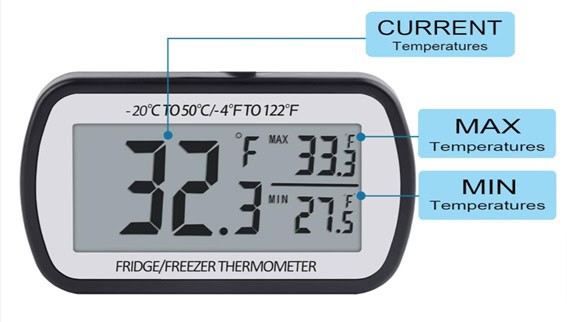
The most important tip? Monitor the temperature closely for the first week after transfer. I check mine three times a day with an external thermometer – maybe a bit obsessive, but better safe than sorry!
| Key Factor | Details |
|---|---|
| Planning the Transfer | Take your time and create a step-by-step plan for moving your collection carefully. |
| Temperature Adjustment | Let the new unit stabilize for 24 hours before loading bottles. Use a wine suitcase with foam inserts for transport. |
| Proper Handling |
|
| Organizing the Collection |
|
| Post-Transfer Monitoring | Monitor temperature closely for the first week; check at least three times a day using an external thermometer. |
Maximizing Your New Wine Fridge
Let me share some hard-earned wisdom about making the most of your new wine fridge – because believe me, I’ve learned these lessons through trial and error (mostly error, if I’m being honest!). The first month with my upgraded unit was a journey of discovery, and now I’ve got a system that works like a charm.
Temperature Zone Optimization
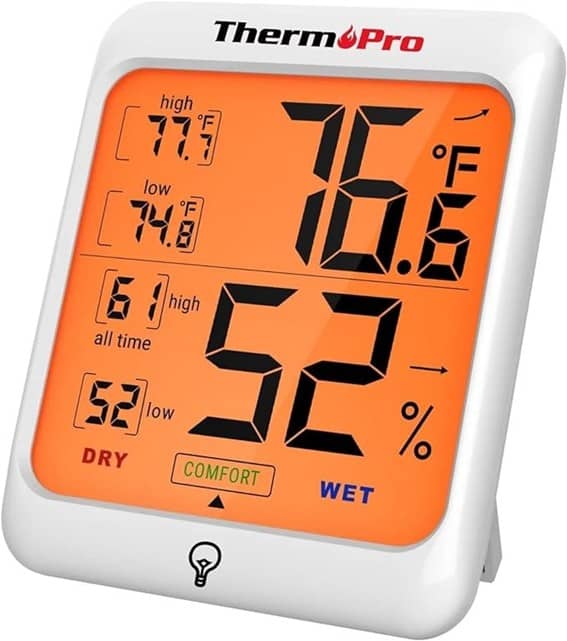
Temperature zone optimization is crucial, and it’s not just about setting it and forgetting it. I keep my reds at a steady 55°F and whites at 46°F, but I’ve found that monitoring humidity is equally important. After losing a few labels to excess moisture, I now maintain humidity between 60-70% using a separate hygrometer. I check these readings weekly and adjust as needed, especially during seasonal changes.
Pro Tip: Keep a log of your temperature and humidity readings for the first few months – you’ll start to notice patterns that help you maintain optimal conditions.
Maintenance
When it comes to maintenance, I’ve developed a schedule that keeps everything running smoothly. Every three months, I do a deep clean of the interior (unplug first!), check the door seals, and vacuum the coils (you’d be amazed at how much dust they collect).
Energy Saving Tips
I’ve also learned some neat energy-saving tricks: I arrange my collection so that frequently accessed bottles are grouped together, minimizing door-opening time. The smart features on newer units are fantastic – I use mine to get temperature alerts on my phone and track power consumption.
My favorite organizational hack? I use removable labels on the shelves to mark different sections, making it easy to find specific wines without disturbing the whole collection.
FAQ – Upgrade Wine Fridge
- Q: How do I know what size wine fridge to upgrade to? A: Calculate your current collection size, add 30-50% for future growth, and consider your collecting habits and space constraints.
- Q: Should I choose a single or dual-zone wine fridge? A: Choose based on your collection – dual-zone if you store both reds and whites, single-zone if you primarily collect one type.
- Q: What’s the average cost difference between small and large wine fridges? A: Large wine fridges typically cost 2-3 times more than small units, ranging from $1,000 to $5,000+ depending on features.
- Q: Do I need professional installation for a large wine fridge? A: While not always required, professional installation is recommended for units over 100 bottles to ensure proper setup and ventilation.
- Q: How long should I wait before transferring wine to a new fridge? A: Wait 24 hours after installation to allow the unit to reach stable temperature before transferring wines.
- Q: What energy consumption differences should I expect? A: Larger units typically use 2-3 times more energy than small fridges; look for energy-efficient models to minimize costs.
- Q: Can I stack wines differently in a larger unit? A: Larger units often offer multiple configuration options, including bulk storage and display areas.
- Q: What maintenance differences exist between small and large units? A: Larger units may require more frequent cleaning and professional maintenance due to bigger cooling systems.
- Q: How much ventilation space does a large wine fridge need? A: Generally, allow 2-3 inches on sides and back, plus 4-6 inches on top for proper ventilation.
- Q: What features should I look for in a larger wine fridge? A: Look for digital temperature control, UV protection, humidity management, and adjustable shelving.
- Q: How do I properly organize wines in a larger unit? A: Group wines by variety, aging potential, and drinking windows; consider using inventory management systems.
- Q: What’s the optimal temperature range for a large wine fridge? A: Maintain 45-50°F for whites and 55-65°F for reds in dual-zone units.
- Q: How do I handle power outages with a larger unit? A: Keep doors closed and monitor temperature; larger units typically maintain temperature longer during outages.
- Q: What’s the average lifespan of a large wine fridge? A: Quality large wine fridges typically last 10-15 years with proper maintenance.
- Q: Can I resell my small wine fridge? A: Yes, there’s a healthy market for used wine fridges, especially smaller units for beginners.
Conclusion
Upgrading your wine fridge is an exciting step in your wine-collecting journey! By carefully considering your needs, choosing the right unit, and following proper installation and transfer procedures, you’ll create the perfect environment for your growing collection.
Remember, this investment not only protects your wines but also enhances your overall wine experience. Ready to make the upgrade?
Use this guide as your roadmap to finding and installing the perfect larger wine fridge for your collection.
Good luck and joy with your new wine fridge, and Cheers!
For your reference, the latest articles by Didi Somm include:
- Wine Cork Types: Best Expert Advice For You
- Wine Fridge Troubleshooting: Best Expert Advice For You
- Wine Fridge Capacity: Get the Best Advice To Store Wine Bottles
- Best Wine Refrigerators For Aging – Your Expert Guide For 2025
- Top 3 Thermoelectric Wine Coolers – Best Expert Guide For You
- Wine Fridge Humidity Control: Get Insights And Best Advice
Important Notice: The information in this article is for general and public information purposes only. It solely reflects Didi Somm’s or his Staff’s opinion, and no responsibility can be assumed for errors or omissions in the service’s contents. For details, please check the Disclaimer at the bottom of the homepage.